
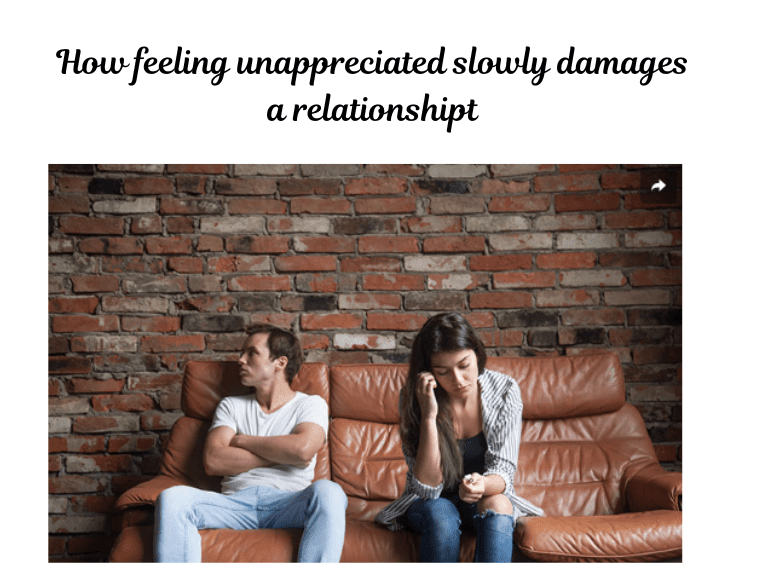
It often begins not with a bang, but with a quiet, almost imperceptible sigh. It’s the sigh you let out when you’ve cleaned the entire house and your partner walks in without a word, tracking mud across the freshly mopped floor. It’s the deflation you feel after cooking a favorite meal that receives only a distracted nod instead of genuine thanks. This is the slow, insidious genesis of feeling unappreciated, a silent toxin that, drop by drop, contaminates the well of a relationship. You might dismiss it at first, telling yourself you’re being too sensitive or that your partner is just having a busy week, but the residue of these small neglects accumulates over time, creating a film of resentment that clouds every interaction. What starts as a minor annoyance can, if left unaddressed, metastasize into the core cancer that kills affection, trust, and ultimately, the connection itself. The human need to be seen, to be valued, and to have our efforts acknowledged is fundamental, and when that need goes chronically unmet within the one relationship where we should feel most valued, the damage is both profound and multifaceted.
Related Post:
The initial phase of this erosion is often a gradual withdrawal of emotional investment. Why pour your energy into planning a special date night if it’s going to be met with a lackluster response or, worse, complaints about the cost or the timing? Why go out of your way to offer a back rub or listen attentively to their work troubles if the gesture is never reciprocated or even noticed? The person who is consistently feeling unappreciated begins to perform a quiet, internal cost-benefit analysis, and they often conclude that the emotional expenditure is no longer worth the return. This isn’t a calculated decision made out of spite; it’s a form of self-preservation. The heart, tired of being met with indifference, simply stops trying as hard. The little thoughtful acts that form the glue of a partnership the love note left on the counter, the spontaneous offer to run an errand, the enthusiastic greeting at the end of the day begin to disappear, leaving the relationship landscape barren and transactional.
As this emotional disengagement sets in, communication inevitably begins to break down. Conversations that were once lively and full of shared stories become purely functional, reduced to logistical discussions about bills, schedules, and whose turn it is to take out the trash. The person harboring the hurt stops sharing their inner world their dreams, their fears, their silly observations about the day because they have come to believe their partner is not a safe or interested audience. This creates a vicious cycle; one partner withdraws, the other may notice the distance but often misinterprets it as coldness or a loss of love, and they in turn may pull away themselves or respond with criticism, which only reinforces the original feeling of being undervalued. The shared language of the relationship, once rich with inside jokes and easy familiarity, is replaced by a dialect of silence and unspoken grievances, where the things left unsaid grow far louder and more damaging than any argument could ever be.
This communication breakdown paves the way for the most corrosive element of all: resentment. Resentment is the emotional scar tissue that forms over unhealed wounds of neglect. It’s the bitter taste in your mouth when you’re folding your partner’s laundry while they relax on the couch, oblivious. It’s the heat that rises in your chest when they ask what’s for dinner without so much as a glance up from their phone. This resentment is poison because it is passive and accumulative; it rarely explodes in a single, cathartic fight. Instead, it seeps into every interaction, coloring neutral comments with a negative tint and transforming minor annoyances into major character flaws. The partner who leaves a cup on the counter is no longer just forgetful; in the eyes of the resentful person, they are selfish and entitled, a symbol of all the ways their efforts go unseen. This distorted perception makes genuine connection impossible, as you are no longer reacting to your actual partner but to the painful narrative you have constructed around their lack of appreciation.
The toll this takes on an individual’s self-esteem and mental well-being cannot be overstated. When the person who is supposed to be your biggest cheerleader consistently fails to notice your achievements or minimize your struggles, you can start to internalize that neglect. You may begin to question your own worth, wondering if you are truly as competent, lovable, or interesting as you once believed. The constant state of feeling unappreciated can lead to symptoms of anxiety and depression, as the relationship, which should be a source of comfort and strength, becomes a primary source of pain. This emotional drain affects every other area of life, from performance at work to relationships with friends and family. You may find yourself becoming more irritable, more withdrawn, or more critical, not because you are an inherently negative person, but because you are emotionally exhausted and running on empty, your own cup never being refilled by the person who promised to be your partner.
Intimacy, both emotional and physical, is often one of the first and most noticeable casualties in this slow-moving crisis. True intimacy requires vulnerability, a willingness to open yourself up and be truly seen by another person. But how can you be vulnerable with someone who you feel doesn’t see your value? The act of physical closeness can start to feel transactional or even violating when it is disconnected from a foundation of emotional respect and gratitude. A person who feels like an unpaid servant or an invisible entity in their own home is unlikely to feel desired or desirous. Sex becomes another chore or, worse, a painful reminder of the emotional chasm that has opened up between them. The bed, once a place of connection and comfort, becomes just another piece of shared territory where two strangers lie side-by-side, isolated in their own separate experiences of hurt and misunderstanding.
Breaking this destructive cycle requires a conscious, deliberate effort from both partners, but it must begin with the one who feels neglected finding the courage to voice their pain without accusation. It is not about keeping score or listing every single time a thank you was missed, but about expressing the underlying emotional reality. Using “I feel” statements can be a powerful way to bridge this gap, shifting the conversation from blame to shared understanding. The listening partner, for their part, must learn to hear the pain behind the words without becoming defensive. It is about recognizing that the complaint about an unmade bed is rarely about the bed itself; it is a desperate plea to be seen, to be acknowledged, to be valued as a contributor to a shared life. This kind of communication is a skill, and like any skill, it requires practice, patience, and a genuine commitment to seeing the world through your partner’s eyes.
Ultimately, the antidote to the poison of feeling unappreciated is a consistent and intentional practice of gratitude and recognition. This goes far beyond a perfunctory “thank you,” though those words are a vital start. It is about cultivating a mindset where you actively look for the things your partner does, both large and small, and you make a point of acknowledging them. It’s noticing that they filled up your car with gas, that they remembered to call the plumber, or that they handled a difficult situation with one of the kids with grace. It’s about expressing appreciation for who they are, not just what they do for their sense of humor, their resilience, their kindness. This consistent validation acts as a steady rain on the parched ground of the relationship, allowing trust and affection to grow once again. It rebuilds the foundation brick by brick, creating a partnership where both individuals feel seen, valued, and secure in the knowledge that their presence and efforts matter. A relationship can survive many storms, but it cannot long endure the slow, silent frost of neglect, making the conscious fight against feeling unappreciated one of the most important investments a couple can ever make.





Blaze-4 is legit, been playing there for a while now. Good selection of games and fast payouts. Check it out! blaze-4
Your point of view caught my eye and was very interesting. Thanks. I have a question for you. https://www.binance.info/register?ref=QCGZMHR6
Can you be more specific about the content of your article? After reading it, I still have some doubts. Hope you can help me. https://accounts.binance.com/register/person?ref=IHJUI7TF