
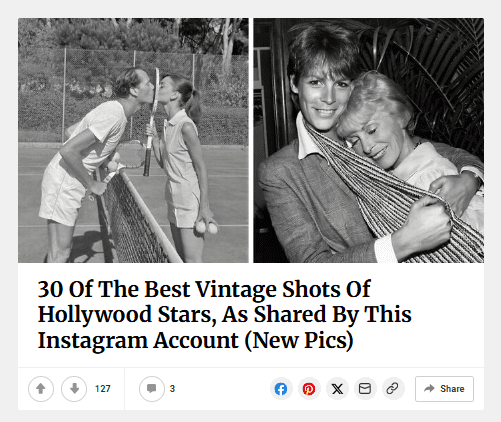
The digital age has a fascinating way of connecting us with the past, often through platforms we associate with the present. A compelling Instagram account dedicated to the golden age of cinema has been making waves by sharing breathtaking, rarely seen photographs of Hollywood’s most iconic figures. This curated collection does more than just post pictures; it serves as a visual time capsule, offering a raw and intimate glimpse into the lives of stars who defined an era of glamour and artistry. The account’s mission is clear: to preserve and celebrate the magic of classic film through the powerful medium of vintage Hollywood photography. By focusing on candid moments, behind-the-scenes snapshots, and stunning portrait work, these images strip away the manufactured mystique and reveal the authentic humanity of legends like Audrey Hepburn, Marilyn Monroe, and Cary Grant. In a world saturated with filtered and fleeting digital content, the enduring power of these analog captures feels more significant than ever, reminding us why these faces remain timeless.
There is an undeniable artistry in these frozen moments that modern paparazzi shots often lack. The grain of the film, the subtle play of natural light in a studio, and the expressive depth captured by master photographers like George Hurrell or Milton H. Greene tell a story beyond the fame. Each photograph is a deliberate composition, a collaboration between subject and artist aimed at capturing an essence whether it’s the mischievous intelligence in Frank Sinatra’s eyes or the serene strength emanating from a young Katherine Hepburn. This focus on vintage Hollywood photography is not merely an exercise in nostalgia; it is an appreciation of a craft where every shot was precious, film rolls were limited, and the process from click to print was slow and tactile. The Instagram account understands this, often providing context about the photographer, the film set, or the historical moment, transforming a simple scroll into an informal education in cinematic and photographic history. The care in selection is evident, prioritizing emotional resonance over mere celebrity.
Consider the magnetic pull of a photograph of James Dean, not in a posed studio shot, but leaning against a brick wall on a New York street, looking pensive and far older than his years. This is the magic of the collection: it finds the person behind the persona. We see Humphrey Bogart sharing a relaxed laugh between takes, far removed from his tough-guy screen image, or Grace Kelly caught in a moment of unguarded reflection, her famous poise softened into something wonderfully ordinary. These images serve as a vital corrective to the often one-dimensional way we remember stars from bygone eras, reminding us that they navigated the same complexities of life, love, and ambition. The Instagram account’s commentary frequently highlights these humanizing details, inviting followers to connect with these figures not as distant myths, but as artists and individuals. This approach fosters a deeper, more meaningful engagement with film history, one grounded in empathy and curiosity rather than simple idolization.
The technical aspects of these photographs also deserve our admiration. Shot on medium or large format film, the detail captured is astonishing. You can see the intricate beadwork on a costume, the texture of a perfectly coiffed hairstyle, and the subtle, un-retouched expressions that give each face its unique character. In an era before digital manipulation, photographers relied on lighting, shadow, and expert developing techniques to create drama and mood. A portrait of Marlene Dietrich, masterfully lit to sculpt her famous cheekbones, is a lesson in using shadow as powerfully as light. The rich tonal range and depth found in these classic film star portraits are qualities that many photographers still strive to emulate with modern technology. The Instagram account does a superb job of scanning and presenting these images with respect for their original quality, allowing viewers to zoom in and appreciate the craftsmanship that went into every single frame. It’s a testament to the lasting power of analog techniques in a digital world.
Beyond the A-list legends, the account also shines a light on character actors, musical stars, and influential figures whose faces might not be instantly recognizable to younger audiences but whose contributions were immense. Discovering a vibrant, smiling photo of Carmen Miranda in full, dazzling regalia or a thoughtful shot of pioneering director Dorothy Arzner on set expands the narrative of Hollywood’s golden age. It celebrates the vast ecosystem of talent that made the studio system work, from composers and choreographers to supporting players who stole every scene they were in. This inclusive curatorial approach paints a fuller, more vibrant picture of the era, moving beyond the usual suspects to honor the breadth of creativity that flourished. It’s a reminder that Hollywood’s history is woven from countless threads, each adding color and texture to the overall tapestry. By featuring these figures, the account educates and inspires, potentially sparking interest in lesser-known films and careers.
The social media engagement surrounding these posts is particularly fascinating. Comments sections become virtual living rooms where generations connect. Older followers share personal memories of seeing these stars on the big screen, while younger ones express awe and discovery, often noting how these images inspire their own fashion or artistic sensibilities. A photo of Steve McQueen might spark a debate about his coolest role, while a radiant image of Rita Hayworth might lead to discussions about her technical skill as a dancer and the challenges she faced in the industry. This interactive element transforms the account from a static archive into a dynamic community of classic film enthusiasts. It proves that the appeal of these stars and their stories is not diminishing but is being passed down and recontextualized for new audiences. The dialogue between past and present happening in the comment section is as valuable as the images themselves.
Fashion is another compelling dimension brought to life through this visual archive. The evolution of style from the sleek Art Deco influences of the 1930s to the bold silhouettes of the 1950s is documented on the bodies of its most famous mannequins. A photo of Lauren Bacall in a sharp, tailored suit speaks volumes about postwar femininity and power, while a casual shot of Paul Newman in a simple t-shirt and jeans redefines masculine cool for the modern age. These are not merely costumes; they are integral to the star’s iconography and the cultural zeitgeist they represented. The account often highlights the work of legendary designers like Edith Head or Adrian, giving credit where it’s due and illustrating how fashion and film were inextricably linked. For contemporary fashion lovers and designers, this feed is a treasure trove of inspiration, a masterclass in timeless style that feels refreshingly authentic compared to today’s fast-fashion cycles.
The emotional spectrum captured in these old Hollywood photos is vast and deeply moving. From the unbridled joy of Judy Garland laughing with Mickey Rooney to the haunting solitude evident in a portrait of Montgomery Clift, these images are a direct line to the heart. They bypass the scripted dialogue and cinematic framing, offering pure, unmediated emotion. This is perhaps the account’s greatest service: it re-humanizes figures who have been so heavily mythologized that they risk becoming caricatures. Seeing Lucille Ball, not as the wacky redhead from “I Love Lucy,” but as a focused, ambitious businesswoman on her studio lot, adds a crucial layer of understanding to her legacy. It encourages a more nuanced appreciation of these individuals as multifaceted human beings who experienced triumph, vulnerability, fatigue, and love, just like anyone else. This emotional authenticity is what makes the photos feel so immediate, even decades after they were taken.
The global reach of this Instagram account also highlights the universal and enduring language of classic cinema. The followers are not confined to the United States; they span the globe, from Tokyo to Buenos Aires to Paris, united by a shared love for this artistic heritage. This speaks to the powerful export of American film during the 20th century and its role in shaping global perceptions of style, romance, and ambition. A fan in Italy might connect with the Mediterranean roots of Frank Sinatra, while a follower in Japan might admire the precise craftsmanship of a Grace Kelly hairstyle. The account, in its own small way, continues this tradition of cultural exchange, using the common ground of iconic imagery to connect people across borders. It demonstrates that the allure of Hollywood glamour is a timeless, borderless phenomenon, one that continues to captivate imaginations worldwide.
In an interesting paradox, the platform of Instagram epitome of the instant, ephemeral, and often superficial becomes the perfect vehicle for preserving and promoting these considered, permanent works of art. The account’s curators skillfully use hashtags, stories, and reels to draw in a scrolling audience, perhaps someone who initially followed for modern celebrity gossip, only to be stopped in their tracks by the profound elegance of a black-and-white portrait of Ava Gardner. This serendipitous discovery is a key part of the account’s success and cultural impact. It acts as a gateway, converting casual scrollers into curious history buffs and classic film aficionados. The juxtaposition of this old content on a new platform creates a fascinating dialogue about what we value, what lasts, and how we choose to remember our collective cultural past.
The preservation aspect cannot be overstated. Many of these photographs come from private collections, old magazine archives, or the estates of the photographers themselves. By digitizing and sharing them, the account is actively participating in cultural preservation, ensuring these visual documents are not lost to time, decaying in forgotten attic boxes. Each post is a digital rescue mission, granting these artifacts a new life and a vastly expanded audience. This work is crucial for historians, researchers, and filmmakers, but also for the general public, as it keeps our shared cultural memory vibrant and accessible. The curators often express a sense of responsibility in this endeavor, highlighting their dedication to accuracy and respect in their captions. They are not just fans; they are stewards of a priceless visual legacy.
What does the popularity of such an account say about our current moment? Perhaps it reflects a collective yearning for authenticity, craftsmanship, and a sense of history in a rapidly changing, often chaotic world. The stars of the golden age of Hollywood operated within a studio system that was deeply flawed, yet the artistry they produced and the images that documented their journey possess a gravity and depth that can feel absent from today’s more fragmented celebrity culture. Looking at these photos offers a form of escape, but not an empty one. It is an escape into a world where detail mattered, where mystery was maintained, and where talent was painstakingly honed over years. It provides a soothing counter-narrative to the constant self-documentation of the present, inviting us to slow down and appreciate a single, perfectly captured moment.
The account also inadvertently serves as a fascinating study in iconography. How did these specific images contribute to the eternal status of these stars? A photo of Marilyn Monroe with her dress billowing over a subway grate is not just a photo; it is the crystallization of an entire archetype of femininity, allure, and spectacle. The Instagram feed allows us to see both these iconic shots and the less familiar ones side-by-side, giving us a more complete understanding of how a star’s image was built, both by the studios and by the public’s imagination. We see the raw material the actor and the finished myth the star and all the nuanced steps in between. This deconstruction of fame is one of the most intellectually rewarding aspects of following the account, as it prompts reflection on the nature of celebrity itself, then and now.
As we scroll through these thirty selected gems, from a dashing young Marlon Brando on his motorcycle to a contemplative Ingrid Bergman on a film set in Italy, we are not just looking at pretty pictures. We are engaging in an act of remembrance and appreciation. Each image is a doorway into a story, a career, a technological achievement in photography, and a slice of social history. They remind us of the collaborative art of filmmaking, the brilliance of portrait photographers, and the undeniable charisma of individuals who could captivate a lens and, by extension, the world. This Instagram account, through its careful curation and passionate presentation, does more than share vintage Hollywood photography; it keeps a glorious chapter of artistic history alive, relevant, and passionately debated. It proves that true star power is not dimmed by the passage of time but is instead burnished by it, glowing ever brighter in the digital realm for new generations to discover and adore. The concluding thought is simple yet powerful: in preserving these glimpses of the past, we better understand the artistry of our present and inspire the creativity of our future, all through the timeless lens of vintage Hollywood photography.
30 Of The Best Vintage Shots Of Hollywood Stars, As Shared By This Instagram Account (New Pics)





Yo, 99okvip is where it’s at! Been playing here for a while now and I’m loving the vibe. Games are good, withdrawals are smooth. Highly recommend checking it out 99okvip