
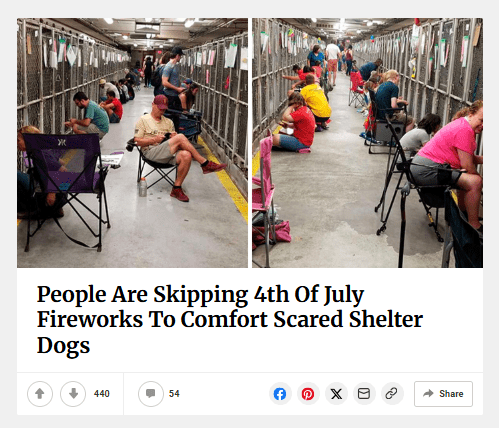
The cacophony of New Year’s Eve fireworks has long been a staple of our collective celebration, marking the stroke of midnight with bursts of light and thunderous booms. For many, it’s a thrilling spectacle, but for countless shelter dogs, it’s a night of sheer terror. In a heartening shift that speaks volumes about our evolving empathy as a society, a growing number of people are now choosing to forego these traditional displays. Instead, they are spending the holiday in a profoundly different way: huddled on concrete floors, offering quiet comfort to frightened canines who have no home to hide in. This movement isn’t about canceling joy but rather redefining it, placing compassion at the center of our festivities. The choice to skip the New Year’s Eve fireworks represents a conscious decision to prioritize the well-being of the most vulnerable among us, creating a new tradition that resonates with deeper meaning. It’s a powerful testament to how our understanding of community is expanding to include every whimper and anxious pant within the local animal shelter’s walls.
This trend began to gain noticeable traction as social media stories circulated, showing the dramatic distress fireworks cause animals. Viral videos of dogs trembling uncontrollably or trying to burrow into the corners of their kennels struck a chord with the public. People started to connect the dots between their brief moment of auditory excitement and the prolonged trauma experienced by pets and wildlife. Animal shelters, often overwhelmed and understaffed, began putting out calls for volunteers on holidays known for loud celebrations, not just Independence Day but notably on New Year’s Eve. The response was unexpectedly robust, with individuals and families showing up not with noisemakers, but with blankets, treats, and a willingness to sit in solidarity. This practice of quiet companionship during the New Year’s Eve fireworks barrage has since blossomed into organized community efforts, transforming a night of fear into an opportunity for profound human-animal connection.
The psychological impact of fireworks on dogs is severe and well-documented. Canine hearing is exponentially more sensitive than our own, meaning the sharp crack and boom of a firework isn’t just loud; it’s physically painful and deeply confusing. For a shelter dog, already in a state of stress from an unfamiliar environment, the experience can be utterly debilitating. They cannot understand that the world is not ending; they only know that their senses are under assault. This triggers a primal fight-or-flight response, leading to panic-driven behaviors like destructive chewing, frantic attempts to escape, or shutdowns where they become catatonic with fear. The aftermath of a fireworks-laden holiday often leaves shelter staff to care for animals with heightened anxiety, lost trust, and sometimes even injuries from their attempts to flee the noise. By choosing to be present, volunteers provide a critical buffer against this trauma, offering a steady, calm presence that can help ground a terrified animal.
Imagine the scene inside a typical municipal shelter as the clock nears midnight on December 31st. Instead of the usual quiet of night shift, the kennel halls are softly lit, and the air is filled with a low, soothing murmur rather than the expected barrage of booms. Volunteers are stationed throughout, many sitting cross-legged outside kennel doors, reading books aloud in gentle tones or simply speaking softly. Some are allowed inside runs with particularly anxious dogs, offering slow, reassuring pets. The goal isn’t to energize or entertain but to emanate calm. When the inevitable fireworks begin in the distance, the volunteers don’t flinch; they might even gently increase their volume, providing a competing, friendly sound a human voice to focus on. This direct, quiet support during the peak of the New Year’s Eve fireworks can mean the difference between a dog spiraling into a days-long anxiety attack and emerging from the event merely unsettled.
The volunteers themselves come from all walks of life, united by a shared desire to do good. There are seasoned dog owners who know their own pets are safe at home, perhaps nestled in a “safe room” with music playing. There are college students home for the holidays, families teaching their children about empathy, and individuals who simply find more fulfillment in this act of service than in a crowded party. Their stories are incredibly moving. One volunteer might describe locking eyes with a shivering pit bull mix, seeing the moment the fear in them subsides just a fraction, replaced by a flicker of recognition that they are not alone. Another might talk about the collective sigh that passes through the shelter when the last distant pop fades away, a shared moment of relief and accomplishment. This experience of providing solace during the New Year’s Eve fireworks often becomes more rewarding than any spectacle, creating memories anchored in kindness rather than fleeting visual excitement.
Beyond the immediate comfort provided, this movement sparks broader conversations about community responsibility and inclusive celebration. It challenges the default assumption that loud, public displays are harmless fun for all. Advocates point out that the negative effects of fireworks extend beyond shelter animals to include veterans with PTSD, elderly individuals, those with sensory processing disorders, and wildlife. The act of volunteering at a shelter becomes a tangible protest against this blanket noise pollution, a personal choice that aligns values with action. It also brings much-needed attention and resources to these shelters. Volunteers who may have never visited before become regular donors, fosters, or even adopters, having formed an unexpected bond on a chaotic night. The New Year’s Eve fireworks, therefore, inadvertently become a catalyst for sustained community engagement with animal welfare organizations.
What does this mean for the future of our holiday traditions? It’s unlikely that massive public fireworks displays will disappear entirely, nor is that the explicit goal of most involved in this shelter comfort movement. Instead, the trend is toward mindfulness and alternative options. Some communities are now investing in “quiet” celebrations, like synchronized drone light shows that offer dazzling visual spectacles without the devastating acoustic fallout. Others are instituting “green zones” where traditional fireworks are prohibited near shelters and sensitive areas. The growing popularity of shelter volunteering on these nights also puts gentle pressure on event organizers to consider the full impact of their plans. The tradition is evolving from a purely explosive affair to a more holistic celebration where joy does not have to come at the cost of another creature’s suffering. This shift reflects a maturation in how we define a communal festival, weighing collective enjoyment against collective compassion.
The practical logistics of organizing a shelter comfort event are complex but manageable. Shelters typically require volunteers to register in advance, often attending a brief orientation to learn how to read canine body language and interact safely. They prepare by creating “quiet rooms” with extra soundproofing, playing classical music or white noise, and ensuring all animals are securely housed to prevent escape attempts. Volunteers are given clear guidelines: stay calm, avoid sudden movements, and let the dog dictate the level of interaction. The presence of these calm humans does more than just distract from the noise; it actively rewires a negative experience. A dog that associates the terrifying sounds of New Year’s Eve fireworks with a patient human offering chicken-flavored treats is undergoing a form of behavioral therapy. This positive conditioning can have lasting benefits, making the dog more adoptable by reducing its overall anxiety levels.
This phenomenon also highlights the deep, often unspoken bond humans share with dogs. Our species have co-evolved for millennia, and we have a profound responsibility toward them, especially those who are homeless and reliant on our mercy. Choosing to sit with a scared animal is an ancient act of companionship, stripping away the modern glitz of a holiday to something fundamentally human. It acknowledges that while we have built a world of loud and brilliant inventions, we must also care for the creatures who share our environment but do not understand our celebrations. The fireworks that light up the sky are a testament to human ingenuity, but the people on the floor of the shelter are a testament to human heart. In that quiet space, the true spirit of the holiday hope, renewal, and kindness shines brighter than any pyrotechnic ever could.
Critics might argue that individual actions cannot stem the tide of a widespread cultural tradition, but the very personal nature of this choice is its strength. Every person who chooses a shelter over a fireworks show is casting a vote for a gentler world. They are modeling behavior for their friends and family, showing that celebration and empathy are not mutually exclusive. Social media plays a key role here, not in broadcasting the fear, but in showcasing the solution. Photos of volunteers reading to dogs, or stories of a particularly nervous pup who finally fell asleep during the noise, go viral for all the right reasons. They inspire others to look up their local shelter and ask how they can help during the next noisy holiday, creating a ripple effect of compassion that extends far beyond a single New Year’s Eve.
For the shelter staff, who dedicate their lives to this challenging work, the influx of volunteers on such a stressful night is an immense gift. It’s not just an extra pair of hands; it’s a morale booster, a sign that the community sees and supports their mission. It allows them to focus on the most critical cases, knowing other animals are being watched over. The shared experience forges a powerful bond between staff and volunteers, building a stronger, more resilient support network for the shelter year-round. The aftermath of the New Year’s Eve fireworks is no longer just a morning of cleaning up stressed-out kennels, but also a moment to reflect on a community that showed up. This reinforcement is crucial for the mental well-being of caregivers who routinely face burnout from emotional fatigue.
Looking at the bigger picture, this trend is part of a larger cultural reevaluation of our relationship with animals and our environment. It parallels movements toward plant-based diets, sustainable consumerism, and ethical tourism. It’s about living with intentionality and considering the unseen consequences of our actions. The decision to comfort shelter dogs during fireworks is a micro-practice of this philosophy a small, direct, and deeply personal way to enact change. It proves that activism isn’t always about loud protests; sometimes, it’s about quiet presence. It demonstrates that the most effective way to protest something you see as harmful is to actively participate in the alternative, building the world you want to see from the ground up, one quiet kennel at a time.
The stories that emerge from these nights are powerful testaments to resilience and connection. There’s the tale of a senior dog, overlooked for years, who spent the entire night curled in the lap of a volunteer, finally sleeping peacefully despite the chaos outside. That volunteer later became its foster and ultimately its adopter, giving the dog a quiet forever home. There’s the story of a group of teenagers who organized a fundraiser to buy sound-dampening mats for their local shelter after volunteering on New Year’s Eve. These narratives are the real legacy of the choice to skip the spectacle. They are about lives changed, both human and canine, and about communities discovering a deeper, more meaningful way to mark the passage of time together.
In the end, the growing movement of people skipping New Year’s Eve fireworks to comfort scared shelter dogs is about more than animal welfare; it is a bellwether for a more empathetic society. It shows a willingness to question long-standing traditions, to prioritize compassion over convention, and to find profound joy in simple, shared comfort. As we move forward, this practice will likely continue to grow, inspiring new, quieter forms of celebration and strengthening the bonds within our communities. It reminds us that the brightest light on a holiday night doesn’t always come from the sky; sometimes, it shines from the quiet act of keeping a frightened creature company, proving that the most meaningful celebrations are those where no one is left trembling in the dark. This beautiful shift ensures that the fear induced by New Year’s Eve fireworks is met with an ever-growing wave of human kindness, setting a hopeful tone for the year to come.
People Are Skipping 4th Of July Fireworks To Comfort Scared Shelter Dogs



Downloaded the 22betapk app. So far, seems pretty smooth. A lot more convenient for playing on the move. Check them out 22betapk and play anywhere!