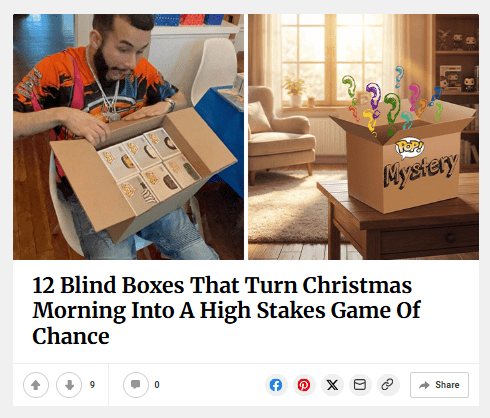
Blind Boxes That Turn Christmas Morning Into A High Stakes Game Of Chance

There’s a new kind of magic, and perhaps a touch of mayhem, transforming the traditional Christmas morning scene. Gone, in some households, are the neatly wrapped boxes whose contents are sometimes guessed from their shape and rattle. In their place is a growing phenomenon that swaps certainty for suspense, wrapping the holiday in an entirely different kind of paper: the opaque, mysterious seal of the blind box. This trend, exploding in popularity, is effectively turning the sacred ritual of gift-opening under the tree into a high-stakes game of chance. The core of the Christmas experience, built on anticipation and joy, is being reshaped by these small, unassuming packages that promise a surprise but deliver a spectrum of emotions from sheer elation to palpable disappointment. It’s a fascinating shift in consumer behavior and gifting culture, where the journey from wishlist to unwrapping becomes a gamble, fundamentally altering the dynamics of the holiday.

The concept of the blind box is simple yet psychologically potent. You purchase a sealed package knowing only the general theme perhaps it’s a series of miniature anime figurines, designer vinyl toys, or exclusive scented candles but you have no idea which specific variant from the collection is inside. The thrill is entirely in the reveal. This mechanic, borrowed directly from the world of gaming and collectible card packs, has found a fertile new home under the Christmas tree. For the giver, it presents an easy out from the complex calculus of finding a perfect, specific gift; the offering becomes the experience of the surprise itself. For the receiver, particularly younger ones or dedicated collectors, the moment of tearing into that box on Christmas morning is charged with a unique electricity. It’s no longer just about receiving a known desired item; it’s about the heart-pounding possibility of hitting the jackpot the ultra-rare “chase” figure that completes a set or becomes a coveted trophy.

This injection of chance into Christmas gifting taps into deep-seated human responses. The dopamine hit associated with unpredictable rewards is a powerful force, one that slot machines and lottery tickets have leveraged for decades. When this mechanism is tied to the already emotionally charged atmosphere of Christmas morning, the effect can be intensely amplified. The unwrapping becomes an event, a performance with a cliffhanger ending. Family members gather around not just to share in the joy of a gift, but to witness the outcome of the gamble. Will it be the common variant everyone seems to get, or will it be the holy grail? This shared suspense can create memorable, viral moments of celebration or collective groans, making the Christmas morning narrative less predictable and, in a way, more theatrical. The holiday becomes a stage for miniature dramas of luck and fortune.

However, this high-stakes game is not without its significant downsides and ethical quandaries, which feel particularly pronounced against the backdrop of a holiday centered on generosity and thoughtfulness. The very essence of a blind box is its inherent inequality of outcome. Two children could receive the same branded blind box as their main Christmas present from Santa, and one could walk away with their dream toy while the other gets a duplicate or a less-desired character. This can lead to tangible feelings of unfairness and sadness on a day meant to be uniformly joyful. The disappointment of “losing” the blind box gamble can overshadow the spirit of the gift, breeding resentment or a sense of inadequacy. It introduces an element of luck-based equity into a tradition that many believe should be based on love and intentionality, not random chance.

Furthermore, the business model behind blind boxes is designed to be addictive and encourages repeated spending a dynamic that can clash with the financial pressures already associated with the Christmas season. The desire to “pull” a specific rare item or complete a collection can lead consumers, or gift-givers, to purchase multiple boxes in succession, a practice often called “box breaking” or buying by the case. What starts as a fun, small Christmas gift idea can spiral into an expensive pursuit of completeness. For parents, this creates a tricky landscape: do you fulfill the implicit promise of the chase by buying more boxes, potentially blowing the holiday budget, or do you allow the disappointment of an incomplete set to linger? This model cleverly exploits the completionist mindset, turning what should be a simple gift into a potential financial sinkhole during the most expensive time of the year.

The psychological pull is especially potent for children and teenagers, making Christmas lists increasingly populated with these mystery items. The marketing is brilliant, often fueled by social media unboxing videos where influencers showcase their luck, pulling rare item after rare item, creating a skewed perception of probability. A child watching these videos in the lead-up to Christmas develops not just a want, but a fueled expectation of hitting it big. When their single Christmas morning box yields a common result, the contrast between their online-fueled fantasy and their reality can be stark. It trains young consumers to value the rarity and potential resale value of an item over its intrinsic utility or joy, commercializing their Christmas wishes in a new and potent way. The holiday wish becomes less about a specific toy and more about the chance to play a lucrative game.

From an environmental and waste perspective, the blind box craze also raises concerns that feel at odds with an increasing desire for sustainable holidays. The sheer volume of plastic used in the figurines, combined with the packaging often an outer box, an inner sealed foil bag, and plastic inserts generates significant waste. When the goal is to collect them all, and duplicates are a frequent, undesired result, these duplicate or unwanted items often get discarded immediately, ending up in landfills. The “mystery” element prevents conscious consumption; you cannot choose the specific item you actually want, leading to a cycle of acquisition and disposal that is inherently wasteful. For families trying to embrace a more mindful and less cluttered Christmas, the blind box is fundamentally at odds with that philosophy, promoting a disposable relationship with material goods.

Yet, despite these criticisms, the trend’s popularity is undeniable, suggesting it fulfills a genuine desire in modern Christmas celebrations. In a world where so much is knowable and instantly accessible via a quick internet search, the blind box reintroduces a genuine, old-fashioned surprise. It combatts the “spoiler” culture that can infect holiday giving when snooping children or predictable lists remove all element of mystery. The blind box, by its very design, protects that surprise until the final moment. In this sense, it paradoxically brings back a element of classic Christmas magic the true unknown albeit in a highly commercialized, modern package. It forces a moment of pure presence and reaction, unmediated by prior knowledge, which can be a rare and precious thing in our hyper-connected age.

Navigating this new landscape as a gift-giver this Christmas requires a blend of enthusiasm and caution. If you choose to venture into blind box gifting, it’s crucial to manage expectations. Frame the gift explicitly as a fun surprise, a lottery ticket with a guaranteed small prize, rather than a guaranteed path to a specific coveted item. Perhaps pair a single blind box with a more traditional, known gift to balance the scales of chance and certainty. For collectors, consider purchasing from resale markets where specific figures can be bought outright, ensuring the Christmas morning joy is attached to a desired object, not just the fleeting thrill of the gamble. This approach honors the recipient’s hobby while removing the potential for holiday disappointment.

The communal aspect of Christmas can also be reframed around blind boxes in a positive, shared way. Instead of individual boxes leading to individual wins or losses, a family could purchase a larger set of blind boxes to open together, pooling their “pulls” and trading duplicates. This turns a potentially isolating gamble into a collaborative event, a mini-trading session by the fireplace. The focus shifts from individual luck to collective resource management and sharing, values much more in line with the Christmas spirit. The duplicates become less of a failure and more of a trading chip, fostering interaction and negotiation among siblings or cousins, and potentially creating a new, playful holiday tradition centered around the exchange.

Ultimately, the rise of the blind box is a powerful metaphor for the modern Christmas experience itself a mixture of commercial pressure, genuine magic, risk, and the hope for a miraculous outcome. It holds a mirror to our relationship with the holiday, highlighting our love for surprise and our vulnerability to marketed addiction. As we wrap these little packages of chance and place them under the tree, we are consciously choosing to infuse our Christmas morning with a dose of uncertainty. We are betting that the thrill of the unknown will outweigh the risk of letdown, that the story of “the one that got away” or “the incredible pull” will become part of that year’s Christmas lore. The tradition becomes less about the static receipt of goods and more about the dynamic experience of the reveal.

In the end, whether this trend enhances or detracts from the holiday comes down to intentionality and balance. The Christmas spirit shouldn’t be something left to chance, locked inside a sealed box. It resides in the thought behind the gesture, the warmth of the gathering, and the love shared regardless of material outcomes. A blind box can be a fun, spicy ingredient in the Christmas morning recipe, but it makes for a poor main course. The true magic of the holiday has always been about connection, gratitude, and peace things that cannot be manufactured, graded for rarity, or left to the luck of the draw. As we move forward, the challenge will be to enjoy the playful gamble these boxes offer without allowing the high-stakes game of chance to overshadow the timeless, certain joys that are the real heart of Christmas.

Post Refence:

12 Blind Boxes That Turn Christmas Morning Into A High Stakes Game Of Chance

One thought on “Blind Boxes That Turn Christmas Morning Into A High Stakes Game Of Chance

Leave a Reply

Your email address will not be published. Required fields are marked *