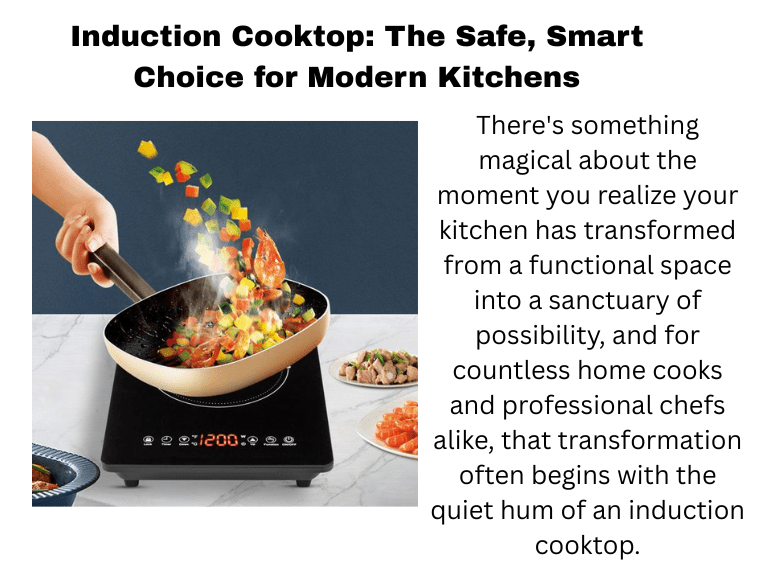
There’s something magical about the moment you realize your kitchen has transformed from a functional space into a sanctuary of possibility, and for countless home cooks and professional chefs alike, that transformation often begins with the quiet hum of an induction cooktop. Unlike traditional cooking methods that rely on open flames or glowing red coils, this sleek appliance harnesses the invisible power of magnetic fields to heat your cookware directly, creating an experience that feels both futuristic and deeply intuitive. The first time I placed a pot on its smooth, cool surface and watched water come to a rolling boil in under two minutes, I felt a genuine sense of wonder this wasn’t just another kitchen gadget; it was a fundamental reimagining of how we interact with heat and food. That immediate responsiveness, that precise control, that startling efficiency it all converges in the modern induction cooktop, an appliance that has quietly revolutionized home cooking while remaining surprisingly misunderstood by many. As we explore this remarkable technology together, you’ll discover why families are tearing out gas lines, why professional kitchens are making the switch, and why this particular piece of equipment might just become the heart of your own culinary journey. The induction cooktop represents more than convenience; it embodies a thoughtful evolution in how we nourish ourselves and those we love, blending scientific precision with the timeless art of cooking in a way that feels both revolutionary and deeply human.
What Is an Induction Cooktop?
An induction cooktop represents a fundamental departure from conventional cooking surfaces by utilizing electromagnetic induction rather than thermal conduction to generate heat directly within your cookware itself. At its core, this appliance features a ceramic glass surface that remains remarkably cool to the touch during operation because it doesn’t produce heat independently instead, copper coils beneath the surface create an alternating magnetic field when electricity flows through them. When you place compatible ferromagnetic cookware like cast iron or magnetic stainless steel on the cooking zone, this invisible magnetic field penetrates the metal base and induces swirling electrical currents known as eddy currents within the material. These currents encounter natural resistance as they flow through the metal, and that resistance instantly transforms into thermal energy, heating your pot or pan with extraordinary efficiency while leaving the surrounding glass surface relatively cool. This elegant physics-based approach means the cooktop itself never becomes the primary heat source; your cookware does, creating a cooking experience that feels almost like magic yet operates on beautifully straightforward scientific principles. Unlike gas flames that heat the air around your pot or electric coils that must first warm up before transferring heat to your pan, the induction cooktop delivers energy precisely where it’s needed with minimal waste. The result is a cooking surface that responds to your touch with near-instantaneous precision, cooling down rapidly when you remove your pan, and maintaining a sleek, minimalist aesthetic that complements virtually any kitchen design. Many people initially confuse induction technology with standard electric cooktops because both feature smooth glass surfaces, but the underlying mechanisms differ dramatically in efficiency, safety, and performance. This distinction matters profoundly when you consider how we actually cook day after day the sizzle of onions hitting a hot pan, the gentle simmer of a delicate sauce, the rapid boil needed for pasta all become more controllable and responsive with induction technology. Understanding this fundamental difference helps explain why so many cooks describe their first experience with an induction cooktop as transformative, almost like upgrading from a manual typewriter to a responsive touchscreen device. The appliance doesn’t just cook food; it redefines our relationship with heat, time, and precision in the kitchen, making the entire process feel more intentional and connected. When you grasp that the induction cooktop heats your pan directly through magnetic energy rather than heating a surface that then heats your pan, the entire paradigm shifts toward efficiency and control. This isn’t merely an incremental improvement over existing technologies; it’s a complete reimagining of thermal energy transfer in culinary applications that honors both scientific innovation and practical human needs. The beauty of this approach reveals itself in everyday moments when you accidentally brush against the surface while cooking and feel only mild warmth, or when you lift a boiling pot and can immediately wipe spills without fear of burns. These small but significant experiences accumulate into a cooking environment that feels safer, cleaner, and more intuitive than traditional alternatives, inviting even hesitant cooks to experiment with greater confidence and joy.
How Does an Induction Cooktop Work?
The inner workings of an induction cooktop unfold through a beautifully orchestrated dance between electricity, magnetism, and metal that happens faster than the blink of an eye yet follows principles discovered by Michael Faraday nearly two centuries ago. When you press the power button and select a cooking zone, electricity surges through tightly wound copper coils positioned just beneath the ceramic glass surface, creating a rapidly alternating electromagnetic field that extends upward a few millimeters above the cooktop. This invisible field remains dormant and harmless until you place a pot or pan with a ferromagnetic base meaning it contains iron or certain magnetic stainless steel alloys directly over the active coil, at which point the magnetic field penetrates the metal and induces circular electrical currents within the cookware’s base material. These induced eddy currents encounter molecular resistance as they flow through the metal, and this resistance instantly converts electrical energy into thermal energy through a process called Joule heating, causing your cookware to heat up rapidly while the glass surface beneath remains relatively cool. The cooktop’s sophisticated electronics continuously monitor the presence and temperature of your cookware through sensors that detect changes in the magnetic field’s characteristics, allowing the appliance to adjust power output with remarkable precision ramping up to high heat for searing steaks or dialing down to a gentle simmer for melting chocolate without scorching. This closed-loop feedback system operates thousands of times per second, making micro-adjustments that human hands could never replicate manually, which explains why induction cooking feels so responsive compared to gas or electric alternatives. If you lift your pan even slightly off the surface, the magnetic circuit breaks instantly, causing the cooktop to recognize the absence of cookware and automatically shut off power to that zone within seconds a safety feature that prevents energy waste and potential hazards. The entire process requires compatible cookware because non-magnetic materials like aluminum, copper, or glass won’t interact with the magnetic field strongly enough to generate sufficient heat, though many manufacturers now offer affordable magnetic interface disks that bridge this compatibility gap. What makes this technology particularly elegant is its inherent efficiency approximately ninety percent of the electrical energy consumed converts directly into cooking heat within your pan, compared to roughly forty percent for gas stoves where much heat escapes around the pot into the surrounding air. This dramatic difference in energy transfer explains why water boils noticeably faster on an induction cooktop and why your kitchen stays cooler during extended cooking sessions, especially valuable during hot summer months when every degree matters. The electromagnetic principle at work here isn’t science fiction; it’s the same physics that powers transformers in electrical grids and wireless charging pads for smartphones, refined and miniaturized into an appliance that fits seamlessly into modern kitchens. When you understand that the induction cooktop never actually gets hot itself it merely creates conditions for your cookware to heat itself through magnetic interaction the entire experience takes on a new dimension of intelligence and intentionality. This fundamental mechanism creates cooking experiences that feel almost telepathic in their responsiveness, where turning a dial from high to low heat produces an immediate change in your pan’s temperature rather than waiting for residual heat to dissipate. The technology respects both the cook’s intention and the food’s needs with a quiet intelligence that transforms routine meal preparation into something more akin to a collaborative dance between human creativity and responsive technology. Every sizzle, every simmer, every precise temperature adjustment becomes possible because of this invisible magnetic conversation happening beneath your cookware, a silent partnership that elevates everyday cooking into something remarkably precise and deeply satisfying.
Types of Induction Cooktop Available
The marketplace offers several distinct configurations of induction cooktop technology, each designed to accommodate different kitchen layouts, cooking styles, and installation preferences while maintaining the core electromagnetic heating principle that defines this category. Freestanding induction ranges combine the cooktop surface with a built-in oven below, presenting a complete cooking solution that replaces traditional gas or electric ranges with a sleek, integrated appliance featuring anywhere from four to six cooking zones with varying sizes and power outputs. Slide-in induction models offer a more seamless aesthetic by fitting flush between cabinetry with finished sides, often including distinctive features like integrated backsplashes with touch controls and premium finishes that elevate the entire kitchen’s visual appeal. For those seeking maximum flexibility or working with existing cabinetry, drop-in or built-in induction cooktops install directly into countertops, available in widths ranging from compact 24-inch units with two zones to expansive 48-inch professional models with five or six independently controlled cooking areas including specialized zones for oval roasters or extra-large stockpots. Portable single-burner induction units have gained remarkable popularity among apartment dwellers, RV owners, and home cooks who want to experiment with induction technology without committing to permanent installation, often featuring compact footprints, lightweight designs, and surprisingly robust power output despite their diminutive size. Some manufacturers now produce hybrid induction cooktops that combine traditional electric coil or gas burners with one or two induction zones, allowing households to transition gradually while maintaining compatibility with all their existing cookware collections. Professional-grade induction cooktops designed for commercial kitchens often feature higher power outputs measured in kilowatts rather than standard household watts, along with heavy-duty construction, advanced safety interlocks, and connectivity features for kitchen management systems. Countertop induction cooktops with integrated ventilation systems represent an emerging category that addresses the common challenge of range hood placement in kitchen islands or open-concept spaces by pulling steam and odors downward through the cooking surface itself. Modular induction systems allow homeowners to customize their cooking surface by purchasing individual induction elements that can be arranged in unique configurations across a large countertop area, creating personalized cooking zones that adapt to specific culinary workflows. Budget-friendly induction options have proliferated in recent years, bringing this technology within reach of cost-conscious consumers without sacrificing core functionality, though these models may feature fewer power settings, simpler controls, or less durable surface materials than premium counterparts. High-end induction cooktops increasingly incorporate smart home connectivity, allowing users to control temperature remotely via smartphone apps, receive cooking notifications, or even access guided recipes that automatically adjust heat levels throughout preparation. The choice between these various types ultimately depends on your kitchen’s physical constraints, your cooking habits, your budget parameters, and how deeply you wish to integrate this technology into your daily life. Whether you’re renovating an entire kitchen or simply adding a single portable unit to supplement your existing stove, the diversity of induction cooktop configurations ensures there’s an option that aligns with virtually any living situation or culinary ambition. Understanding these categories helps demystify the purchasing process and empowers you to select a model that genuinely enhances your cooking experience rather than simply checking a technological box. The evolution from single portable units to fully integrated smart systems demonstrates how rapidly this technology has matured, moving from niche curiosity to mainstream kitchen essential within little more than a decade. Each configuration type solves specific problems for different users portables offer accessibility, built-ins provide seamless aesthetics, ranges deliver convenience, and modular systems enable customization proving that induction technology’s versatility matches its performance advantages. As manufacturing scales and competition increases, we’re witnessing remarkable innovation across all price points, meaning even entry-level induction cooktop models now deliver performance characteristics that would have been considered professional-grade just a few years ago.
Key Features of an Induction Cooktop
Modern induction cooktops arrive packed with thoughtfully engineered features that transform routine cooking into an experience of remarkable precision, safety, and convenience while addressing practical concerns that have long plagued traditional cooking surfaces. Precise temperature control stands among the most celebrated capabilities, allowing cooks to dial in exact heat levels with digital accuracy rather than estimating between vague settings like “medium” or “high,” which proves invaluable for delicate tasks like tempering chocolate or maintaining a steady simmer for custards without constant vigilance. Many models include programmable timers that automatically shut off individual cooking zones after predetermined intervals, providing peace of mind when preparing slow-simmered sauces or when household distractions inevitably pull attention away from the stove. The residual heat indicator feature addresses a universal kitchen safety concern by illuminating a warning symbol on zones that remain warm after cookware removal, even though the surface cools significantly faster than conventional electric coils or gas grates. Child safety locks prevent accidental activation by curious little hands, requiring a deliberate sequence of button presses to engage cooking functions a simple but profoundly effective safeguard for families with young children. Bridge elements represent an innovative solution for oversized cookware, allowing adjacent cooking zones to merge electronically into a single elongated heating area perfect for griddles, fish poachers, or large roasting pans that would otherwise straddle multiple burners inefficiently. Power boost functions deliver temporary surges of maximum energy to specific zones, accelerating tasks like boiling water or searing meats while automatically reverting to normal settings after a preset duration to prevent overheating or energy waste. The smooth, seamless glass-ceramic surface not only contributes to minimalist aesthetics but also creates a hygienic cooking environment where spills and splatters can’t seep into grates or burner caps, making cleanup as simple as wiping with a damp cloth once the surface cools slightly. Automatic pan detection ensures energy flows only when compatible cookware is properly positioned, eliminating wasted electricity and enhancing safety by preventing activation when nothing is present to absorb the magnetic energy. Some premium models incorporate temperature probes that monitor food internally while cooking, communicating with the cooktop to maintain perfect doneness for roasts or delicate proteins without guesswork or constant thermometer checks. Flexible cooking zones adapt their effective heating area based on the size of your cookware’s base, ensuring efficient energy transfer whether you’re using a small saucepan or a large stockpot without manual adjustment. The near-silent operation limited primarily to the gentle hum of cooling fans and the natural sounds of cooking itself creates a calmer kitchen atmosphere compared to the constant roar of gas flames or the clicking of electric coil regulators. Many induction cooktops now feature intuitive touch controls with responsive feedback, backlit displays that remain visible in various lighting conditions, and interface designs that resist accidental activation from steam or splashes. These features collectively address the real-world frustrations cooks experience daily: imprecise heat control, difficult cleanup, safety anxieties, and energy inefficiency transforming the cooktop from a passive appliance into an active cooking partner that anticipates needs and solves problems before they arise. The cumulative effect of these thoughtful engineering choices creates a cooking environment that feels simultaneously advanced and intuitive, where technology serves human creativity rather than complicating it. When these features work in concert precise temperature control meeting rapid response meeting easy cleanup they create moments of genuine delight in everyday cooking that accumulate into a profoundly satisfying relationship with your kitchen space. Manufacturers continue refining these capabilities based on user feedback, meaning today’s induction cooktops solve problems we didn’t even know we had until experiencing their elegant solutions firsthand.
Benefits of Using an Induction Cooktop
The advantages of embracing induction cooktop technology extend far beyond mere novelty, touching every dimension of the cooking experience from safety and efficiency to environmental impact and culinary precision in ways that genuinely improve daily life. Energy efficiency emerges as perhaps the most compelling practical benefit, with induction systems converting approximately ninety percent of consumed electricity directly into cooking heat compared to forty percent for gas and seventy percent for conventional electric coils, translating to noticeably lower utility bills and reduced carbon footprint for environmentally conscious households. The remarkable speed of heating transforms time-sensitive cooking tasks bringing six cups of water to a full rolling boil in under three minutes versus six or seven on gas giving busy families precious minutes back in their evenings while reducing overall energy consumption during each cooking session. Safety improvements prove especially meaningful for households with children, elderly residents, or pets, since the cooktop surface remains relatively cool during operation and cools rapidly after cookware removal, dramatically reducing risks of accidental burns compared to glowing red electric elements or open gas flames. The precise temperature control enables culinary techniques previously reserved for professional kitchens, allowing home cooks to maintain exact temperatures for delicate emulsions, candy-making, or sous vide-style preparations without expensive auxiliary equipment. Indoor air quality receives an unexpected but significant boost since induction cooking produces no combustion byproducts like nitrogen dioxide or carbon monoxide associated with gas stoves, creating healthier breathing environments especially important for families with asthma or respiratory sensitivities. The cool-running nature of the surface means kitchens stay noticeably cooler during extended cooking sessions a genuine comfort advantage during summer months or in homes without robust air conditioning systems. Cleanup transforms from a dreaded chore into a near-instantaneous task since spills don’t bake onto hot surfaces; a simple wipe with a damp cloth after cooking suffices even for sugary splatters or starchy boil-overs that would require scrubbing on traditional stovetops. The responsive control feels almost intuitive turning the power down instantly reduces heat without waiting for residual warmth to dissipate, while increasing power delivers immediate results without the lag associated with gas flame adjustment or electric coil heating cycles. Noise reduction contributes to a more peaceful cooking environment, eliminating the constant roar of gas flames or the rhythmic clicking of electric coil thermostats in favor of near-silence broken only by the natural sounds of cooking itself. The flat, seamless surface creates a minimalist aesthetic that complements contemporary kitchen designs while eliminating crevices where crumbs and grease accumulate over time. Many users report increased cooking confidence after switching to induction, particularly when attempting techniques requiring precise temperature management like tempering chocolate or making hollandaise sauce without curdling. The technology’s inherent efficiency means less wasted heat radiating into the kitchen, reducing strain on air conditioning systems during warm weather and contributing to overall home energy savings beyond just the cooking appliance itself. For households concerned about resilience during power outages, it’s worth noting that while induction requires electricity, its superior efficiency means battery backup systems can power cooking tasks longer than would be possible with conventional electric coils. These benefits accumulate quietly but profoundly over time, transforming not just how we cook but how we experience our kitchens as spaces of calm precision rather than chaotic heat and constant vigilance. The emotional payoff manifests in small daily moments: the relief of wiping a spill effortlessly after dinner prep, the confidence of maintaining a perfect simmer while attending to other tasks, the pride of serving restaurant-quality results achieved with remarkable ease. When technology serves human needs this thoughtfully, it ceases to feel like an appliance and begins to feel like a genuine partner in the daily ritual of nourishing ourselves and those we love.
Drawbacks and Limitations of an Induction Cooktop
Despite its many advantages, the induction cooktop experience comes with genuine limitations that prospective buyers should thoughtfully consider before making the switch, particularly regarding cookware compatibility, initial investment costs, and certain sensory aspects of cooking that some users genuinely miss. The most significant practical constraint involves cookware requirements only pots and pans with ferromagnetic bases containing iron or specific magnetic stainless steel alloys will work effectively, meaning many households must replace beloved non-magnetic cookware like pure aluminum, copper, or glass pieces unless they invest in relatively inexpensive magnetic interface disks that add slight inefficiency to the cooking process. The upfront financial investment presents another meaningful barrier, as quality induction cooktops typically command twenty to forty percent higher purchase prices than comparable gas or electric models, though this gap has narrowed considerably in recent years as manufacturing scales and competition increases across price tiers. Some cooks express genuine disappointment about the absence of visual flame cues that gas provides, finding it disorienting to cook without seeing an open flame indicating active heating though most adapt to indicator lights and audible feedback within days of regular use. The characteristic humming or buzzing sound produced by certain cookware at high power settings bothers sensitive individuals, though this noise varies significantly based on pan construction quality and typically disappears at lower temperature settings. Power dependency represents a legitimate concern for households in regions prone to frequent electrical outages, since unlike gas stoves that can sometimes operate with manual ignition during power failures, induction cooktops become completely nonfunctional without electricity though this limitation applies equally to conventional electric ranges. The glass-ceramic surface, while beautiful and easy to clean, requires mindful handling to avoid damage from impacts with heavy cookware or thermal shock from placing extremely cold items directly onto hot zones, though modern surfaces are remarkably durable when treated with reasonable care. Certain specialized cooking techniques prove challenging to replicate perfectly achieving authentic wok hei flavor requires specialized round-bottom wok adapters and extremely high-powered commercial units, while some bakers miss the dry, radiant heat of gas ovens for specific bread recipes though this relates more to range ovens than cooktop surfaces themselves. The learning curve for power settings can initially frustrate cooks accustomed to gas’s visual flame adjustment, as induction’s numbered scales don’t always translate intuitively to familiar cooking intensities until users develop new mental mappings through experience. Installation requirements sometimes present complications in older homes with inadequate electrical circuits, potentially necessitating panel upgrades or dedicated wiring that add to total conversion costs beyond the appliance purchase itself. Some users report that the rapid cooling of the surface, while a safety advantage, eliminates the useful residual heat that gas or electric coils provide for keeping food warm after cooking without active energy consumption. The electromagnetic field generated during operation, while well within international safety standards, occasionally interferes with pacemakers or other sensitive medical devices at very close range though maintaining twelve inches of distance eliminates this concern entirely according to medical guidelines. These limitations deserve honest acknowledgment not to discourage adoption but to ensure realistic expectations that prevent post-purchase disappointment. Most users discover that initial hurdles like cookware adaptation or learning new power settings resolve quickly through practical experience, while the benefits accumulate meaningfully over time. Understanding these constraints empowers informed decision-making that aligns technology choices with genuine household needs rather than marketing promises alone. The key insight lies in recognizing that no cooking technology proves universally perfect for every cook or cuisine induction excels brilliantly in specific areas while presenting trade-offs that matter more to some users than others. For households prioritizing safety, efficiency, and precision, these limitations often prove minor compared to daily benefits; for others deeply attached to gas cooking rituals or working within tight budget constraints, the trade-offs may feel more significant. Honest evaluation of personal cooking habits, existing infrastructure, and genuine priorities not theoretical perfection guides the wisest appliance decisions.
Who Should Use an Induction Cooktop?
The ideal candidates for induction cooktop adoption span a remarkably diverse spectrum of households and cooking styles, united not by demographic characteristics but by shared values around safety, efficiency, precision, and the desire to transform daily cooking from chore to joy. Families with young children represent perhaps the most compelling beneficiaries, as the cool-to-touch surface and automatic shut-off features dramatically reduce burn risks compared to glowing electric elements or open gas flames parents of toddlers often describe the peace of mind as transformative when little hands inevitably reach toward the cooking surface. Home cooks passionate about precision techniques from tempering chocolate to making delicate emulsions discover newfound confidence with induction’s exact temperature control and instant responsiveness that eliminates the guesswork inherent in gas flame adjustment or electric coil lag. Environmentally conscious households increasingly choose induction for its superior energy efficiency and elimination of indoor air pollutants associated with gas combustion, aligning kitchen choices with broader sustainability values without sacrificing performance. Apartment dwellers and urban residents in buildings prohibiting gas lines find induction provides the responsive control they associate with gas cooking without requiring combustible fuel infrastructure, often making it the only viable path to high-performance cooking in modern multifamily developments. Professional chefs transitioning to home kitchens frequently prefer induction for its commercial-grade responsiveness and ease of cleanup after elaborate meal preparation, appreciating how the technology bridges restaurant precision with domestic practicality. Individuals with respiratory sensitivities or asthma often experience noticeable improvements in kitchen air quality after switching from gas, since induction produces zero combustion byproducts during operation a benefit that extends to entire households’ wellbeing beyond just the cook. Retirees and older adults frequently embrace induction for its safety advantages, easy cleanup, and reduced physical strain compared to lifting heavy pots over gas grates or wrestling with stubborn electric coil replacements. Tech-savvy early adopters enjoy the seamless integration of smart features like app connectivity, guided cooking programs, and energy monitoring that transform the cooktop into an intelligent kitchen hub rather than a passive appliance. Homeowners renovating kitchens with contemporary aesthetics appreciate how the sleek, minimalist surface complements modern design languages while eliminating visual clutter from grates, burners, and drip pans associated with traditional stoves. Culinary educators and cooking school instructors increasingly specify induction for demonstration kitchens because the cool surface allows safe student interaction during technique instruction while providing consistent, reliable performance across multiple workstations. Even hesitant cooks intimidated by traditional stovetops often discover newfound confidence with induction’s intuitive controls and forgiving nature spills wipe away easily, temperature adjustments happen instantly, and the absence of open flames reduces anxiety around kitchen safety. The technology proves surprisingly versatile across global cuisines too from perfecting delicate French sauces to achieving the rapid high-heat searing essential for authentic stir-fries when using appropriate cookware and technique adaptations. What unites these diverse users isn’t a single demographic profile but a shared appreciation for cooking as an act of care rather than mere necessity a recognition that the tools we use to nourish ourselves and others deserve thoughtfulness, intelligence, and respect. Induction cooktops don’t demand culinary expertise to deliver value; they meet cooks wherever they are on their journey and elevate the experience through quiet intelligence rather than complexity. The most successful adoptions happen when users approach the technology with openness to slight adaptation learning new power settings, checking cookware compatibility while recognizing that these minor adjustments unlock profound daily benefits. Ultimately, the question isn’t whether induction suits a particular “type” of cook but whether your values around safety, efficiency, precision, and kitchen experience align with what this technology uniquely offers. For millions of households worldwide who’ve made the switch, the answer has proven resoundingly affirmative not because induction is perfect for every conceivable cooking scenario, but because its strengths align powerfully with the realities of modern home cooking where safety, time, and precision matter deeply.
Power Consumption and Energy Efficiency
The energy profile of an induction cooktop reveals a compelling narrative of technological efficiency that translates directly into household savings, environmental benefits, and surprisingly nuanced real-world performance characteristics beyond simple wattage ratings. While induction units typically draw between 1,200 and 3,700 watts per cooking zone during active use comparable to high-end electric coil stoves the critical distinction lies in how effectively that electricity converts into actual cooking heat rather than wasted ambient warmth. Approximately ninety percent of electrical energy consumed by induction transfers directly into your cookware through magnetic induction, whereas gas stoves manage only thirty to forty percent efficiency with the remainder escaping as convective heat around the pot, and conventional electric coils achieve roughly seventy percent efficiency with significant radiant loss. This dramatic difference in transfer efficiency means an induction cooktop boiling a quart of water might consume 0.12 kilowatt-hours of electricity versus 0.25 kWh for electric coils or the equivalent of 0.30 therms of natural gas translating to measurable reductions in both utility bills and carbon emissions over time. The rapid heating capability further enhances efficiency by reducing total active cooking time; tasks requiring sustained heat like simmering soups or reducing sauces benefit from induction’s precise low-temperature control that maintains exact heat levels without energy-wasting overshoot common in less responsive systems. Many modern induction models incorporate intelligent power management that dynamically allocates available electrical capacity across multiple active zones when using all four burners simultaneously, the system might temporarily reduce output on lower-priority zones to prevent circuit overload while maintaining cooking performance where it matters most. Standby power consumption remains minimal at typically one to three watts for control electronics and display functions, though completely disconnecting the appliance eliminates even this negligible draw for ultra-conscious households. The cool-running nature of the surface creates secondary efficiency gains by reducing air conditioning load during warm weather unlike gas or electric stoves that radiate significant waste heat into the kitchen environment, induction’s targeted energy transfer keeps ambient temperatures lower, easing demands on climate control systems. Real-world energy savings vary based on cooking habits, local utility rates, and existing appliance efficiency, but studies consistently show twenty to thirty percent reductions in cooking-related energy consumption after switching to induction from conventional electric, with even greater comparative advantages over gas when accounting for full lifecycle emissions including fuel extraction and transportation. Households in regions with high electricity costs sometimes question induction’s value proposition until recognizing that reduced cooking times and superior efficiency often offset higher per-kilowatt-hour rates compared to gas especially as renewable energy adoption increases grid cleanliness over time. The environmental calculus extends beyond direct energy use to include indoor air quality benefits from eliminating gas combustion byproducts, reduced manufacturing waste from longer appliance lifespans, and decreased need for range hood ventilation systems due to minimal ambient heat production. For environmentally motivated consumers, induction represents a meaningful step toward kitchen decarbonization especially when paired with renewable electricity sources like rooftop solar or green utility programs. Practical energy-saving habits amplify these inherent advantages using appropriately sized cookware that fully covers cooking zones, keeping pot lids on during heating phases, and taking advantage of residual heat in cookware after power reduction all maximize the technology’s efficiency potential. The financial payback period for the higher initial investment typically ranges from two to five years depending on usage patterns and local energy costs, after which ongoing savings accumulate directly to the household budget. What makes induction’s efficiency story particularly compelling isn’t just the numbers on utility bills but the qualitative improvement in cooking experience less wasted heat means more comfortable kitchens, faster task completion means more time for connection rather than appliance monitoring, and precise control means less food waste from overcooking or scorching. This holistic efficiency encompassing energy, time, comfort, and food creates value that transcends simple kilowatt-hour calculations and resonates deeply with households seeking both practical savings and elevated daily experiences. As electrical grids worldwide continue greening through renewable integration, induction cooktops position households to benefit increasingly from cleaner energy sources without appliance replacement a future-proof advantage that gas-dependent systems cannot match.
Induction Cooktop vs Alternative Appliances
When weighing the induction cooktop against gas ranges and conventional electric stoves, the comparison reveals nuanced trade-offs across performance, safety, cost, and user experience that resist simplistic declarations of universal superiority yet clearly favor induction for specific household priorities and cooking philosophies. Gas stoves have long held emotional appeal for many cooks who associate open flames with culinary authenticity, responsive control, and professional kitchen credibility yet objective testing consistently demonstrates that induction matches or exceeds gas in temperature responsiveness while eliminating combustion byproducts that degrade indoor air quality and pose health risks documented in recent environmental health studies. The tactile feedback of adjusting a gas flame provides intuitive satisfaction that some cooks genuinely miss with induction’s digital controls, though most users adapt within days to the precise numbered settings that actually deliver more consistent results than flame estimation ever could. Conventional electric coil stoves suffer from the slowest response times of all three technologies, requiring significant lag both when increasing heat and more problematically when decreasing it as residual coil heat continues transferring to cookware after power reduction, creating challenges for temperature-sensitive techniques that induction handles with near-instantaneous precision. Smooth-top electric radiant cooktops improve aesthetics over coil models but share similar efficiency limitations and slow response characteristics while introducing new frustrations like difficult cleanup of baked-on spills and vulnerability to thermal shock damage from cold liquids contacting hot surfaces. Safety comparisons decisively favor induction across multiple dimensions: the cool surface dramatically reduces burn risks especially for children and elderly users, automatic shut-off when cookware is removed prevents dangerous unattended operation scenarios, and elimination of open flames or red-hot elements reduces fire hazards from flammable materials contacting the cooking surface. Energy efficiency metrics show induction converting ninety percent of electricity into cooking heat versus forty percent for gas and seventy percent for electric coils translating to faster cooking times, lower utility bills, and reduced environmental impact particularly as electrical grids incorporate more renewable sources. Installation considerations present meaningful differences: gas requires professional plumbing for fuel lines with associated safety inspections and potential ventilation requirements, electric coils work with standard household circuits but lack performance sophistication, while induction demands adequate electrical capacity that may necessitate panel upgrades in older homes though eliminating gas line dependencies simplifies installation in new construction or renovations. The cookware compatibility constraint unique to induction requiring magnetic bases initially seems limiting until recognizing that most quality stainless steel and cast iron cookware already meets this requirement, and the constraint actually encourages investment in durable, versatile cookware rather than accumulating incompatible specialty pieces. Cleanup experiences differ dramatically: induction’s smooth surface wipes clean in seconds after cooling slightly, gas grates and burner caps require disassembly and soaking to remove baked-on residues, and electric coils trap spills beneath drip pans that become increasingly difficult to access as appliances age. Noise profiles vary meaningfully too gas produces constant flame roar, electric coils emit rhythmic clicking from thermostat cycling, while induction generates only gentle fan hum and cookware-specific vibrations that many users find preferable for creating calm kitchen atmospheres. Long-term ownership costs balance higher induction purchase prices against lower energy bills, minimal maintenance requirements, and extended appliance lifespans compared to gas systems requiring periodic valve replacements or electric elements needing coil substitutions. The emotional dimension matters profoundly: gas evokes nostalgia and theatrical cooking drama, electric feels utilitarian and dated, while induction cultivates a sense of modern precision and intelligent partnership that resonates with cooks who view kitchen tools as enablers of creativity rather than mere necessities. No single technology proves universally optimal gas retains advantages for specific techniques like wok cooking with proper equipment, electric coils remain viable budget options for infrequent cooks, while induction excels for households prioritizing safety, efficiency, precision, and contemporary aesthetics. The wisest choice emerges not from declaring one technology superior but from honestly assessing which attributes matter most in your specific household context children’s safety versus flame nostalgia, energy savings versus installation complexity, precise control versus visual feedback. For growing numbers of households worldwide, this honest assessment increasingly leads to induction not as a compromise but as a genuinely superior solution aligned with modern values around health, efficiency, and intelligent design. The comparison ultimately reveals that cooking technology has evolved beyond simple heat delivery into sophisticated systems that shape our entire relationship with food preparation making the choice deeply personal yet increasingly clear for those prioritizing safety, precision, and sustainable living.
Safety Tips for Using an Induction Cooktop
Approaching your induction cooktop with thoughtful safety practices transforms its inherent advantages into a genuinely secure cooking environment while preventing rare but avoidable incidents that could undermine confidence in this remarkable technology. Always verify cookware compatibility before first use by performing the simple magnet test placing a standard refrigerator magnet against the pan’s base; if it adheres firmly, the cookware will work efficiently and safely, whereas non-magnetic pieces may slide unexpectedly or fail to heat properly creating confusion that could lead to accidental burns when users mistakenly believe the surface is inactive. Maintain awareness that while the glass surface remains relatively cool during operation, it does absorb some conductive heat from cookware particularly at high settings or during extended cooking so always assume residual warmth exists after removing pots and use the built-in residual heat indicators as guidance rather than touching surfaces immediately. Keep the cooktop surface clean and dry before each use, as moisture or food debris trapped between cookware and the glass can create steam pockets that might cause cookware to shift unexpectedly or produce startling sizzling sounds that startle users into jerking movements near hot surfaces. Position cookware centered precisely over designated cooking zones to ensure optimal magnetic coupling and prevent accidental sliding induction’s lack of physical grates means smooth-bottomed pans require deliberate placement, especially important when cooking with children nearby who might bump the counter. Utilize back burners whenever possible for tasks involving young children in the kitchen, and consistently turn pot handles inward toward the cooktop center rather than extending over aisle ways where they could be grabbed or bumped accidentally. Never place empty cookware on an active induction zone for extended periods, as the rapid heating without thermal mass to absorb energy can cause extreme temperatures that might damage both cookware and the glass surface beneath most quality units include auto-shutoff for this scenario but prevention remains preferable. Keep flammable materials including towels, paper products, and plastic utensils well away from active cooking zones, remembering that while the surface itself doesn’t produce open flames, cookware becomes extremely hot and can ignite nearby combustibles just as with any cooking method. Exercise caution when using cookware with warped or uneven bases that might rock during cooking, potentially breaking the magnetic seal and causing the unit to cycle power erratically a stable, flat base ensures consistent performance and prevents startling behavior that could cause user hesitation. Understand that certain medical devices like pacemakers require maintaining approximately twelve inches of distance from active induction zones during operation a precaution easily managed through normal cooking posture but worth discussing with healthcare providers if concerns exist. Teach children early that the cooktop’s cool appearance doesn’t mean it’s always safe to touch, using consistent language about “waiting for the lights to go off” before approaching the surface to build respectful habits around all cooking appliances regardless of technology. Avoid placing extremely cold items like frozen foods directly onto hot cookware already on the induction surface, as the dramatic temperature differential could theoretically cause thermal shock to the glass though modern surfaces are remarkably resilient, gradual temperature transitions remain prudent practice. Never attempt to clean the surface while it’s still warm enough to cause steam burns from cleaning solutions wait until residual heat indicators extinguish completely, typically within five to ten minutes after cookware removal depending on prior usage intensity. Keep the area beneath the cooktop free of combustible storage, as cooling fans require unobstructed airflow and accumulated debris could potentially overheat components over extended periods simple cabinet organization prevents this rare but serious risk. Recognize that induction cooktops require stable, level installation to function safely; if your unit rocks or shifts during use, contact a professional installer immediately rather than attempting DIY shimming that could compromise electrical connections or ventilation. These practices aren’t burdensome restrictions but thoughtful habits that honor both the technology’s intelligence and the cook’s responsibility transforming safety from anxiety into confident competence that allows full enjoyment of induction’s remarkable capabilities. The beauty of induction safety lies in its layered approach: inherent design advantages like cool surfaces and auto-shutoff provide robust baseline protection, while simple user practices elevate that foundation into genuinely worry-free cooking experiences. When safety becomes integrated into cooking rhythm rather than feeling like separate rules to memorize, the kitchen transforms into a space of calm creativity where attention flows naturally to food and connection rather than constant hazard monitoring. This mindful approach doesn’t diminish the joy of cooking; it liberates it by removing the background anxiety that too often shadows kitchen time especially for parents, elderly cooks, or anyone who’s experienced cooking-related accidents in the past. Safety with induction isn’t about fear; it’s about respect for the technology’s capabilities, for the physics involved, and most importantly for the people gathered around the food you’re preparing with such care.
Maintenance and Cleaning Guide
Caring for your induction cooktop properly transforms routine maintenance from a dreaded chore into a satisfying ritual that preserves both performance and beauty while extending the appliance’s lifespan through simple, consistent practices anyone can master. Begin each cleaning session only after the surface has cooled completely and residual heat indicators have extinguished typically five to fifteen minutes after cooking depending on prior usage intensity since applying liquids to warm glass can create stubborn mineral deposits or, in rare cases with extreme temperature differentials, contribute to surface stress over many years. For daily maintenance after routine cooking, a soft microfiber cloth slightly dampened with water suffices for most spills and splatters, wiping in gentle circular motions rather than abrasive scrubbing that could gradually dull the glass surface’s luster over many years of use. Address sugary or starchy spills like syrup, jam, or pasta water immediately after cooking while still warm but not hot these substances caramelize and harden rapidly as they cool, becoming significantly more difficult to remove once fully set, whereas prompt wiping with a damp cloth prevents permanent adhesion. For dried or stubborn residues that daily wiping missed, apply a specialized induction cooktop cleaner or create a gentle paste using baking soda and water, allowing it to sit for three to five minutes to soften the deposit before wiping with a non-abrasive sponge or soft cloth never use steel wool, harsh scouring pads, or oven cleaners that can permanently scratch or etch the ceramic glass surface. Avoid spraying cleaning solutions directly onto the cooktop surface where liquids could seep into control panel seams; instead, apply cleaners to your cloth first then wipe the surface, keeping moisture away from touch controls and ventilation grilles located typically along the rear edge or beneath the unit. Periodically inspect and clean the ventilation fans located beneath the cooktop by gently vacuuming accessible vents with a soft brush attachment accumulated cooking grease and dust can reduce cooling efficiency over time, potentially causing the unit to throttle power during extended high-heat cooking sessions. Remove and clean any magnetic interface disks separately with mild soap and water after each use, as food particles trapped between the disk and cooktop surface can carbonize during subsequent cooking sessions creating difficult-to-remove stains. Address water spots and hard water mineral deposits by wiping with a solution of equal parts white vinegar and water, followed immediately by a clean water rinse and thorough drying with a soft cloth to prevent new spotting particularly important in regions with mineral-rich water supplies. Never place heavy objects directly on the cooktop surface when not cooking, as concentrated pressure points could potentially crack the glass store cookbooks, small appliances, or other kitchen items elsewhere to preserve the surface’s integrity over years of use. Inspect cookware bottoms regularly for rough spots, burrs, or food debris that could scratch the glass during cooking; a quick wipe of pan bases before placement prevents cumulative micro-scratches that dull appearance over time even if they don’t affect performance. For households in hard water areas, consider installing a water softener not just for appliance longevity but specifically to reduce mineral spotting on the cooktop surface that requires more frequent cleaning attention. Replace any cookware with severely warped or uneven bases that rock during cooking, as inconsistent contact creates hot spots that stress both the cookware and the glass surface beneath while reducing cooking efficiency. Develop a weekly deep-cleaning ritual that includes wiping beneath the cooktop’s edges where crumbs accumulate, checking ventilation areas for dust buildup, and inspecting the entire surface under bright light to catch minor residues before they become problematic. Remember that prevention proves easier than correction wiping spills promptly, using appropriately sized cookware that fully covers cooking zones, and maintaining clean pan bottoms collectively reduce cleaning effort by eighty percent compared to neglectful habits. The emotional reward of this mindful maintenance emerges in the daily satisfaction of a gleaming, responsive cooking surface that feels like a trusted partner rather than a high-maintenance appliance each effortless wipe reinforcing the joy of cooking in a space that remains beautiful through intentional care. This isn’t about perfectionism; it’s about respect for the technology that serves your family daily, for the beauty that elevates ordinary cooking moments, and for the simple truth that well-cared-for tools perform better and bring more joy over their lifetime. When cleaning becomes integrated into cooking rhythm rather than feeling like separate labor, the entire kitchen experience transforms toward calm competence where attention flows naturally to food and connection rather than appliance anxiety.
Things to Consider Before Buying an Induction Cooktop
Making an informed decision about purchasing an induction cooktop requires thoughtful evaluation across multiple practical dimensions that extend far beyond advertised features or aesthetic appeal, ensuring your investment aligns with genuine household needs rather than marketing allure alone. Begin by auditing your existing cookware collection using the simple magnet test placing a standard refrigerator magnet against each pot and pan’s base to identify compatible pieces, then honestly assessing whether replacing non-magnetic items fits within your budget and emotional attachment to current cookware before committing to the switch. Evaluate your home’s electrical infrastructure by consulting your circuit breaker panel to confirm whether your kitchen has a dedicated 240-volt circuit capable of handling the appliance’s power demands typically requiring thirty to fifty amps depending on the model’s total wattage since inadequate wiring may necessitate costly electrical upgrades that significantly impact total ownership cost. Consider your cooking style honestly: if you regularly prepare meals requiring simultaneous high-heat searing across multiple zones while simmering sauces elsewhere, prioritize models with robust power management systems that prevent circuit overload during peak demand rather than focusing solely on maximum per-zone wattage ratings. Assess your kitchen layout carefully, measuring available countertop cutout dimensions precisely against manufacturer specifications since induction cooktops require exact fitment and adequate clearance around edges for proper ventilation especially critical for island installations where heat dissipation differs from wall-mounted configurations. Reflect on household composition and safety priorities: families with toddlers or elderly residents may value child locks and cool surfaces enough to justify premium pricing, while single cooks in apartments might prioritize portable single-burner units for flexibility over built-in permanence. Research local utility rates and incentive programs, as many regions now offer rebates for energy-efficient appliances or electrical panel upgrades that improve induction compatibility these financial incentives can dramatically improve payback periods and overall value proposition. Examine warranty terms beyond headline duration, paying attention to coverage specifics for the glass-ceramic surface which represents the most vulnerable component, and whether labor costs are included for in-home service versus requiring transportation to repair centers. Consider long-term ownership costs holistically: while induction units command higher purchase prices, factor in projected energy savings, reduced range hood requirements due to minimal ambient heat, and extended appliance lifespan when comparing total cost of ownership against gas or electric alternatives over ten to fifteen years. Evaluate control interface preferences carefully touch sliders versus physical knobs, responsive feedback mechanisms, visibility in various lighting conditions as these seemingly minor details profoundly impact daily usability and frustration levels during actual cooking sessions. Investigate manufacturer reputation for customer service responsiveness and parts availability in your region, since even premium appliances occasionally require support, and geographic service coverage varies significantly between brands regardless of global prestige. Assess noise tolerance honestly by watching demonstration videos of units operating at high power with various cookware types, as buzzing or humming varies considerably based on pan construction quality and may bother sound-sensitive individuals despite being normal operational characteristics. Consider future-proofing aspects like smart home integration capabilities if you’re building connected kitchen ecosystems, though avoid overpaying for features you won’t actively use many cooks find basic models deliver ninety percent of the value at sixty percent of premium pricing. Reflect on installation logistics including whether you’ll hire professionals or attempt DIY, remembering that improper installation voids warranties and creates safety hazards factor professional installation costs into your total budget from the outset rather than treating them as afterthoughts. Finally, visit appliance showrooms when possible to interact physically with different models feeling control responsiveness, observing surface reflections in your kitchen’s lighting conditions, and imagining the unit within your actual space creates confidence that online specifications alone cannot provide. This comprehensive evaluation transforms purchasing from impulsive decision into intentional investment aligned with genuine needs, values, and household realities ensuring your induction cooktop becomes a source of daily joy rather than post-purchase regret. The wisest buyers recognize that technology should serve human needs rather than demanding human adaptation to technological limitations a principle that guides selection toward models enhancing rather than complicating the sacred daily ritual of nourishing ourselves and those we love.
Price Range and Cost Considerations
Navigating the financial landscape of induction cooktop ownership requires looking beyond initial purchase price to understand total value across the appliance’s entire lifecycle, revealing a more nuanced picture where higher upfront investment often translates to meaningful long-term savings and satisfaction. Entry-level portable single-burner induction units start around fifty to eighty dollars, providing an accessible gateway for apartment dwellers or cooks wanting to experiment with the technology before committing to permanent installation these compact models deliver surprisingly robust performance despite diminutive size though typically lack advanced features like precise temperature control or power management systems. Budget-friendly built-in induction cooktops begin around four hundred to six hundred dollars for basic two-zone models with essential functionality, rising to eight hundred to twelve hundred dollars for standard four-zone configurations from value-oriented brands that deliver core induction benefits without premium aesthetics or smart features. Mid-range induction cooktops spanning twelve hundred to twenty-five hundred dollars represent the sweet spot for most households, offering refined build quality, responsive touch controls, multiple power settings with boost functions, bridge elements for oversized cookware, and reliable performance from established manufacturers with strong service networks. Premium induction models command twenty-five hundred to five thousand dollars or more for professional-grade features like ultra-high wattage outputs, commercial-style controls, integrated ventilation systems, smart home connectivity, and exceptional build materials designed for heavy daily use in serious home kitchens. Freestanding induction ranges incorporating both cooktop and oven typically start around fifteen hundred dollars for basic models and extend beyond six thousand dollars for fully loaded professional configurations with convection ovens, steam functions, and sophisticated cooking technologies. Installation costs vary significantly based on existing infrastructure simple replacements of electric cooktops on adequate circuits may cost only one hundred to two hundred dollars for professional installation, while homes requiring electrical panel upgrades or new 240-volt circuit runs can add eight hundred to two thousand dollars to total project costs depending on local labor rates and complexity. Many regions now offer utility rebates ranging from fifty to three hundred dollars for ENERGY STAR certified induction appliances, with additional incentives sometimes available for households converting from gas to electric cooking as part of broader decarbonization initiatives researching these programs before purchase can meaningfully improve affordability. Long-term energy savings typically offset twenty to forty percent of the price premium over conventional electric cooktops within two to four years depending on usage patterns and local electricity rates, after which ongoing savings accumulate directly to household budgets while environmental benefits compound over the appliance’s fifteen to twenty year expected lifespan. Cookware adaptation costs represent another consideration households with extensive non-magnetic collections may need to invest two hundred to five hundred dollars in compatible pots and pans, though many discover existing stainless steel and cast iron pieces already work perfectly with simple magnet testing. Warranty value varies considerably between price tiers budget models often include one-year parts and labor coverage while premium units may offer two to five years with more comprehensive protection including glass surface replacement, potentially justifying higher initial investment for peace of mind. Resale value considerations matter for homeowners planning future moves induction cooktops increasingly signal modern, energy-efficient kitchens that appeal to environmentally conscious buyers, potentially enhancing property value in competitive markets though this benefit remains difficult to quantify precisely. The emotional cost of decision paralysis deserves acknowledgment too spending excessive time comparing minute feature differences across dozens of models often creates more stress than the actual price differential justifies, whereas identifying three to five models meeting core requirements then selecting based on trusted reviews and personal intuition typically yields greater satisfaction. Total cost of ownership calculations should include not just purchase price and installation but projected energy savings, reduced maintenance compared to gas systems requiring valve replacements, extended appliance lifespan reducing replacement frequency, and even secondary benefits like lower air conditioning costs during summer cooking sessions. For budget-conscious households, strategic approaches like purchasing previous-generation models when new versions launch, shopping holiday sales events, or considering certified refurbished units from manufacturers can deliver eighty percent of premium performance at sixty percent of retail pricing. The wisest financial perspective recognizes induction cooktops not as mere appliances but as long-term kitchen partners whose value compounds daily through safety, efficiency, and cooking joy making initial investment feel less like expense and more like meaningful allocation toward daily quality of life. When viewed through this holistic lens, the price question transforms from “Can I afford this?” to “What is daily cooking joy worth to my household?” a reframing that often reveals induction’s true value extends far beyond simple dollars and cents.
Common Problems and Their Solutions
Even the most thoughtfully engineered induction cooktops occasionally present challenges that, when understood and addressed properly, transform from frustrating obstacles into manageable aspects of appliance ownership that rarely diminish long-term satisfaction. The most frequently reported issue involves cookware compatibility confusion, where users place non-magnetic pots on active zones only to discover no heating occurs this resolves instantly by performing the magnet test on cookware bases and either replacing incompatible pieces or using affordable magnetic interface disks that bridge the gap while accepting slightly reduced efficiency. Erratic power cycling or unexpected shut-offs typically stem from cookware with uneven or warped bases that intermittently break magnetic contact with the cooking zone, solved by replacing damaged cookware or ensuring pots sit perfectly flat before activation most quality units include auto-restart functionality that resumes heating once proper contact reestablishes. Persistent error codes appearing on the display usually indicate specific conditions like overheating from blocked ventilation, liquid intrusion near controls, or power supply fluctuations consulting the owner’s manual for code definitions followed by appropriate remedies (clearing vents, drying surfaces, or installing surge protectors) resolves ninety percent of these scenarios without professional intervention. Stubborn stains or discoloration on the glass surface often result from sugary or starchy spills left to cool and harden, addressed by applying specialized cooktop cleaner or baking soda paste to soften residues before gentle wiping prevention through prompt spill cleanup proves far easier than correction after carbonization occurs. Unusual buzzing or humming sounds at high power settings typically originate from cookware construction rather than the appliance itself, particularly with multi-ply pans where layers vibrate against each other under intense magnetic fields switching to heavier-gauge or single-material cookware usually eliminates the noise while maintaining performance. Residual heat indicator lights remaining illuminated long after cookware removal sometimes concerns new users until understanding these sensors detect surface temperature rather than active heating waiting fifteen to twenty minutes for complete cooling represents normal behavior especially after extended high-heat cooking sessions. Touch controls becoming unresponsive often traces to moisture, grease buildup, or static electricity interference powering the unit off completely for sixty seconds then restarting typically restores functionality, while regular cleaning of the control area prevents recurrence. Cookware sliding unexpectedly during cooking usually indicates insufficient friction between smooth pan bases and the glass surface, remedied by using cookware with textured bottoms or placing a barely visible silicone trivet designed specifically for induction use that maintains magnetic coupling while preventing movement. Inconsistent heating across the cookware base frequently results from using pots significantly smaller than the designated cooking zone, causing the magnetic field to extend beyond the pan’s perimeter matching cookware diameter closely to zone size ensures efficient energy transfer and even heating. Power fluctuations affecting multiple kitchen appliances simultaneously suggest household electrical issues rather than cooktop defects consulting an electrician to evaluate circuit capacity and voltage stability addresses the root cause while protecting all sensitive electronics. Rare instances of surface cracking almost always trace to physical impact trauma or extreme thermal shock from placing frozen items directly onto very hot cookware already on the surface prevention through mindful handling proves essential since glass replacement typically requires professional service. When problems persist despite troubleshooting, contacting manufacturer support with specific details about error codes, usage patterns, and cookware types often yields surprisingly helpful guidance many companies maintain knowledgeable support teams who resolve issues remotely without service calls. The emotional perspective matters profoundly: viewing occasional challenges as normal aspects of appliance ownership rather than personal failures or product defects preserves cooking joy and prevents frustration from overshadowing induction’s daily benefits. Most users discover that initial hurdles resolve quickly through simple adjustments, while the appliance’s consistent performance and safety advantages accumulate meaningfully over time transforming early concerns into distant memories overshadowed by daily cooking satisfaction. This realistic approach acknowledging imperfections while maintaining perspective on overall value creates resilient relationships with technology that serve us well beyond the kitchen.
Latest Technology and Trends in Induction Cooktop
The evolution of induction cooktop technology continues accelerating at a remarkable pace, with recent innovations transforming these appliances from simple heating surfaces into intelligent culinary partners that anticipate needs, conserve resources, and seamlessly integrate into connected home ecosystems. Precision temperature control has advanced beyond basic numbered settings to include actual degree-specific displays with accuracy within one degree Fahrenheit enabling home cooks to execute professional techniques like sugar work or chocolate tempering with confidence previously requiring expensive auxiliary equipment. Integrated temperature probes now communicate wirelessly with cooktops to maintain perfect internal food temperatures automatically, eliminating guesswork for roasts, delicate proteins, or candy-making while freeing cooks to attend to other tasks without constant monitoring. Smart home connectivity has matured beyond novelty into genuinely useful functionality allowing users to preheat zones remotely while commuting home, receive smartphone notifications when water reaches boiling point, or access guided cooking programs that automatically adjust heat levels throughout multi-stage recipes. Modular induction systems represent a paradigm shift in kitchen design philosophy, replacing fixed burner configurations with customizable arrangements of individual induction elements that can be positioned anywhere across large countertop surfaces enabling personalized cooking workflows that adapt to specific culinary styles rather than forcing cooks to conform to predetermined layouts. Integrated downdraft ventilation eliminates the need for overhead range hoods in island installations by pulling steam and odors downward through the cooking surface itself a solution particularly valuable in open-concept homes where traditional hoods disrupt sightlines or prove impractical to install. Adaptive cooking zones now detect cookware size and shape automatically, adjusting the effective heating area to match precisely eliminating energy waste from oversized zones while ensuring even heating for irregularly shaped pans like oval roasters or specialty cookware. Energy monitoring features provide real-time feedback on consumption during cooking sessions, helping environmentally conscious households optimize habits and track progress toward sustainability goals with concrete data rather than estimation. Self-cleaning technologies incorporating catalytic coatings or gentle steam functions promise to further simplify maintenance though current implementations remain limited, this direction signals manufacturers’ recognition that effortless upkeep ranks among users’ highest priorities. Haptic feedback controls simulate the tactile satisfaction of physical knobs through precise vibrations while retaining the sleek aesthetics of touch interfaces a thoughtful bridge between traditional cooking intuition and modern minimalism. Sustainability-focused manufacturing increasingly utilizes recycled materials in construction and designs for disassembly to facilitate end-of-life recycling a shift reflecting broader industry recognition that environmental responsibility extends beyond operational efficiency to entire product lifecycles. Voice control integration with platforms like Alexa or Google Assistant enables hands-free operation during messy cooking tasks though practical implementation remains challenging due to ambient kitchen noise, rapid improvements in microphone technology suggest viable solutions emerging soon. Professional-grade power outputs now appear in residential models, with some units delivering over 3,700 watts per zone closing the performance gap with commercial equipment while maintaining safety features essential for home environments. These innovations collectively signal induction technology’s maturation from niche appliance to mainstream kitchen essential driven not by gimmickry but by genuine user needs around precision, convenience, safety, and sustainability. The most exciting developments focus not on adding features for their own sake but on removing friction from the cooking experience anticipating needs before users articulate them, simplifying complex techniques, and transforming routine meal preparation into moments of calm competence rather than stressful obligation. As artificial intelligence capabilities advance, we can anticipate cooktops that learn individual cooking patterns, suggest optimal heat settings for specific recipes based on pan material and food volume, and even detect when attention has wandered from unattended cooking to provide gentle reminders. The trajectory points toward kitchens where technology serves human creativity invisibly handling precision and safety concerns so cooks can focus entirely on the joyful, sensory experience of transforming ingredients into nourishment and connection. This human-centered innovation philosophy distinguishes meaningful advancement from mere technological novelty ensuring each new capability genuinely enhances daily life rather than complicating it with unnecessary complexity. For households considering induction adoption today, the timing proves remarkably fortunate current models deliver mature, reliable performance while standing on the threshold of even more intelligent capabilities that will enhance ownership value over coming years without requiring replacement. The technology has reached that sweet spot where core functionality proves exceptionally reliable while innovation continues enhancing the experience making today’s purchase decisions feel both immediately rewarding and future-proof against rapid obsolescence.
Is an Induction Cooktop Worth Buying?
The question of whether an induction cooktop warrants investment resolves differently for each household based on authentic priorities rather than universal declarations, yet for growing numbers of families worldwide the answer has crystallized into a resounding affirmation rooted in daily lived experience rather than theoretical advantages alone. Households prioritizing child safety discover genuine peace of mind in the cool surface and automatic shut-off features parents of toddlers describe the difference as transformative when little hands inevitably reach toward the cooking area, eliminating a persistent background anxiety that shadows kitchen time with traditional stoves. Cooks passionate about precision techniques find newfound confidence executing delicate tasks like tempering chocolate or maintaining exact simmer temperatures tasks that previously demanded constant vigilance now proceed with reliable consistency that builds culinary competence and reduces food waste from scorching or curdling. Environmentally conscious families appreciate the dual benefits of superior energy efficiency and elimination of indoor air pollutants reducing both utility bills and health concerns associated with gas combustion byproducts in a single decision that aligns kitchen choices with broader sustainability values. Apartment dwellers and urban residents in gas-prohibited buildings discover induction delivers the responsive control they associate with professional cooking without requiring combustible fuel infrastructure often making it the only viable path to high-performance cooking in modern multifamily developments. Retirees and older adults frequently embrace induction for its safety advantages, effortless cleanup, and reduced physical strain compared to wrestling with gas grates or electric coil replacements transforming cooking from potentially hazardous chore back into enjoyable daily ritual. Even hesitant cooks intimidated by traditional stovetops often discover unexpected confidence with induction’s intuitive controls and forgiving nature spills wipe away easily, temperature adjustments happen instantly, and the absence of open flames reduces kitchen anxiety enough to encourage culinary experimentation previously avoided. The financial calculus proves more favorable than many anticipate while upfront costs run twenty to forty percent higher than comparable gas or electric models, energy savings typically offset this premium within two to five years depending on usage patterns, after which ongoing savings accumulate directly to household budgets while environmental benefits compound over the appliance’s fifteen to twenty year lifespan. Cookware adaptation requirements initially seem limiting until recognizing most quality stainless steel and cast iron pieces already work perfectly many households discover they need replace only one or two specialty items while gaining motivation to invest in durable, versatile cookware that serves them well beyond induction compatibility. The emotional dimension ultimately proves most decisive households that view cooking as an act of care rather than mere necessity consistently report that induction’s combination of safety, precision, and ease transforms daily meal preparation from stressful obligation into calm, competent ritual where attention flows naturally to food and connection rather than constant hazard monitoring. This isn’t about perfection induction presents genuine limitations around cookware requirements, power dependency during outages, and initial learning curves that matter more to some users than others. The wisest perspective acknowledges these trade-offs honestly while recognizing they prove minor compared to daily benefits for households whose values align with induction’s strengths. For families prioritizing safety above theatrical flame aesthetics, for cooks valuing precision over nostalgia, for environmentally conscious households seeking practical decarbonization steps induction consistently delivers profound daily value that compounds quietly but meaningfully over years of ownership. The purchase decision ultimately reflects deeper questions about what we value in our kitchens: Do we seek tools that reduce anxiety and friction around daily nourishment? Do we prioritize health and safety for vulnerable household members? Do we appreciate technology that serves human creativity rather than demanding adaptation to its limitations? For those answering yes to these questions, induction cooktops prove not merely worth buying but genuinely transformative elevating the sacred daily ritual of feeding ourselves and others through quiet intelligence rather than complexity or spectacle. The technology doesn’t promise perfection; it delivers consistent, reliable partnership in the kitchen a steady presence that handles precision and safety concerns so we can focus on what truly matters: the joy of creating nourishment, the comfort of shared meals, and the quiet satisfaction of a well-cared-for home.
Final Verdict and Conclusion
Standing in my kitchen on an ordinary Tuesday evening, watching steam rise from a pot of gently simmering soup while my daughter safely draws at the counter just inches from the cooktop’s cool surface, I feel a profound sense of gratitude for the quiet intelligence that has transformed this space from a source of daily anxiety into a sanctuary of calm competence. The induction cooktop resting beneath my favorite cast iron skillet has become far more than an appliance it has become a silent partner in the daily ritual of nourishing my family, handling the physics of heat with such precision and safety that I can focus entirely on the human elements of cooking: the rhythm of chopping vegetables, the aroma of herbs releasing their essence, the anticipation in my children’s eyes as dinner approaches. This technology asks little of us merely compatible cookware and mindful placement while giving so much in return: the confidence that comes from exact temperature control when making delicate sauces, the peace of mind when toddlers wander through the kitchen, the satisfaction of wiping spills away in seconds rather than scrubbing baked-on residues for twenty minutes after dinner. It doesn’t demand we become better cooks; it simply removes the friction that too often stands between intention and execution, between the desire to create nourishing meals and the reality of exhausted weeknights when every minute and every ounce of mental energy matters. The induction cooktop represents something rare in our technology-saturated world: an innovation that genuinely serves human needs without complicating our lives, that enhances daily experience without demanding constant attention or creating new anxieties to replace old ones. It honors both the science of cooking and the soul of nourishment respecting ingredients through precise heat management while respecting cooks through intuitive operation and genuine safety. As I lift the pot from the surface and feel only mild warmth where moments before water boiled vigorously, I’m reminded that the most profound technologies often work invisibly, handling complexity so we can focus on connection. This appliance won’t solve every kitchen challenge or suit every cooking philosophy no single tool ever could but for households that value safety, efficiency, precision, and the quiet joy of effortless cleanup, it delivers daily value that compounds meaningfully over years of ownership. The decision to adopt induction ultimately reflects a deeper choice about how we want to experience our kitchens: as spaces of controlled chaos or calm intention, as sources of stress or sanctuaries of creativity, as places where we merely survive meal preparation or where we genuinely thrive in the daily act of caring for ourselves and others. For those ready to embrace cooking as an act of love rather than obligation, the induction cooktop stands ready not as a perfect solution to every culinary challenge, but as a remarkably thoughtful partner in the beautiful, messy, nourishing work of feeding the people we hold dear. In a world of noisy technological promises, this quiet appliance delivers something genuinely rare: the gift of presence, allowing us to be fully in the moment with our food and our families rather than constantly monitoring hazards or fighting against inefficient tools. That is a transformation worth every penny, every moment of adaptation, every cookware replacement because at its heart, the induction cooktop isn’t really about cooking at all; it’s about creating space for what matters most in the kitchen: connection, care, and the quiet joy of a meal prepared with love and served with confidence.