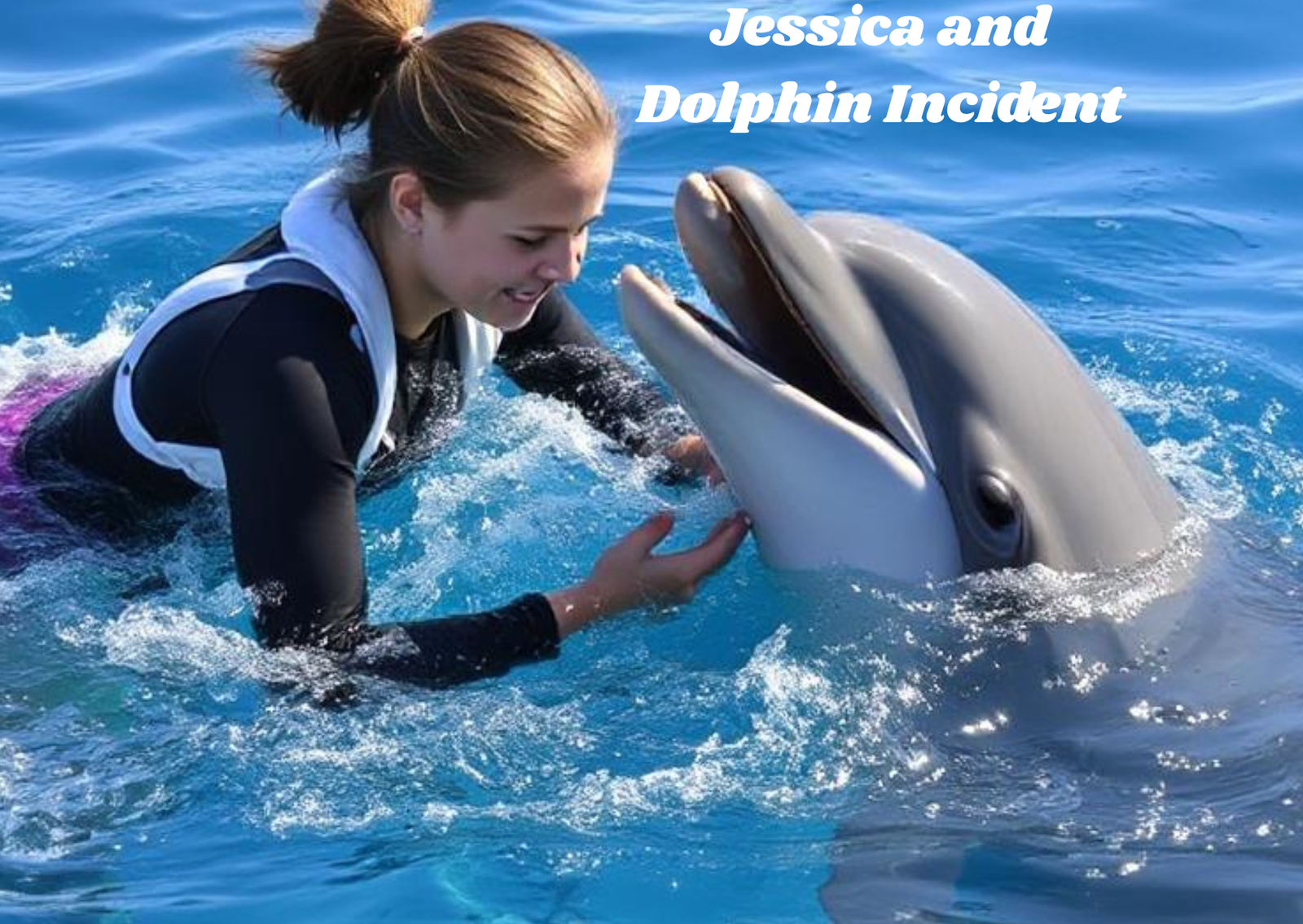
The Jessica and Dolphin incident, sometimes called the “Jessica Radcliffe orca attack,” exploded across TikTok, Facebook, and Instagram, sparking outrage and heartbreak. It appeared to show a 23-year-old marine trainer named Jessica Radcliffe being killed by an orca during a live performance. The short, dramatic clip spread fast, igniting conversations about the dangers of working with marine animals. But the reality? It never happened.
In this deep-dive, we’ll explore how the Jessica and Dolphin story went viral, why so many believed it, the truth uncovered by fact-checkers, real-life incidents that inspired the hoax, and how AI-generated media is reshaping online misinformation. We’ll also examine the ethical concerns around marine animal captivity, drawing lessons from real tragedies like those of Tilikum and Kiska.
Jessica and Dolphin Incident: How the Viral Hoax Began
The story began with a short, shocking video. It showed a young trainer in a wetsuit, riding an orca’s nose during a performance. The animal suddenly lunged, tossing her into the air before dragging her underwater. The captions named her Jessica Radcliffe, claimed she worked at “Pacific Blue Marine Park,” and suggested the attack was triggered by “menstrual blood mixing with the water.” No date, location, or official confirmation was provided.
Within hours, the clip had millions of views. Its dramatic narrative, realistic-looking visuals, and emotional hook made it perfect viral material. Yet, there were glaring gaps no eyewitnesses, no local news reports, and no statements from any marine park.
Real-Life Example: The 2010 death of SeaWorld trainer Dawn Brancheau at the hands of the orca Tilikum deeply impacted public memory. This tragedy, widely reported, made viewers more inclined to believe a similar incident could happen again especially when paired with convincing video footage.
Jessica and Dolphin Incident: Fact-Checking Reveals the Truth
Investigations by Hindustan Times, Economic Times, and fact-checking platforms like Vocal Media and The Star (Kenya) uncovered the hoax. They found:
- Jessica Radcliffe does not exist no professional records, social media profiles, or obituaries match her identity.
- Pacific Blue Marine Park is fictional it has no legal or online presence.
- The audio was AI-generated with unnatural pauses and flat tones.
- The visuals were stitched together from old marine park footage and altered with AI.
Real-Life Example: In 2025, an AI-generated shark attack video fooled thousands before being debunked. Like the Jessica and Dolphin hoax, it combined believable captions, authentic-sounding crowd noise, and AI-altered stock footage.
Jessica and Dolphin Incident: Why People Believed the Fake Story
The hoax worked because it hit the key psychological triggers of viral content:
- Shock value: sudden violence involving a beloved animal.
- Relatability: trainers and animals in live shows are familiar to the public.
- Visual realism: blending real footage with AI enhancements.
- Social proof: seeing friends share the clip made it seem authentic.
Real-Life Example: The 2009 death of Spanish trainer Alexis Martinez, killed by the orca Keto at Loro Parque, reinforced the idea that such tragedies can happen. Even though the Jessica and Dolphin clip was fake, audiences connected it to genuine memories of such events.
Jessica and Dolphin Incident: Orcas, Dolphins, and Misunderstood Behavior
Orcas belong to the dolphin family and are among the most intelligent marine mammals. In the wild, they rarely harm humans. In captivity, however, stress, confinement, and lack of stimulation can lead to aggression. Unfortunately, viral stories like the Jessica and Dolphin hoax reinforce the myth that these animals are inherently dangerous killers.
Real-Life Example: Kiska, known as “the loneliest whale in the world,” spent decades in solitary captivity at Marineland, Canada. Her abnormal behaviors banging her head against the tank, swimming in circles were symptoms of extreme stress, not innate aggression.
Jessica and Dolphin Incident: Real Events That Inspired the Hoax
The hoax appears to draw on real tragedies involving captive orcas:
- 1991 Tilikum killed trainer Keltie Byrne at Sealand of the Pacific.
- 1999 Daniel Dukes was found dead in Tilikum’s tank.
- 2009 Alexis Martinez was killed by Keto at Loro Parque.
- 2010 Dawn Brancheau was killed by Tilikum at SeaWorld Orlando.
These incidents, heavily covered in the media, made the hoax’s narrative seem plausible.
Jessica and Dolphin Incident: The Role of AI in Modern Hoaxes
Artificial Intelligence can now generate realistic videos, voices, and images. While this technology has creative and educational benefits, it also enables misinformation at scale.
The Jessica and Dolphin clip used AI voice tools to mimic crowd noise and screams, combined with altered stock footage to simulate an orca attack.
Tip: Always reverse-image search viral video frames and cross-check with reliable news sources before sharing sensational content.
Jessica and Dolphin Incident: Media Literacy is Essential
The speed at which the Jessica and Dolphin hoax spread shows why digital literacy is vital. Internet users must learn to:
- Question the source.
- Verify through multiple credible outlets.
- Recognize hallmarks of AI content.
Real-Life Example: In 2022, a deepfake video of a celebrity making offensive remarks spread widely before being exposed as AI-generated. The damage to reputation was immediate and severe.
Jessica and Dolphin Incident: Conservation and Public Perception
False stories harm not only public understanding but also animal conservation efforts. They divert attention from genuine issues like habitat loss and the ethics of marine mammal captivity.
Real-Life Example: The documentary Blackfish used real footage and verified accounts to expose the psychological and physical toll of captivity on orcas, leading to widespread changes in SeaWorld’s practices.
Jessica and Dolphin Incident: Lessons Learned
This hoax is a case study in how easily the internet can be manipulated. It’s also a reminder that captivating stories can be dangerous if they are unverified. As AI becomes more sophisticated, spotting falsehoods will require sharper skills and stronger public awareness.
Handling Viral Animal Related Content Responsibly
| Step | Action | Why It Matters | Real-Life Example |
|---|---|---|---|
| 1 | Verify video origin | Stops fake stories early | 2023 shark hoax video |
| 2 | Check news outlets | Confirms facts | SeaWorld press releases |
| 3 | Identify AI audio cues | Prevents spread of deepfakes | Jessica and Dolphin hoax |
| 4 | Educate on species behavior | Reduces harmful myths | Kiska’s stress behaviors |
| 5 | Share responsibly | Builds trust online | Blackfish documentary impact |
Publish by: Woman One Network | w1network
At Woman One Network, we bring clarity to the chaos of viral news. Our fact-checked stories separate truth from fiction, giving readers accurate insights into trending topics. From human interest stories to wildlife issues, we empower our audience with knowledge, not noise.