The act of traveling, of truly immersing oneself in a culture far removed from the familiar rhythms of home, is often less about the destinations we see and more about the indelible marks those places leave upon our souls, prompting a cascade of lasting lifestyle changes we carry back with us. It is in the quiet moments of observation watching a family in Italy savor a multi-hour dinner without a phone in sight, or seeing the collective calm of a Japanese morning commute that the first seeds of transformation are planted. We return home not just with photographs and souvenirs, but with a newly calibrated internal compass, questioning the very foundations of our daily routines and social contracts. The world, it turns out, is the most profound classroom, and its lessons are etched into our behavior long after the suitcase is stored away. This collection of forty-six personal evolutions, gathered from the experiences of countless travelers, serves as a testament to that powerful, quiet revolution that begins at a border crossing and ends in the heart of our own homes.
Many of the most immediate and noticeable lifestyle changes occur around the table, as our palates and our perspectives on food are fundamentally reshaped by culinary immersion. People who spent time in France often return with a deep-seated aversion to eating on the go, having internalized the French reverence for a proper meal enjoyed seated, with focus and conversation. The Danish concept of ‘hygge’ translates into a new appreciation for ambient lighting, candles, and creating a cozy, intentional atmosphere at home, making evenings feel like a special occasion rather than a rushed prelude to sleep. In Spain, the late-night dinner culture teaches visitors the value of a late afternoon siesta or a substantial ‘merienda’ snack to reconfigure their entire daily energy cycle, abandoning the early bird special for a more vibrant nocturnal social life. Travelers to Japan adopt the meticulous art of the bento box, finding joy in preparing small, varied, and visually appealing portions for their lunches, a practice that reduces waste and increases mindfulness about nutritional balance. The Turkish habit of ending a meal with a strong, small cup of coffee rather than a sugar-laden dessert becomes a ritual that feels both sophisticated and satisfying, altering one’s approach to the final course. In Mexico, the reliance on fresh, local markets for daily ingredients inspires a shift away from weekly supermarket mega-shops to smaller, more frequent trips that prioritize seasonal produce and human connection with vendors. The simple act of drinking coffee, transformed by the Italian ‘al banco’ espresso shot swallowed quickly while standing at a bar, can dismantle a lifetime of believing coffee is primarily a vehicle for milk and sugar carried in a giant insulated cup.
Beyond the kitchen, the architecture of our entire day can be rebuilt based on the cadences we observe in other societies, leading to profound daily routine shifts. Someone who has lived in Argentina, where dinner commonly starts at 10 p.m., finds their entire social and familial schedule pushed later, creating longer, more relaxed evenings that prioritize connection over early bedtimes. The German commitment to ‘Feierabend’ the sacred, work-free time after hours empowers employees to truly disconnect, a practice that travelers bring home to protect their own mental health from the encroachment of endless emails. In the Netherlands, the sight of everyone from CEOs to grandparents relying on bicycles for daily transit inspires a complete overhaul of personal mobility, replacing short car trips with a bike ride that doubles as built-in exercise and a moment of fresh air. The Swedish practice of ‘fika’ a mandatory coffee and pastry break with colleagues becomes a non-negotiable part of the workday, fostering team cohesion and providing a necessary mental pause that ultimately boosts productivity. Visitors to Thailand often incorporate the morning ritual of offering food to Buddhist monks, not necessarily as a religious act, but as a practice of mindfulness, gratitude, and starting the day with a gesture of generosity. The British ‘elevenses’ a mid-morning tea break introduces a gentle, comforting rhythm to the workday, a small moment of pause that prevents the morning slump and breaks the day into manageable chunks. The Mediterranean ‘passeggiata,’ an evening stroll through the town center, becomes a cherished ritual to see and be seen, to digest the day’s events literally and figuratively, replacing an hour of television with an hour of gentle movement and community observation.
Our relationship with our living spaces undergoes a dramatic transformation when we see how other cultures inhabit their homes, prompting significant household habit adjustments. A trip to Scandinavia can result in a strict ‘no shoes indoors’ policy, imported not just for cleanliness but for the palpable sense of calm and demarcation between the outside world and the inner sanctuary it creates. The Japanese minimalism and concept of ‘tokonoma’ the small, curated alcove for displaying a single piece of art nspires a massive decluttering effort, replacing knick-knacks with intentional emptiness and a focus on quality over quantity. After experiencing the open-air living of homes in Bali or Thailand, where walls are less barriers and more suggestions, people return to install larger windows, spend more time in their gardens, and create a seamless flow between their indoor and outdoor spaces. The Spanish use of shutters not just for decoration but for brilliant, practical temperature control becomes a model for managing a home’s climate passively, reducing reliance on air conditioning and reconnecting with the natural cycles of sun and shade. In many parts of Central Europe, the deeply ingrained habit of airing out the house completely for ten minutes every single day, even in winter, becomes a non-negotiable ritual for ensuring fresh, clean air and preventing stagnation. The common sight in Greece or Portugal of beautifully maintained potted plants on every balcony and windowsill sparks a new dedication to urban gardening, transforming a concrete view into a personal, blooming oasis that provides herbs, flowers, and a profound connection to nurturing life.
Perhaps the most profound shifts happen in the intangible realm of social interaction and community values, where we learn new forms of connection and patience. A traveler returning from Ireland, where a trip to the pub is about conversation and ‘craic’ rather than just intoxication, will often seek out quieter, conversation-friendly establishments at home, prioritizing the quality of interaction over the quantity of drinks. The incredible patience and non-confrontational communication styles observed in countries like Canada or Finland teach visitors the power of listening first, speaking softly, and valuing harmony over the need to be ‘right’ in every discussion. In Italy and Brazil, the physicality of greeting the hugs, the kisses, the warm hand on the shoulder feels so genuinely connecting that it breaks down the reserved, personal-space bubbles many of us inhabit, leading to warmer, more physically expressive greetings with friends and family. The collective responsibility seen in Switzerland, where public spaces are immaculate because everyone takes ownership, fosters a new personal commitment to picking up litter, not just one’s own, and contributing to the cleanliness of shared spaces. Witnessing the multi-generational living common in India or the Philippines, where grandparents, parents, and children all coexist and support one another, can reshape one’s perspective on elder care, leading to decisions to live closer to family or provide more hands-on support. The ‘mañana’ attitude prevalent in many Latin American and Mediterranean cultures, often misinterpreted as laziness, is understood upon immersion as a healthy prioritization of life over schedules, a wisdom that travelers bring back to combat their own chronic stress and hurry sickness.
On a deeply personal level, travel rewires our approach to wellness, leisure, and our very sense of self, fostering incredible personal growth and self-care transformations. The Korean dedication to elaborate, multi-step skincare routines, viewed as a form of self-respect and meditation, is adopted not as a vanity project but as a cherished daily ritual of nurturing oneself. In Austria or Switzerland, the culture of ‘wandern’ hiking not as an extreme sport but as a default weekend leisure activity for people of all ages becomes a cornerstone of physical and mental well-being, replacing gym sessions with time in nature. The Finnish love of sauna, followed by a plunge into a cold lake, is imported as a weekly practice for resilience, detoxification, and mental clarity, a powerful reset for both body and mind. Visitors to Iceland, immersed in the tradition of community swimming pools as social hubs, often abandon their solitary gym routines for the more social, low-impact, and rejuvenating practice of daily swimming. The Thai practice of daily offering of alms to monks, a quiet moment of reflection and giving, inspires the incorporation of a non-religious but deeply spiritual minute of gratitude each morning, setting a purposeful tone for the day. In Denmark, the focus on ‘arbejdsglæde’ the happiness found in work challenges people to reevaluate their careers, seeking roles that offer not just a paycheck but a genuine sense of purpose, community, and joy. The pervasive sense of ‘sisu,’ or stoic determination, felt in Finland encourages a new mental toughness and resilience in the face of personal or professional adversity, a quiet strength borrowed from an entire culture.
Ultimately, the most beautiful lifestyle changes are those that blend several of these lessons into a new, holistic philosophy of living. It is the person who, after time in Italy, shops at a farmer’s market daily, cooks simple but exquisite meals to share with friends over long, talk-filled evenings, and takes a nightly stroll through their neighborhood. It is the individual who, inspired by Japan, creates a minimalist, serene home, commutes by bicycle with a beautifully prepared bento box, and ends their day with a hot bath and a moment of quiet reflection. These are not isolated habits but interconnected threads in a new tapestry of life, woven from the best the world has to offer. We travel initially to see the world, but the deeper, more lasting journey is the one that allows the world to reshape us, to question our defaults, and to consciously choose a life that feels more authentic, connected, and joyful. The passport stamp fades, but these internalized global perspectives become a permanent part of our identity, a quiet revolution of routine and spirit that stands as the most valuable souvenir of all, a collection of meaningful lifestyle changes that truly make a house a home and a routine a life well-lived.
#1
 I visited Iceland and was intrigued by all the authors there were despite the country’s relatively small status. I learned that books are a cherished part of their culture and they celebrate Christmas book flood or Yule book flood (Jólabókaflóðið) every year. A book catalogue with all the new books are sent to families and apparently it accounts for something like 80% of the book sales for the year. We have been celebrating it every Christmas since! My family gifts books to each other on Christmas Eve and we read them that night with hot chocolate and cookies.
#2
 I spent a month in Prague three years ago and the only tv channel in English was BBC.. I get most of my news from BBC now.
rogue_ger replied:
Same every time I go to Germany I’m shocked at the quality of the news reporting compared to the US. Germany has strict laws for content of news reporting and it makes for actual facts being communicated and not just tailored content meant to push an agenda.
The US desperately needs to regulate news media in all forms, including social media.
#3
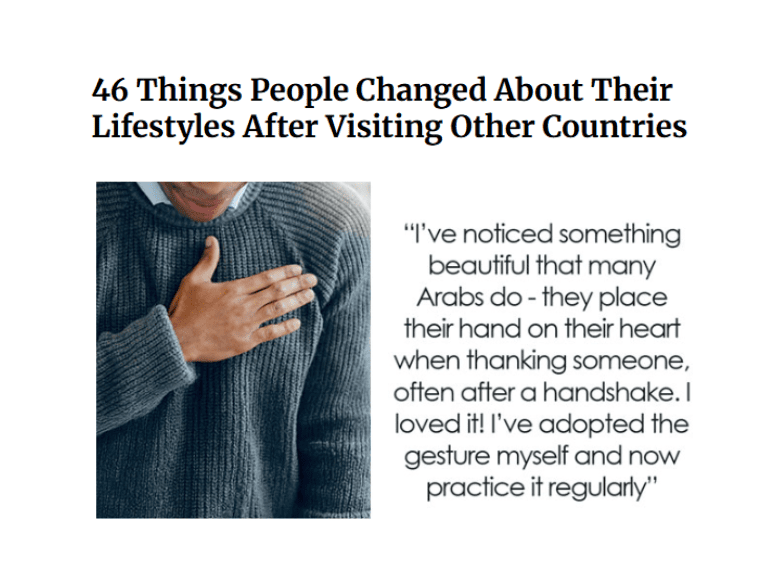
 I’ve been to Iraq, Egypt, and Jordan. I’ve noticed something beautiful that many Arabs do — they place their hand on their heart when thanking someone, often after a handshake. I loved it! I’ve adopted the gesture myself and now practice it regularly.
The people most impressed by it are usually the ones who understand its cultural meaning. But even beyond that, I love how sincere it feels — like the thanks are truly coming from the heart, which, in most cases, they are.
#4
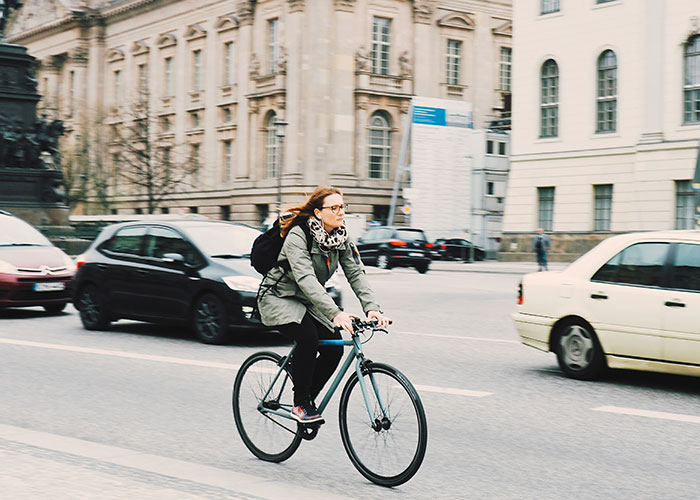 I’ve always been very pro-transit/anti car ideologically speaking, but spending a week in the Netherlands really pushed me into finally getting a bike. I live in Canada which is as car-centric as the US, and coming home to constant gridlocked traffic (because a million of us are all trying to go in the same direction at the same time and we’re apparently allergic to building trains!!) was so depressing. I was like, what are we doing here, man? So I got myself a cute bike!
I’m not the most active person so it took some adjusting, but now I bike to work every day (except in the winter, I’m too much of a baby for that lol). It’s very satisfying zooming past all the backed up traffic when I leave work at 4pm!
So yeah, shoutout to the Dutch and their cute bikes with cute baskets full of flowers for giving me a little push because now I love my bike.
#5
 Individual comforters/duvets for my spouse & I… this is like a 30+ year habit now. Saved my sanity & probably his life.
Disraeli_Ears replied:
After my husband and I went to Denmark together, we immediately changed to two comforters at home. No more yanking the blankets off each other in the middle of the night. It’s almost better than couples’ therapy – LOL.
#6
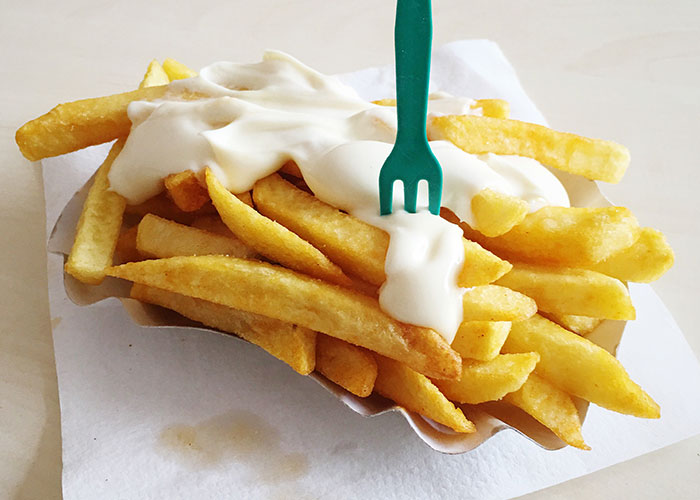 Mayo on French fries.
#7
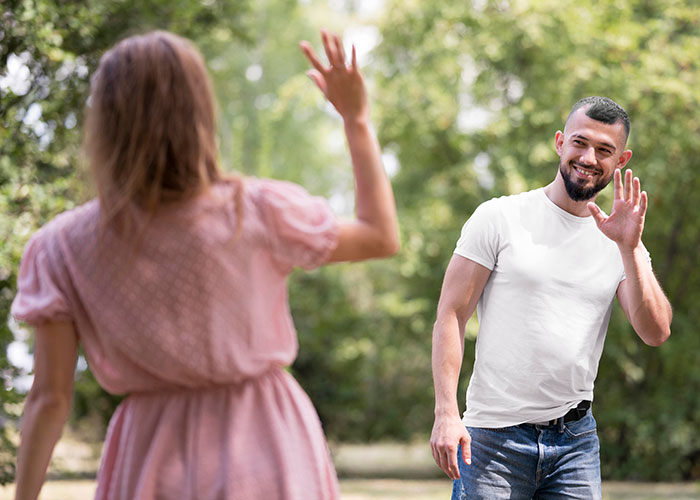 I became friendlier. I’ve found while traveling, especially where I’m visibly a tourist many people greet you. It’s generally a simple hello or good afternoon sometimes just eye contact and a smile. I loved it and always makes me feel welcome.
I realized people don’t do that as frequently at home and I’ve set out to change that.
I live in an extremely multicultural area and I want people to know they’re welcome here. I now always say hello, smile and make eye contact with every single person I encounter while walking or out in public. It is generally, like 95% of the received with a smile and greeting or at least a head nod!
#8
 One of my earlier trips, a friend got food poisoning in Thailand. He couldn’t go out obviously. What to do? In America, I had gone to a few afternoon movies alone, but I don’t think I’d ever gone out alone at night.
Anyway, that night was the first time I went out alone to have drinks and socialize. I’ve always met up with friends or gone out with friends before. I had the best time alone. I realized when I was with my friend, we were kind of discussing America stuff, and it was mostly about being a cool friend and accommodating him. That night, I met people from Australia, then talked to some bartenders all night. Then sang with a Filipino band at a hotel. It was probably the most memorable night of the trip.
When I got back home, I kept going out alone. I realized it was liberating. If there was nothing to do, I would just go out solo.
maulsma replied:
I went backpacking around Europe by myself for three months when I was 30 in the mid-nineties. Fantastic experience. As a woman I was very fortunate to have only a few bad interactions with aggressive men, and spent a lot of time hanging out with people from all over. I’d travel a few days with these Australians, a few days with these Swedes, go dancing with some Americans, shopping with a French woman, rent motorbikes in Greece with a big group of various nationalities, talk to locals on the buses and trains. Totally different experience travelling with my SO and friends.
#9
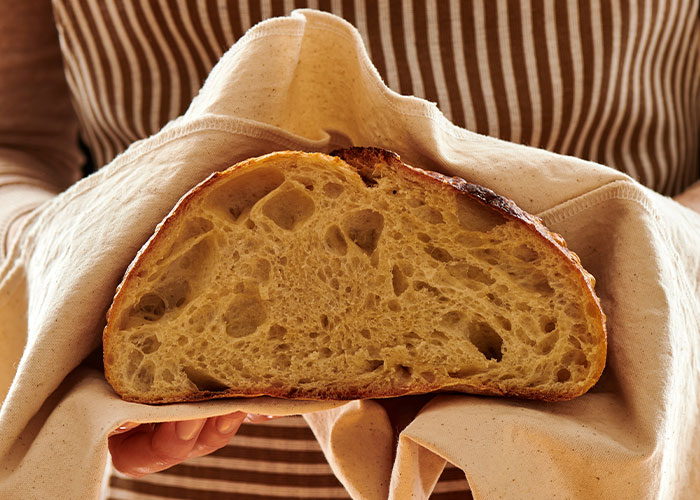 I make a lot more food from scratch. My stomach is so much happier in Europe and my theory is it’s the lack of overly processed foods. So I took up baking breads, occasionally make my own pasta, and trying to buy flour that hasn’t been exposed to certain pesticides that are outlawed in Europe.
I don’t care if it’s just the placebo effect, I love having a happy tummy.
#10
 Took up an active lifestyle and reduced ordering food & groceries from outside. Deliberately walked through the city. Used public transport more than Ubers. These are some small things but it helps me lead a better life.
#11
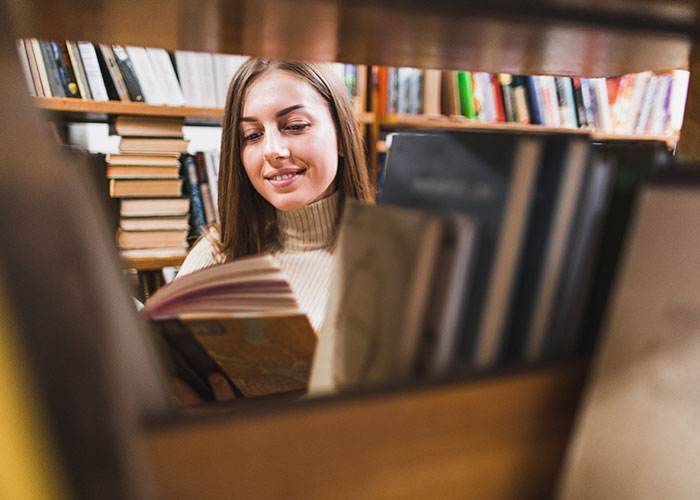 After living in London for four years I developed a penchant for buying books secondhand. So much cheaper, and I love the idea of someone else having held and enjoyed the book before me.
FlushTwiceBeNice replied:
And the smell. Only if someone can bottle old book smell and sell it as a perfume.
#12
 After a month in Copenhagen, I started doing the whole hygge thing. I bought a ton of candles, got a cozy throw blanket, and now I just make my apartment a super comfy little sanctuary.
Muffin278 replied:
I am Danish, and I always felt like hygge is in part our way of dealing with the dark Danish winters where we get maybe 6 hours of sunlight but obscured by the sun. Warm lighting, cozy blankets, and candles are a way to embrace the terrible winters. It is one of the reasons Christmas feels so special to me despite being a non-religious adult.
#13
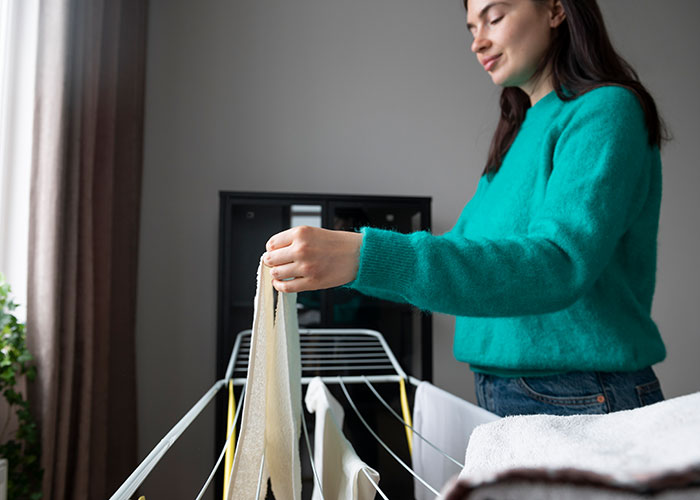 Hang drying most of my laundry!
#14
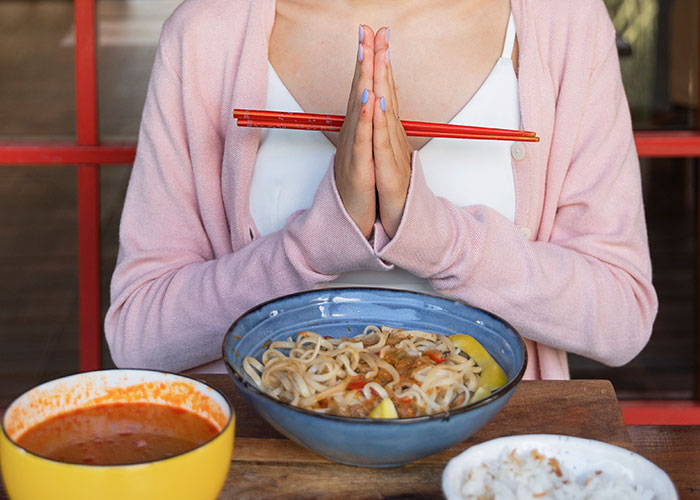 I stayed at a Sikh temple (gurdwara) in India for a few days and it really taught me to value the food on my table, as cliche as that may sound. Sikh temples usually give out food for free, and there were a bunch of interesting customs that I wasn’t used to before. Like when you’re receiving the food from the volunteers, you need to accept the bread with two hands instead of one, because doing it with one is seen as greedy whereas with two it’s seen as thankful. So in general I just try to be thankful for my food whenever I’m about to eat.
nineties_adventure replied:
That is beautiful. In Türkiye, when you for instance have to throw away food you “kiss it” before throwing it out (not really kissing but more moving it from your chin to your forehead) to respect what God has given one. The same goes for when dropping bread. After you pick it up you “kiss” it (again not actually). Bread is sacred. I think this shows a lot of respect. I still do this in The Netherlands.
#15
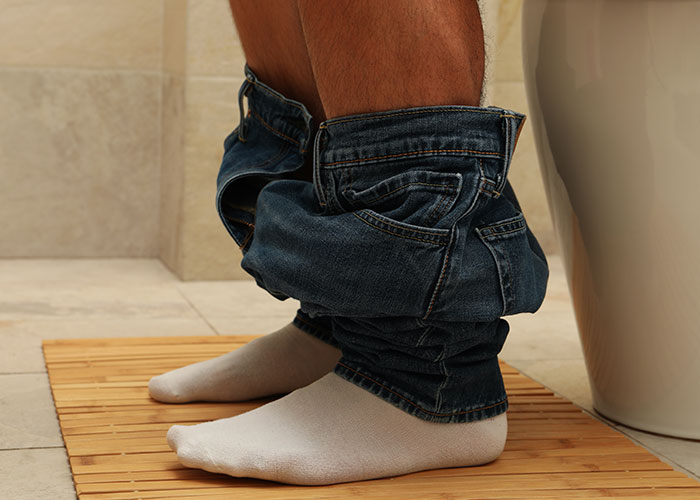 Sit and pee even if you are a male , never use your phone while having a conversation at your restaurant, don’t block anyone’s way, smile at strangers
I am from India and learnt this from my trip to Europe.
#16
 I embraced the moka pot as my coffee method after visiting Italy 🇮🇹 ☕️.
#17
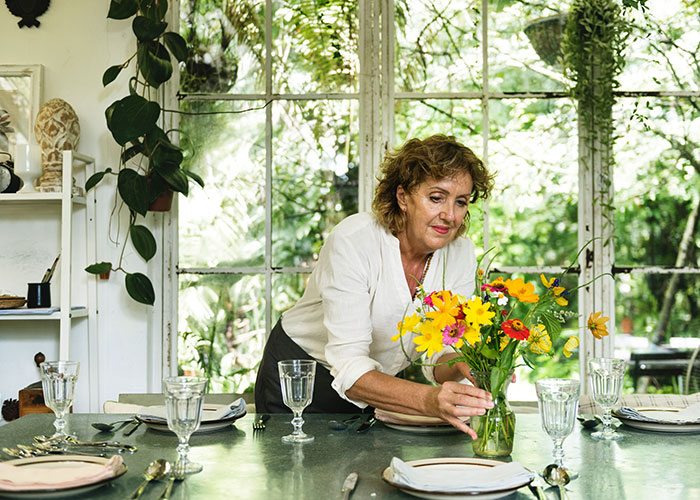 The French way of making meals a bit fancy. We set a table every night for dinner, placemats, cloth napkins, a vase with fresh flowers. My 15 year old and 11 year old have become major foodies and we all look forward to this ritual. Everyone helps either cook, set, or clean up. Going on 5 years or more like this.
missmeganbee replied:
After returning from Italy I started using a table cloth, lighting candles and a little table lamp, and playing background music during a meal. It makes it feel special!
#18
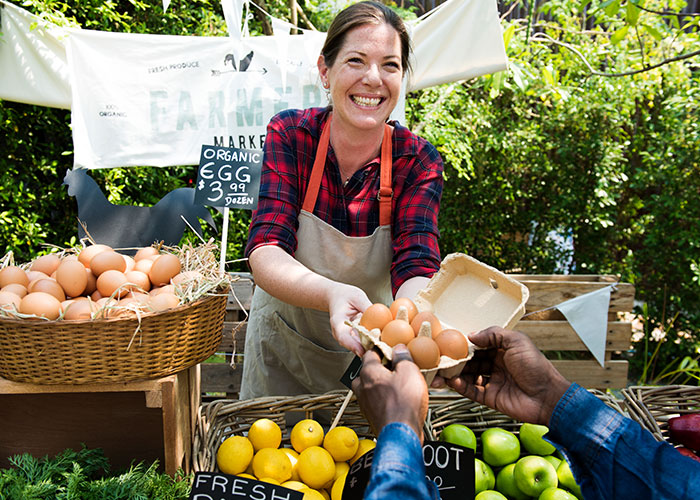 Doing small shops more frequently. At farmers markets when possible.
#19
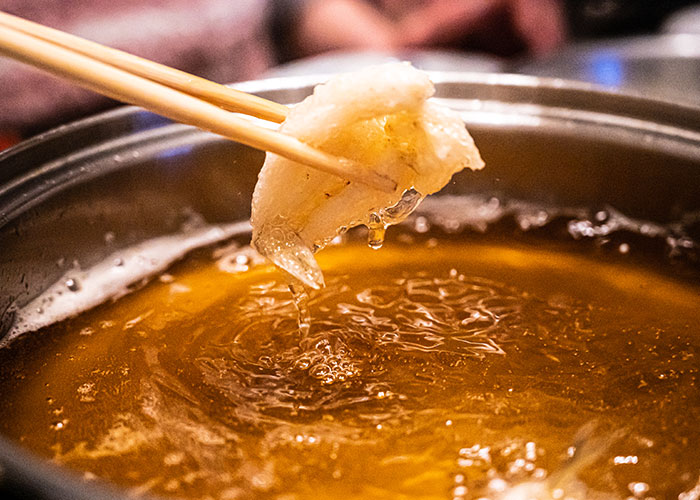 Cooking with chopsticks.
hohomei replied:
awww yes im glad chopsticks are getting the recognition it deserves when it comes to not just eating but other uses! im from hong kong and grew up always cooking with chopsticks. you can stir, you can pick out individual ingredients, you can flip over things in the frying pan.. its amazing!
not sure if you know about this already but we have some extra long chopsticks that we use for cooking only! very helpful for staying farther away from the potential oil sizzling out!
#20
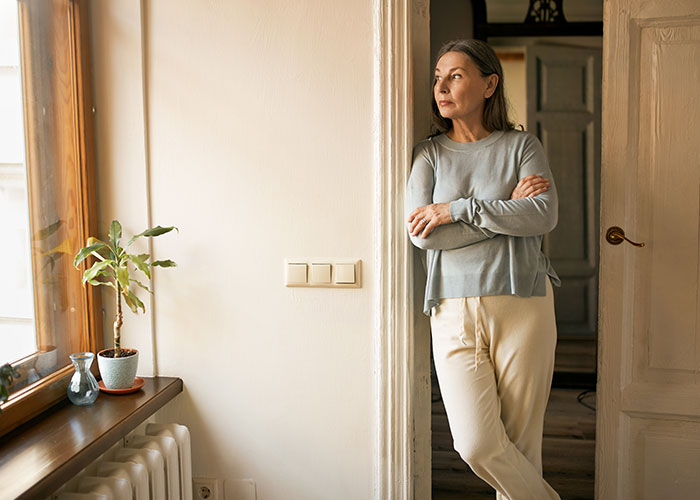 Minimalism… I really don’t need a lot.
#21
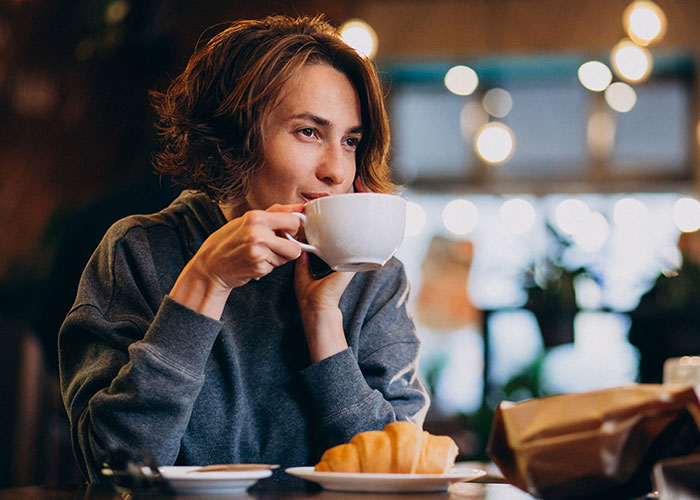 We went to Eastern Europe and noticed a lot of cafes didn’t have to-go cups. People don’t go for coffee or tea unless they have the time to sit there and enjoy it, not sip it as they run to catch a bus or something. I like that concept so much better, so when I go for a chai latte or something, it’s when I have the time to stay and savor it.
#22
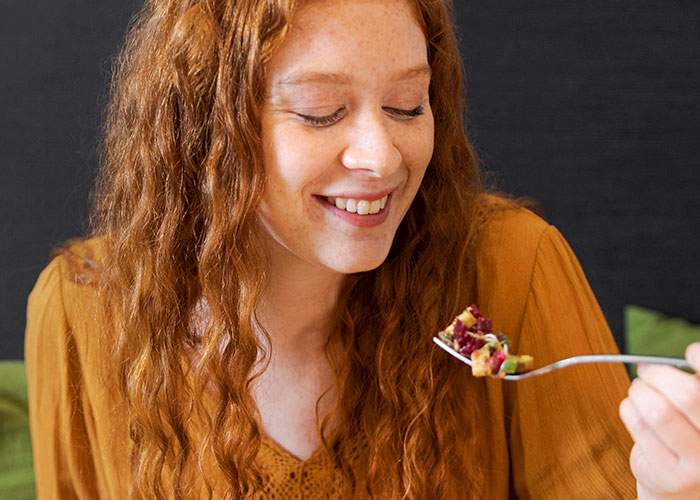 After living in Germany for awhile I switch my “big” meal of the day to lunch and a smaller one at dinner.
#23
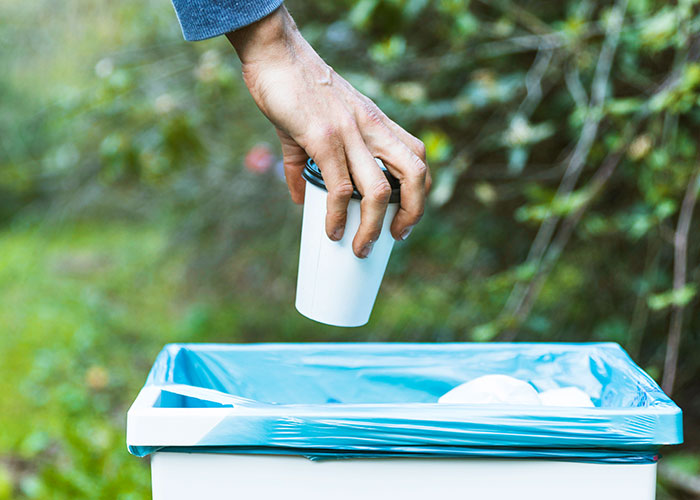 Japan – carrying trash home with me if I don’t find a trash can.
#24
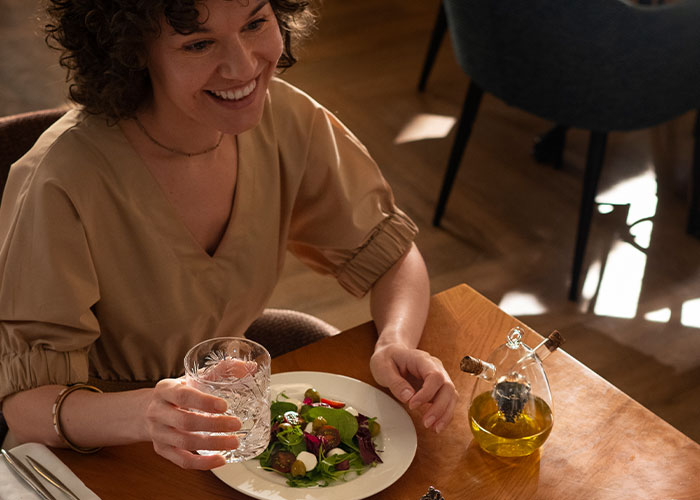 I’m from Spain and started eating dinner earlier once I started traveling. I no longer have dinner at 10PM like my friends and family do back home.
#25
 Wearing backpack on the front of my body when getting on a crowded train or bus. People wear their huge backpacks on their back on public transport and it drives me crazy. I wish my city would do a campaign about it like Japan did.
#26
 I read in France you need to make eye contact before doing business, and greet the person. That seemed quite fair so I did and then continued back in the US. No need for a full convo but acknowledge the person. Have gotten to know various people who work places I go and it’s a lot nicer. Some of them light up when they see me. I get we’re busy but there’s always time for good morning!
#27
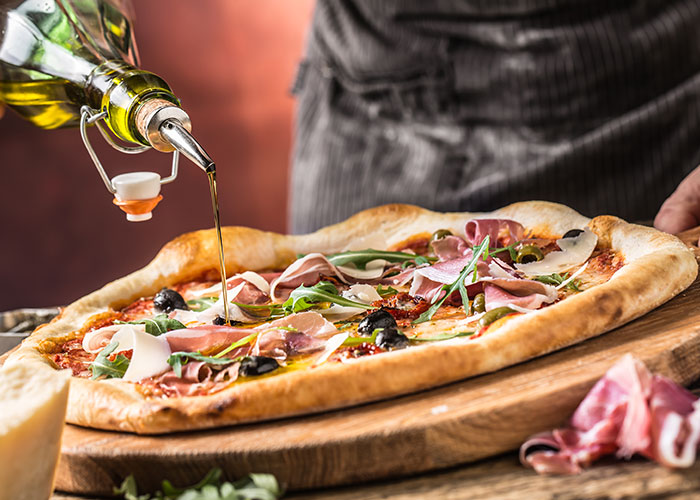 Olive oil on pizza.. (they do this in Italy)
It just makes EVERY PIZZA taste that much better and more satisfying!
#28
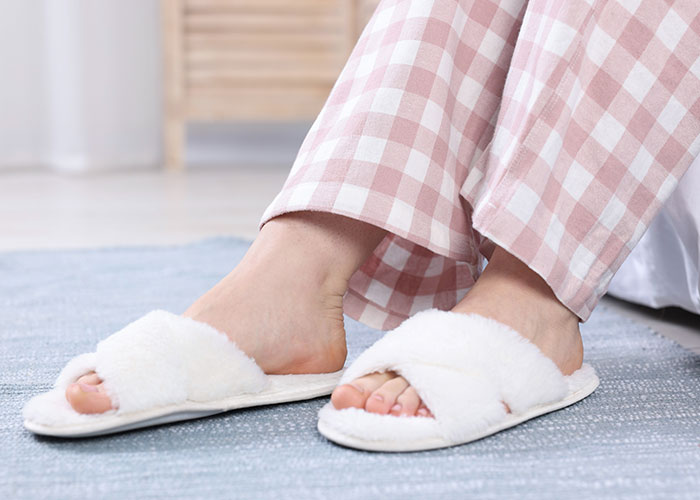 I grew up in one of those weird, American families that allowed shoes inside and after staying a few months in Japan I now wear slippers in my apartment and have slippers for guests too!
rirez replied:
I’ve straight up built a Genkan into my house. I love the naturally understandable barrier with all the shoes and sandals neatly lined up — I don’t need a sign that says “take your shoes off here”, it’s just blindingly obvious, and eliminates any potential cultural awkwardness of “so do I keep my shoes on or…”
Architecturally it’s literally just a single step up, but it makes a huge difference in how the house-entering experience feels. Somehow that single change in elevation makes a big psychological difference.
#29
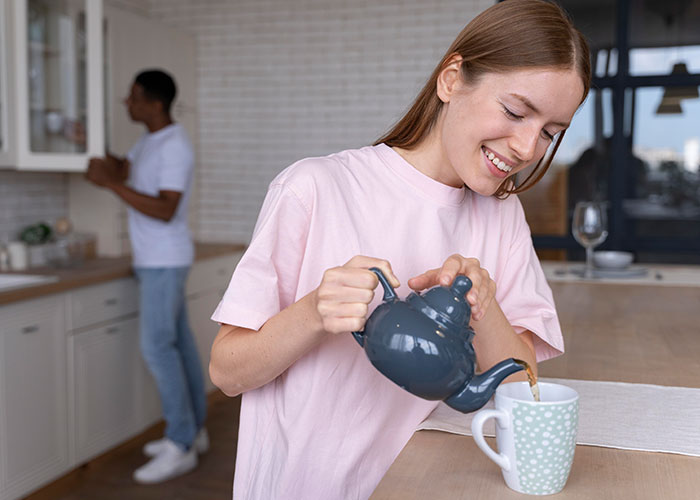 Not as life changing as most other replies but… tea! I now drink tea. Never did before, but black tea and rooibos tea are my favourites now.
DrMoneybeard replied:
I picked up a lot of habits after 5 years living in the UK but a strong opinion about tea is the biggest! I was already a tea drinker before but mostly Asian style teas. Now I NEED a proper brew every morning and other types on the weekends and afternoons.
Content Source and pict by: BoredPanda / W1Network