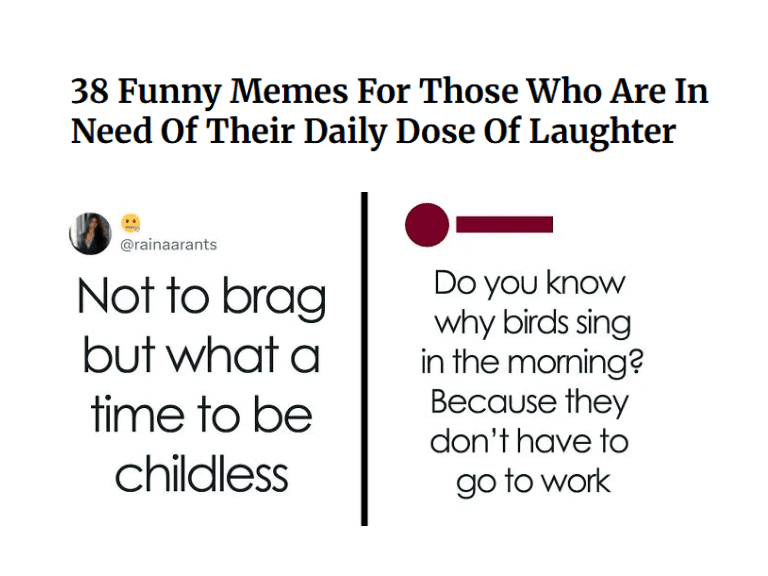
It’s a universal truth, acknowledged by just about everyone with an internet connection and a pulse, that some days just feel like they were engineered by a mischievous gremlin with a personal vendetta. Your alarm clock doesn’t just fail to go off; it actively mocks you by ringing an hour after you were supposed to be at work. Your coffee, the one single beacon of hope in a foggy morning, decides to leap from your cup and directly onto your last clean shirt. The commute is a masterclass in frustration, and your inbox looks less like a list of messages and more like a digital hydra, where for every email you answer, two new ones appear in its place. On days like these, when the weight of the mundane and the absurd presses down, there is a modern-day panacea, a digital balm for the weary soul: funny memes. These little capsules of cultural commentary and shared experience have an almost magical ability to puncture the tension of a terrible day, offering a moment of pure, unadulterated laughter that feels less like a distraction and more like a necessary reset for your entire nervous system. The beauty of a truly great meme lies in its relatability; it takes a common, often unspoken frustration or observation and holds a funhouse mirror up to it, making our own struggles feel less isolating and, frankly, hilarious.
The journey of the meme, from its academic origins to the cultural cornerstone it is today, is a fascinating story of how technology shapes humor. The term itself was coined by the renowned evolutionary biologist Richard Dawkins in his 1976 book “The Selfish Gene,” where he used it to describe a unit of cultural transmission, an idea, behavior, or style that spreads from person to person within a culture. He was thinking of things like catchy tunes, fashion trends, or phrases, but he couldn’t have possibly predicted the digital wildfire his concept would become. With the dawn of the internet, these cultural units found the perfect ecosystem to replicate, mutate, and evolve at lightspeed. Early internet forums and primitive social media platforms became the primordial soup where the first recognizable funny memes began to bubble up, often in the form of simple image macros with Impact font text, like the classic “I Can Has Cheezburger?” cat or the ever-philosophical Success Kid. These were the pioneers, proving that a single image paired with a perfectly timed caption could communicate a complex feeling more effectively than a thousand-word essay.
What makes the world of funny memes so endlessly captivating is its sheer diversity and its uncanny ability to cater to every possible niche and mood. There is a meme for every facet of the human condition. Consider the “Woman Yelling at a Cat” meme, a screenshot from a reality TV show that has become the ultimate visual shorthand for any situation involving misunderstanding, conflict, or a simple breakdown in communication. The calm, unimpressed cat sitting at the dinner table is a mood all its own, representing stoic confusion in the face of irrational anger. Then you have the surreal and wonderfully absurd realm of what some call “abstract” or “surreal memes,” which often feature bizarre, nonsensical imagery and text that seems to follow a logic known only to the initiated. These funny memes aren’t necessarily about relatability in the traditional sense; they are about a shared sense of the absurd, a collective embrace of the weird that provides a different kind of catharsis, one that comes from letting go of the need for linear meaning altogether and just enjoying the strange ride.
Another incredibly potent category is the “relatable” or “everyday life” meme, which often features characters like the animated “Arthur” with his clenched fist or a still from “The Office” of Jim Halpert staring directly into the camera. These are the funny memes that make you nod your head and say, “It’s me.” They capture the tiny, universal agonies and ecstasies of modern life: the profound struggle of trying to get out of a warm bed on a cold morning, the social anxiety of deciding whether to wave back at someone who might have been waving at the person behind you, the quiet triumph of remembering your password on the first try, or the existential dread of hearing your boss say, “Got a minute?” These memes validate our experiences. They tell us that we are not alone in our quirks and our minor sufferings, and by laughing at them, we are, in a way, laughing at ourselves and the shared ridiculousness of being human.
The format of these funny memes is just as important as their content. The template itself becomes a language. When you see a picture of a distraught-looking man sitting on a curb next to a beautiful woman who is comforting him, known as the “Distracted Boyfriend” meme, you immediately understand the framework of the joke before you even read the text. It’s a template about temptation, divided attention, or realizing you’ve made a poor choice. Similarly, the “Two Buttons” meme, which shows a panicked character trying to choose between two large buttons, perfectly encapsulates the agony of decision-making, from trivial choices like what to eat for lunch to more significant life dilemmas. The power of these templates is that they provide instant context, allowing for a rapid-fire delivery of humor that our brains are now expertly trained to process. We see the format, and our mind is already primed for a specific kind of joke, making the punchline that much more effective and immediate.
Beyond just personal amusement, funny memes serve a profound social function. They are the currency of digital socialization, a way to connect with friends, family, and even strangers across the globe. Sending a meme to a friend that perfectly describes your mutual work situation is a form of modern-day empathy. It says, “I am thinking of you, and I understand what you’re going through.” It’s a shared inside joke on a global scale. In group chats, a well-timed meme can defuse an argument, lighten the mood, or simply keep the conversation flowing. They act as social glue, reinforcing bonds through shared humor and understanding. During times of collective stress or global events, funny memes often emerge as a powerful coping mechanism. They allow people to process complex, frightening, or frustrating situations by finding a sliver of humor in the darkness, creating a sense of community and resilience among those who are sharing and laughing together. It’s a way of saying, “This is terrible, but at least we can laugh about how terrible it is.”
The creation and evolution of funny memes also highlight a fascinating aspect of collective intelligence and creativity. A single image or video clip is launched into the digital ether, and within hours, it is remixed, re-contextualized, and repurposed by thousands of users. A meme that starts as a commentary on a video game might be adapted to critique political policy, and then further twisted into a joke about the struggles of adulting. This collaborative, iterative process is a form of modern folk art, where the “artist” is not one person but the collective hive mind of the internet. The lifecycle of a meme, from its obscure birth to peak virality and eventual descent into overuse or obscurity, is a rapid, brutal, and fascinating reflection of our accelerated culture. Tracking the rise and fall of a particular meme format is like watching a cultural wave form, crest, and crash onto the shore, only to be replaced by the next one.
For those who feel creatively inclined, making your own funny memes can be an incredibly rewarding endeavor. It’s a low-stakes, high-reward creative outlet. All you need is an idea, a relatable feeling, and a free meme generator app or website. The process is simple: choose a template that fits your concept, add your text, and share it with the world. The thrill of creating a meme that resonates with people, that gets shared and liked and commented on with cries of “This is so me!” is a unique form of digital satisfaction. It’s a way of adding your own voice to the vast, churning conversation of internet culture, of leaving your own small, humorous mark on the digital landscape. You don’t need to be a professional artist or comedian; you just need a keen eye for the absurdities of life and a desire to connect with others through laughter.
In a world that can often feel overwhelmingly serious, fractured, and fast-paced, the humble meme stands as a testament to our enduring need for joy and connection. It is a democratizing force in humor, allowing anyone with a smartphone to participate in a global comedy club. The best funny memes do more than just make us chuckle for a second before we continue scrolling; they capture a piece of our collective consciousness. They remind us that for all our differences, we share common struggles, common frustrations, and a common desire to find lightness in the dark. They are a daily dose of laughter, a quick hit of serotonin that can, even for just a moment, make everything feel okay. So the next time you find yourself sinking into the sofa after a long, difficult day, feeling the weight of the world on your shoulders, don’t underestimate the healing power of opening your favorite social media app and diving headfirst into the wonderful, wacky, and wisdom-filled world of funny memes. It is there, in that endless stream of relatable images and perfectly crafted jokes, that you will find a community of laughter, a moment of clarity, and the simple, profound reminder that it is always okay, and often necessary, to just laugh.