The other night, I stumbled upon a heart-wrenching post in an online forum, a modern-day confessional where a woman poured out her frustration and profound sadness about her husband’s remote work habits. Her story was a stark illustration of a work-life balance that had not just tilted, but had completely shattered, with the fragments scattering across their family life. She explained that since her husband began working from home, his physical presence in the house had not translated into emotional or mental availability. He would retreat into his office first thing in the morning and emerge late in the evening, long after the children had finished their homework and the dinner she had carefully prepared had gone cold on the table. This wasn’t just about a missed meal; it was about a missed connection, a daily ritual of togetherness that had been unceremoniously erased from the family’s calendar, and her plea was a desperate one, searching for answers on how to reclaim the man and the father from the relentless grip of his job that had, quite literally, moved in with them.
This scenario, while deeply personal, is becoming a silent epidemic in households across the country, a troubling side effect of the remote work revolution that promised greater flexibility and more family time. The very technology that was supposed to liberate us from long commutes and rigid office hours has instead created a permeable boundary between professional and personal life, one that is all too easy for work to seep through and dominate. The concept of work-life balance is not merely a trendy corporate buzzword; it is the fundamental architecture of a healthy, fulfilling existence, the delicate equilibrium that allows us to thrive in our careers without sacrificing the relationships that give our lives meaning and joy. When this balance is lost, the fallout is felt by everyone under the same roof, leading to resentment, loneliness, and a fraying of the familial bonds that are so crucial for a supportive home environment.
What often begins as a necessity, a push to meet a deadline or impress a new client, can slowly morph into a hardened habit, a new normal where the home office becomes a cave and the digital ping of a new email holds more urgency than the sound of a child’s laughter in the next room. The individual working may not even perceive the gradual shift, believing that by being physically present in the building, they are fulfilling their familial role. They might argue that they are providing for their family, which is, of course, a core and noble responsibility. However, this perspective misses a critical truth provision is not solely financial. Emotional provision, the gift of time, attention, and active participation in the shared life of the family, is a currency just as valuable, and its absence creates a deficit that money cannot replenish. The professional commitment that fuels a career can, without conscious guardrails, consume the space meant for personal connection.
From the perspective of the person feeling neglected, the spouse or the parent left outside the closed door, the experience is one of a peculiar form of isolation. You are alone, even when the person you love is just a few feet away, separated by a wall and a screen. The nightly dinner table, once a sanctuary for sharing the day’s small triumphs and tribulations, becomes a stark reminder of this divide. Each empty chair speaks volumes, and the act of eating without that key family member can feel like a silent admission of defeat. This is where the foundation of a marriage can begin to crack, not from a single, dramatic event, but from the slow, corrosive drip of perceived irrelevance. The emotional disconnect fostered by this imbalance tells a painful story to the partner left waiting, a story that they are less important than a spreadsheet, that their company is less stimulating than a conference call.
The impact on children, however, is perhaps the most profound and lasting consequence of this dynamic. Children learn about relationships, priorities, and their own value by observing the adults in their lives. When a parent consistently chooses work over family time, the message internalized by the child is not that “Dad is busy,” but that “I am not a priority.” This can shape their understanding of the world and their future relationships in ways we are only beginning to comprehend. They miss out on the casual conversations, the silly jokes, the gentle guidance, and the simple, reassuring rhythm of a shared meal that reinforces their place in a secure and loving unit. The family harmony that should be the bedrock of their childhood is replaced with a subtle tension, a background hum of absence that can affect their emotional well-being and their own ability to form healthy attachments later in life.
Reclaiming a healthy work-life balance is not about working less, but about working with greater intention and establishing non-negotiable boundaries that protect what matters most. It starts with a conscious, empathetic conversation, not in the heat of frustration, but in a calm moment where both partners can express their feelings without accusation. The working partner might be completely unaware of the depth of their family’s feeling of loss, and a heartfelt expression can be a powerful catalyst for change. This dialogue should focus on “us” and “we,” framing the problem as a shared challenge to be solved together, rather than a fault to be assigned. The goal is to collaboratively design a sustainable routine that honors both professional obligations and the sacred space of family life, creating a structure that allows both to flourish.
Practical steps are essential to transform intention into reality. This could mean physically closing the laptop at a designated time each evening, a symbolic act that tells your brain and your family that the workday is officially over. It could involve creating a dedicated “shutdown ritual,” like a short walk around the block after work, to mentally transition from the role of employee to the role of partner and parent. For the family described in that initial post, the most powerful change might be as simple as declaring the dinner hour an inviolable appointment, a daily shared experience that is prioritized over everything short of a genuine emergency. This single act rebuilds the ritual of connection, providing a consistent touchpoint for everyone to reconnect, communicate, and reinforce their bonds.
Ultimately, the story of the wife who feels her family has been ruined is a cautionary tale about the perils of allowing our professional identities to consume our personal ones. It highlights a critical need for mindfulness in how we structure our days and where we direct our most precious resource our attention. A successful work-life balance is not a mythical state of perfect equilibrium that we achieve once and for all; it is a continuous, daily practice of choosing presence over productivity, connection over completion. It is about remembering that we work to live and provide for our families, not the other way around. The true measure of a life well-lived will never be found in an inbox, but in the faces of the people we come home to, and in the shared, simple joy of a meal together, where the only item on the agenda is being a family, fully and completely.
The idealized family dinner around a table is often a far cry from the chaotic reality of modern life

Image credits: freepik / Freepik (not the actual photo)
A mother of two is desperate to start a family meal tradition but faces a mountain of hurdles



Image credits: syda_productions / Freepik (not the actual photo)
Her husband works from home and has turned their dining room table into his office which is off-limits to everyone

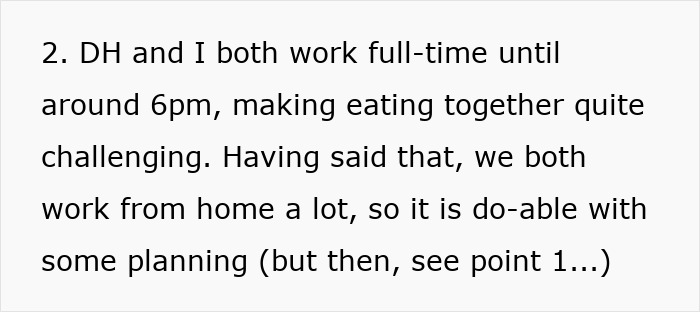
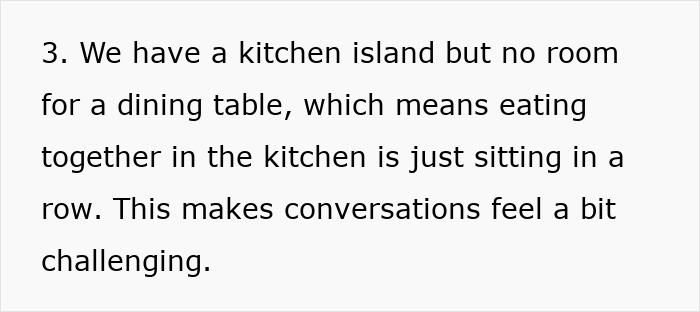
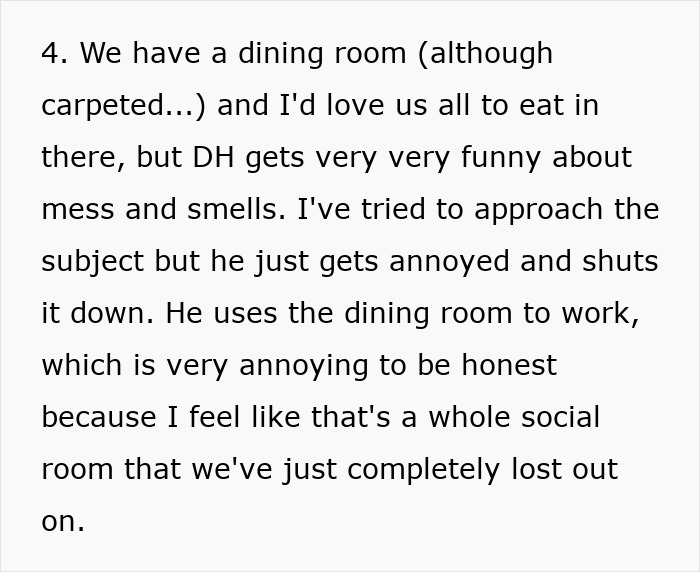

Image credits: freepik / Freepik (not the actual photo)ADVERTISEMENT
Her attempts at a “family meal” in the kitchen island ends with her son on a tablet and her husband on his phone
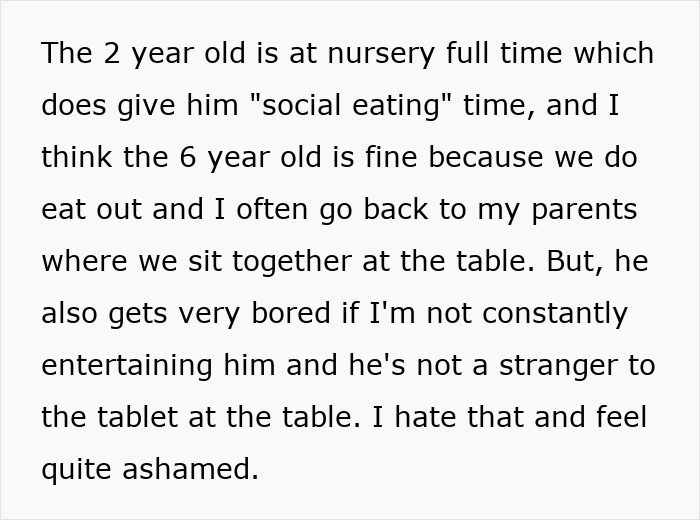
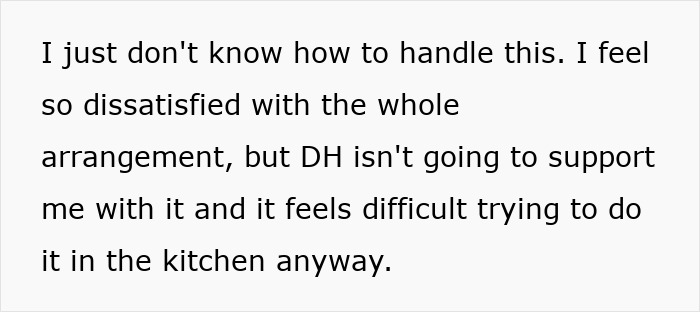
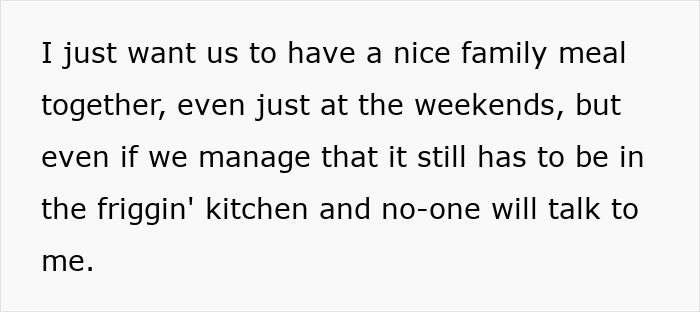
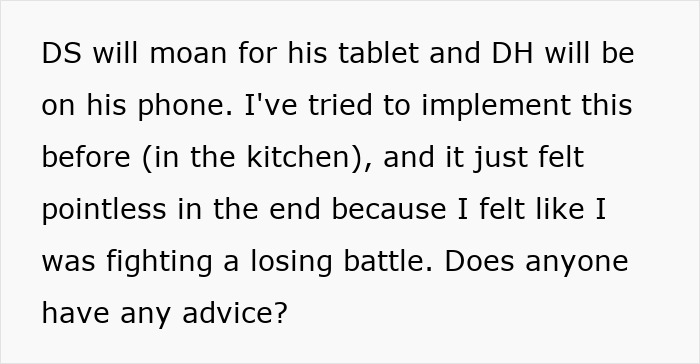

Image credits: Drazen Zigic / Freepik (not the actual photo)
To top it off, the husband is an incredibly fussy eater and he kicks up a fuss about the smell of her cooking seeping into the rest of the house

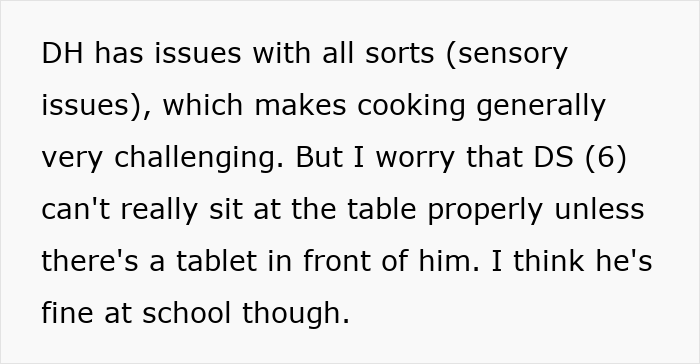



Image credits: noohsaob974 / Freepik (not the actual photo)
The wife is starting to think there is an element of neurodivergence at play, making the husband unable to cope with any sort of change



Image credits: pch.vector / Freepik (not the actual photo)ADVERTISEMENT
The husband argues that things are just fine the way they are and also feels kids don’t need to expand their pallets at their age

Image credits: freepik / Freepik (not the actual photo)
The wife posted an update, detailing the conversation she had with her husband that didn’t go exactly as planned


Image credits: Getty Images / Unsplash (not the actual photo)
She is still willing to compromise on adding an extension to the kitchen island and even try to batch cook when he isn’t home



Image credits: freepik / Freepik (not the actual photo)
The husband is adamant that nothing much should be done and that she is kicking up a fuss about nothing

Image credits: RockininthefreeworldADVERTISEMENT
She feels she’s fighting a losing battle against a husband who refuses to support her simple wish
A mother of two is living with a deep sense of dissatisfaction: her family never, ever eats together. Her kids, aged 6 and 2, eat separately, and she’s feeling immense guilt about the lack of a traditional family mealtime. But she’s not just dealing with a simple scheduling issue; she’s up against a fortress of excuses and a completely unsupportive partner.
The first hurdle is her husband, an incredibly fussy eater. The second problem is that they have no dining table, and their kitchen island forces them to eat in a row like people waiting for a bus. The third, and most infuriating, obstacle is that they do have a dining room, but her husband has claimed it as his personal office and refuses to let it be used for its intended purpose.
She’s tried to force the issue, attempting to have family meals in the kitchen, but the experience is a soul-crushing failure. Her six-year-old immediately moans for his tablet, a habit she’s “ashamed” of but has come to rely on, and her husband just scrolls on his phone. She’s left feeling like she’s fighting a “losing battle,” a solo warrior for family connection in a sea of digital distraction and picky eating.
Now, she’s at her wit’s end, feeling completely defeated by a husband who “shuts it down” every time she tries to bring it up. She desperately wants the simple pleasure of a nice family meal, even just on the weekends, but she’s trapped by a house layout, a difficult husband, and a culture of disconnection that she feels powerless to change.

Image credits: Getty Images / Unsplash (not the actual photo)
The mother’s desire for family meals isn’t just a nostalgic dream; it’s a widely shared value with proven benefits. A recent study by ButcherBox found that 70% of Americans believe family dinners are important, with younger generations valuing them even more. A post-pandemic world sees a major upward trend for people enjoying their meals around a table.
Furthermore, experts at Wren Kitchens note that eating at a table “promotes mindfulness” and can even help with fussy eating. Ironically, the very thing her husband uses as an excuse is something that a structured family mealtime could potentially improve. The husband’s refusal to use the dining room is a major obstacle, as it prevents the family from reaping these benefits.
The Wren Kitchens report also emphasizes that a dinner table serves as a “focal point for communication,” which is exactly what the mother is craving. By commandeering this social space for his work and shutting down any discussion about it, he is actively preventing his family from connecting and creating the very “pointless” and disconnected atmosphere his wife is so unhappy with.ADVERTISEMENT
Ultimately, this isn’t a problem about food or furniture; it’s a serious communication breakdown in their marriage. The husband’s tendency to get annoyed and shut it down is a classic example of stonewalling, a behavior that mental health experts at Verywell Mind identify as highly damaging to a relationship. For any progress to be made, the conversation needs to shift from logistics to feelings.
Do you agree that table-based dinners are worth a shot for this shut-down family or is this mom being a little too traditional? Tell us your thoughts below!
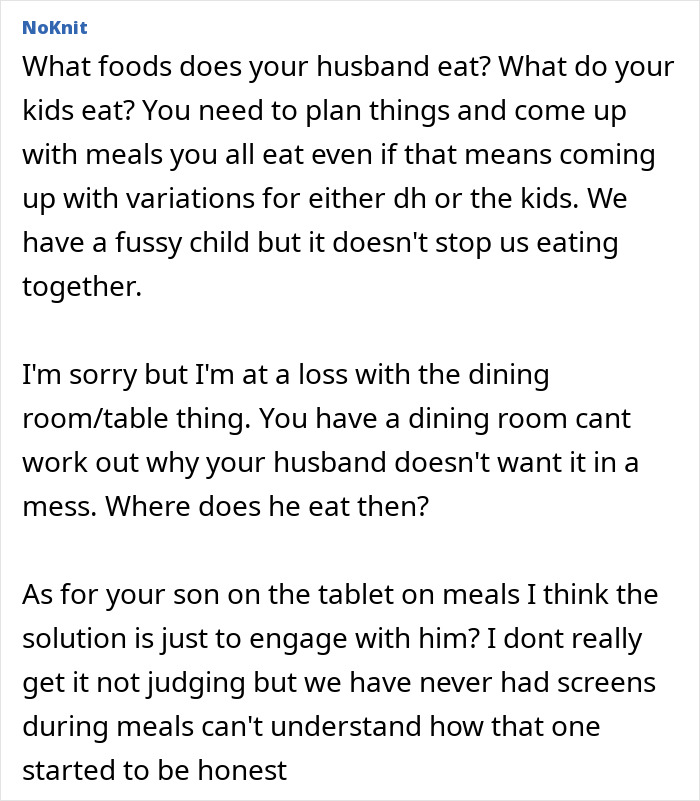
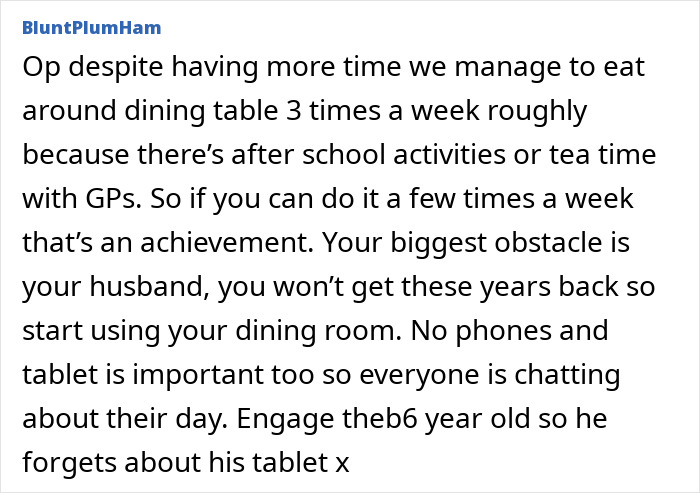
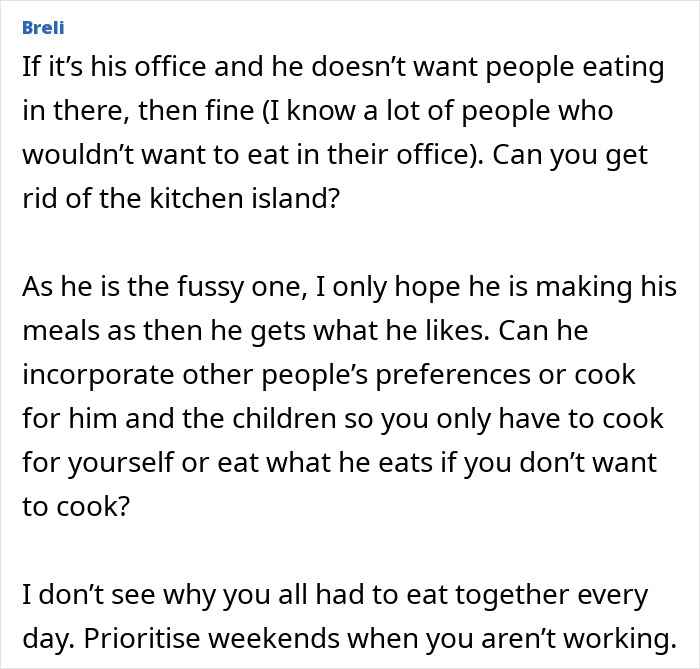
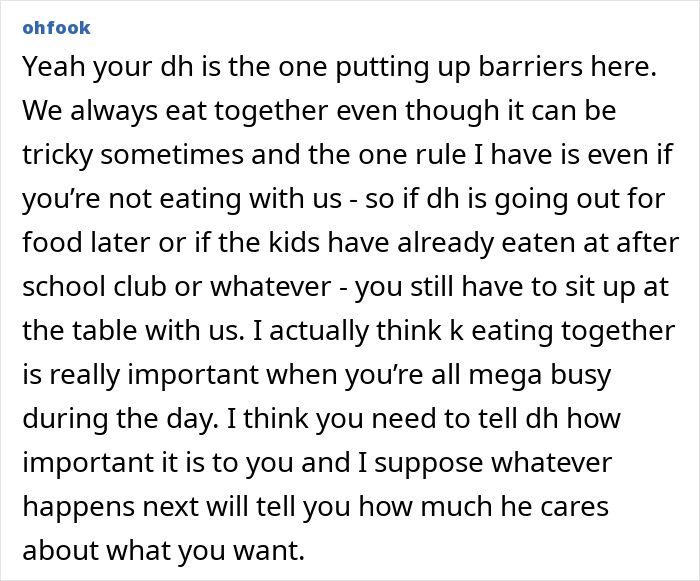
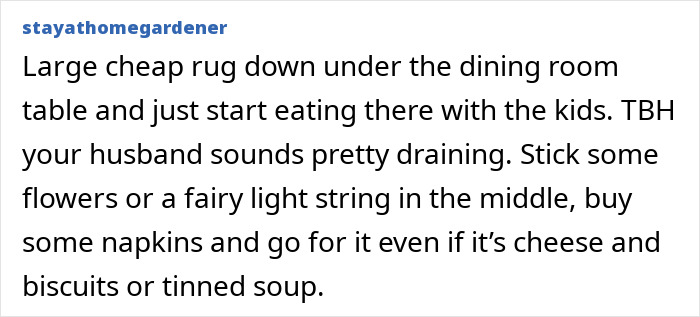
The online community offered her advice, agreeing her problem wasn’t just about dinner, but her unsupportive husband





Content Source and pitcher by: Bored Panda / W1Network