

Life has a funny way of making simple things unnecessarily complicated. You stop at the grocery store for a few essentials and somehow spend more than expected. You waste valuable minutes searching for the perfect parking spot. Or you discover that a household problem you paid someone to fix had a surprisingly simple solution.
These little frustrations may not seem particularly important on their own, but they can add up over time. Between work, shopping, household responsibilities, and personal commitments, most of us would welcome a few practical ways to make everyday life easier.
The good news is that improving your daily routine doesn’t necessarily require an expensive gadget, a complicated productivity system, or a complete lifestyle makeover. Sometimes, a small change in how you approach a familiar situation can save time, reduce unnecessary spending, or make an otherwise stressful experience more manageable.
Think about the simple advantage of checking grocery expiration dates, asking a better question during a customer service conversation, or taking a few minutes to reconsider an online purchase. These aren’t dramatic discoveries, but they can be useful habits.

That’s exactly what makes everyday life hacks interesting. They encourage us to look at ordinary problems from a slightly different perspective.
Below are 30 practical life hacks covering shopping, money management, work, travel, home maintenance, communication, and personal well-being. Each suggestion includes a realistic way to put it into practice, along with situations where a little extra caution may be necessary.
You probably won’t need every tip, but a few could make your next busy day noticeably easier.
Clever Shopping and Money-Saving Hacks for Everyday Life
Shopping is one of those activities where small decisions can have a surprisingly large effect on your budget. Being a smarter shopper isn’t necessarily about avoiding purchases or choosing the cheapest product. It’s about understanding what you’re paying for, reducing waste, and making decisions that fit your actual needs.
1. Check Grocery Expiration Dates Instead of Grabbing the First Package
Most people walk into a grocery store, find the product they need, and place it in their cart without giving the packaging much thought. However, taking a moment to compare dates can make a difference, particularly when buying foods that spoil quickly.

Many supermarkets use stock rotation practices that move older inventory toward the front of the shelf. As a result, a carton of milk, container of yogurt, or package of bread sitting farther back might have a later use-by or best-before date than the item directly in front of it.
Imagine buying enough groceries to last an entire week. If you accidentally choose a product that’s close to its expiration date, you may need to use it sooner than planned or risk throwing it away.
A practical approach is to compare a few packages and select one that suits when you expect to use it. Remember that best-before dates often describe quality rather than safety, and storage conditions also matter.
Checking dates takes only a few seconds, but it can help you plan meals and reduce unnecessary food waste.
2. Wait 24 Hours Before Making Nonessential Online Purchases
Online retailers have made shopping incredibly convenient. With saved payment details and one-click checkout options, you can purchase almost anything without leaving your couch.
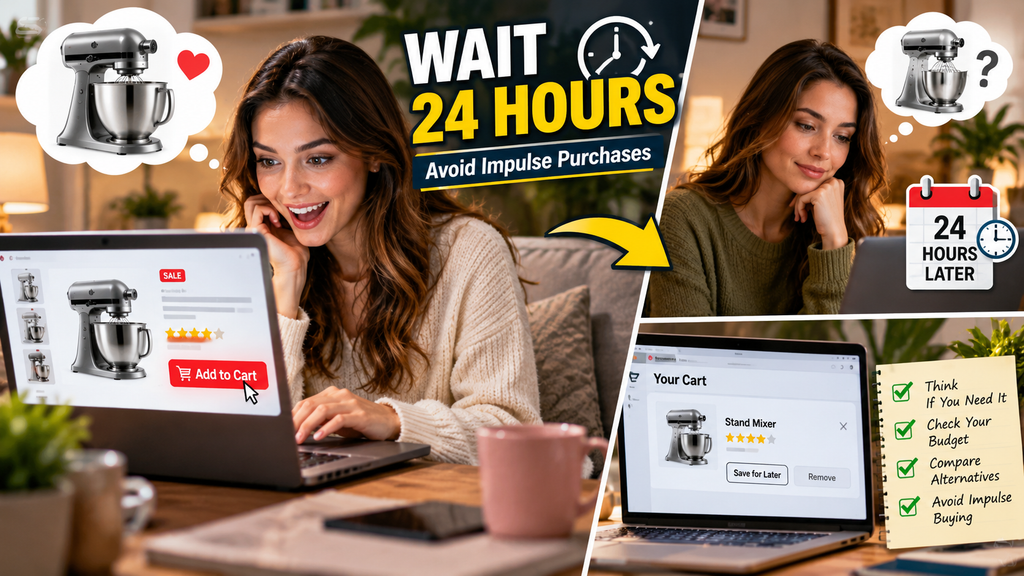
Unfortunately, that convenience also makes impulsive spending easier.
The next time you find a product you want but don’t urgently need, try leaving it in your shopping cart for at least 24 hours. During that time, think about whether the purchase solves a real problem, fits your budget, or simply caught your attention because of an attractive advertisement.
For example, a kitchen appliance might seem irresistible when you first see it. A day later, you may realize that something already in your kitchen performs essentially the same function.
Occasionally, retailers also send discount offers to customers who leave items in their carts, although this isn’t guaranteed and shouldn’t be the reason to buy.
The real advantage of waiting is that it gives you time to separate genuine needs from temporary excitement.
3. Check the Final Price Before Assuming a Sale Is a Good Deal
A large discount label can make almost any purchase feel like an opportunity. But the advertised price doesn’t always tell the complete story.
Shipping fees, service charges, taxes, minimum purchase requirements, and return costs can change the amount you ultimately pay.
Before placing an online order, compare the final checkout total with the price offered by another reputable retailer. You can also check the store’s official promotions page for available coupons or loyalty discounts.

Suppose one website advertises a product for $45 but adds $12 in shipping. Another store offers the same item for $52 with free shipping. Despite the higher listed price, the second option may be the better deal.
Don’t forget to consider delivery reliability, warranty coverage, and return policies.
A genuinely smart purchase balances price, quality, and convenience rather than focusing on the biggest advertised discount.
4. Make a Grocery List That Reflects Your Actual Meals
Walking through a supermarket without a plan can lead to duplicate purchases, forgotten ingredients, and products that never get used.
A useful grocery list starts with something simple: checking what you already have.

Look through your refrigerator, freezer, and pantry before leaving home. Then consider which meals you’re likely to prepare over the next several days. Build your shopping list around those meals instead of adding random ingredients that happen to look appealing.
If you regularly throw away unused vegetables, for example, buying smaller quantities more frequently may work better than purchasing everything at once.
Online grocery ordering can also help some shoppers stay focused because the running total is visible before checkout. However, delivery charges and product quality should be considered.
Meal-based shopping doesn’t require a strict weekly schedule. Even a rough plan can help you purchase more intentionally and reduce waste.
5. Visit Secondhand Stores Before Buying Certain Items New
Buying new isn’t always necessary, especially for products designed to last for years.
Thrift stores, consignment shops, and reputable resale marketplaces can offer clothing, books, furniture, and household items at lower prices than traditional retailers.
For example, someone furnishing a first apartment might find a sturdy bookshelf or dining table secondhand for considerably less than a similar new item.

The important part is inspecting what you’re buying. Check for damage, missing pieces, unusual odors, and signs of excessive wear. For furniture, consider whether it can be transported safely and whether its condition justifies the asking price.
Certain items, including child safety equipment and products subject to recalls, require additional caution when purchased used.
Secondhand shopping is most valuable when it helps you obtain something useful and reliable, not when it encourages you to buy things simply because they’re inexpensive.
6. Use Credit Card Rewards Without Letting Them Control Your Spending
Cash back, travel miles, and loyalty points can make credit cards appealing, particularly for households that already have predictable monthly expenses.
But rewards are only worthwhile when they don’t lead to more expensive financial habits.
Imagine earning $20 in rewards during a month but carrying a balance that generates more than $20 in interest. In that situation, the reward hasn’t actually saved you money.
If you use a credit card, try to keep purchases within your existing budget and pay the statement balance in full by the due date. Review annual fees, reward restrictions, and how points can be redeemed.
Also, don’t buy unnecessary items simply to reach a bonus threshold.
The smartest reward strategy is one that complements responsible spending rather than changing how much you spend.

Simple Productivity and Career Hacks That Actually Make Sense
A productive day isn’t always the one where you complete the most tasks. Sometimes, it’s the day when you avoid preventable mistakes, make progress on something important, or handle a difficult situation efficiently.
These workplace and productivity habits focus on practical improvements rather than unrealistic expectations.
7. Make Difficult Tasks Easier by Starting With Two Minutes
One of the biggest obstacles to productivity is the feeling that a task will take too much effort.
You might keep postponing an overflowing inbox, a cluttered desk, or an important document because you imagine the entire project rather than the first step.
A useful approach is to commit to just two minutes.
If your desk is messy, spend two minutes clearing one area. If you need to write a report, open the document and create a basic outline. If you’re trying to read more, start with one page.

The purpose isn’t to complete everything immediately. It’s to make beginning feel manageable.
Once you’re engaged, continuing may become easier. Even if you stop after two minutes, you’ve moved the task forward.
For larger responsibilities, repeat this process and gradually increase the time you dedicate to them.
Small beginnings can create momentum without requiring a sudden burst of motivation.
8. Write and Review Emails Before Entering the Recipient’s Address
Accidentally sending an unfinished email is a mistake many people would rather avoid.
Perhaps you’ve written an emotional response, forgotten an attachment, or noticed an important error immediately after pressing Send.
One simple precaution is to leave the recipient field empty until your message is ready.
Write the email, organize the paragraphs, check names and dates, and confirm that any promised documents are attached. Then read the message once more, considering how the recipient might interpret your tone.
Only after completing these steps should you enter the email address.

This habit is particularly useful for job applications, client messages, financial correspondence, and other important communications.
For additional protection, some email services also offer an undo-send feature or a short sending delay.
A brief review before sending can prevent misunderstandings that take much longer to resolve.
9. Don’t Automatically Reject Yourself From a Job Opportunity
Job listings sometimes describe an ideal candidate with an extensive combination of qualifications, technical abilities, and years of experience.
Reading those requirements can be intimidating, particularly if you meet most of them but lack a few preferred skills.
However, not every item in a job description carries the same importance.

Some employers list preferred qualifications separately from mandatory requirements. If you have the essential abilities, relevant experience, and a realistic understanding of the role, submitting an application may be worthwhile.
Focus your application on concrete achievements and transferable skills. Explain how your previous work or training prepares you for the responsibilities involved.
At the same time, respect requirements such as professional licenses, legal authorizations, and mandatory certifications.
You don’t need to pretend that you possess skills you haven’t developed. A clear explanation of your strengths and willingness to learn is more useful than exaggeration.
10. Build a Professional Reputation by Making Other People’s Work Easier
Professional success often involves more than completing your assigned responsibilities.
Think about the colleague everyone appreciates working with. That person may not always be the loudest in meetings or the most experienced employee, but they communicate clearly, honor commitments, and handle problems constructively.
You can develop similar habits through everyday actions.

When a coworker asks for information, provide a useful answer if you can. If a deadline changes, communicate early. When someone contributes to a successful project, acknowledge their work.
Avoid promising help you can’t realistically provide, and don’t take responsibility for tasks that belong to others without discussing expectations.
Being dependable doesn’t mean saying yes to everything. It means making your work and communication predictable.
Over time, these qualities can strengthen relationships and make collaboration considerably easier.
11. Address Mistakes Before They Become Bigger Problems
A small mistake can become a serious issue when it goes unnoticed or remains unaddressed.
Suppose you’ve sent a spreadsheet containing an incorrect figure. You could hope nobody notices, but that creates the risk of someone using the wrong information.
A better approach is to verify the mistake, correct it, and notify anyone affected.

You might explain what happened, provide the updated information, and describe any additional action needed.
There’s no need for an excessively long apology or an elaborate explanation designed to avoid responsibility.
The goal is to repair the situation and reduce the chance of repeating it.
When mistakes involve safety, finances, or important decisions, prompt reporting becomes even more valuable.
Taking responsibility is not about appearing perfect. It’s about demonstrating that problems will be handled reliably.
Practical Travel and Transportation Hacks to Reduce Stress
Travel often involves situations you can’t completely control, from flight delays to crowded parking lots. However, a little preparation can prevent minor inconveniences from turning into major disruptions.
12. Choose an Easy Parking Spot Instead of Searching Endlessly for the Closest One

Imagine arriving at a busy shopping center on a Saturday afternoon.
The spaces near the entrance are full, and several drivers are circling the same crowded aisles, hoping someone will leave.
Meanwhile, there are empty parking spaces a short walk away.
If walking is comfortable for you, choosing a safe space farther from the entrance may be faster than waiting for a closer one.
It can also make leaving easier because the busiest sections of a parking lot often have more pedestrians and turning vehicles.
Of course, the best choice depends on accessibility needs, weather, lighting, and personal safety.
In a poorly lit area at night, for example, proximity and visibility may matter more than saving a minute.
The lesson is to consider the entire parking experience rather than assuming the closest space is always the most convenient.
13. Use Multiple Official Channels When a Flight Gets Canceled

Flight cancellations are stressful because they can affect hotel reservations, connecting transportation, work schedules, and family plans.
When an airline announces a cancellation, passengers often head straight toward the service counter. If dozens of people are already waiting, that line may move slowly.
Rather than relying on a single option, check the airline’s official mobile app and website while also contacting customer support.
Some airlines allow passengers to review alternative flights or manage rebooking digitally.
Keep your reservation number, identification, and relevant travel information readily available. If your itinerary includes multiple airlines, confirm which company is responsible for handling the disruption.
Refunds, rebooking rights, and assistance can vary depending on the route and applicable regulations.
Knowing your options before problems arise can make an unexpected cancellation less overwhelming.
14. Carry an Empty Reusable Water Bottle Through Airport Security

Travel days can be expensive, especially when you’re purchasing meals, snacks, and drinks at airport prices.
Carrying an empty reusable water bottle is a simple way to reduce at least one recurring expense.
Where airport security rules permit, you can take an empty bottle through screening and fill it afterward at a designated drinking-water station.
Many major airports in the United States and Canada provide water fountains or refill stations, although availability varies.
Choose a bottle that’s lightweight, easy to clean, and convenient to carry with your other belongings.
Before traveling, confirm the relevant airport’s current security requirements, particularly if your itinerary includes international connections.
This small preparation step can make staying hydrated more convenient while reducing the need for disposable bottles.
15. Check Mobile Ordering Before Joining a Long Coffee Shop Line
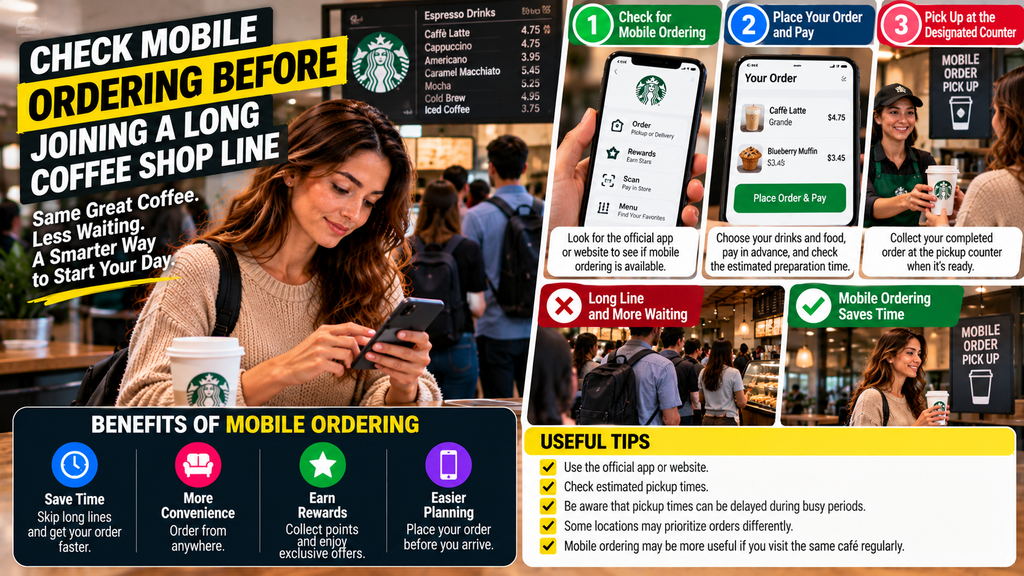
The morning coffee stop that usually takes five minutes can become frustrating when a café is unusually busy.
Before joining a long line, check whether the business offers ordering through its official app or website.
Some coffee shops allow customers to choose their drinks, pay in advance, and collect completed orders at a designated pickup counter.
If you visit the same café regularly, mobile ordering may fit naturally into your routine.
For instance, you could place an order before leaving home and check its expected preparation time before arriving.
However, digital orders aren’t always faster. During busy periods, pickup times can be delayed, and some locations prioritize orders differently.
The useful habit is checking your available options instead of automatically assuming that standing in line is the only choice.
16. Contact Your Hotel Before Giving Up on a Late Cancellation

Travel plans can change for reasons beyond your control. A family emergency, illness, or transportation issue might force you to cancel a hotel reservation.
If the free cancellation deadline has passed, the booking terms may allow the hotel to charge a fee.
Still, it’s worth reviewing the policy carefully and contacting the property directly.
Explain the situation honestly and ask whether a date change, partial refund, or future-stay credit might be available.
Hotels sometimes have discretion to offer alternatives, but they are not obligated to waive valid cancellation terms unless applicable rules require it.
Keep written confirmation of any changes to your booking.
Even when a full refund isn’t possible, understanding the available options can help you make a more informed decision.
Useful Home and Learning Hacks That Can Save Time and Money
Being resourceful at home doesn’t mean you need to become a professional handyman, chef, or repair expert.
Learning a few practical skills and knowing where to find reliable information can make ordinary household challenges easier to handle.
17. Learn Which Household Repairs Are Safe to Handle Yourself
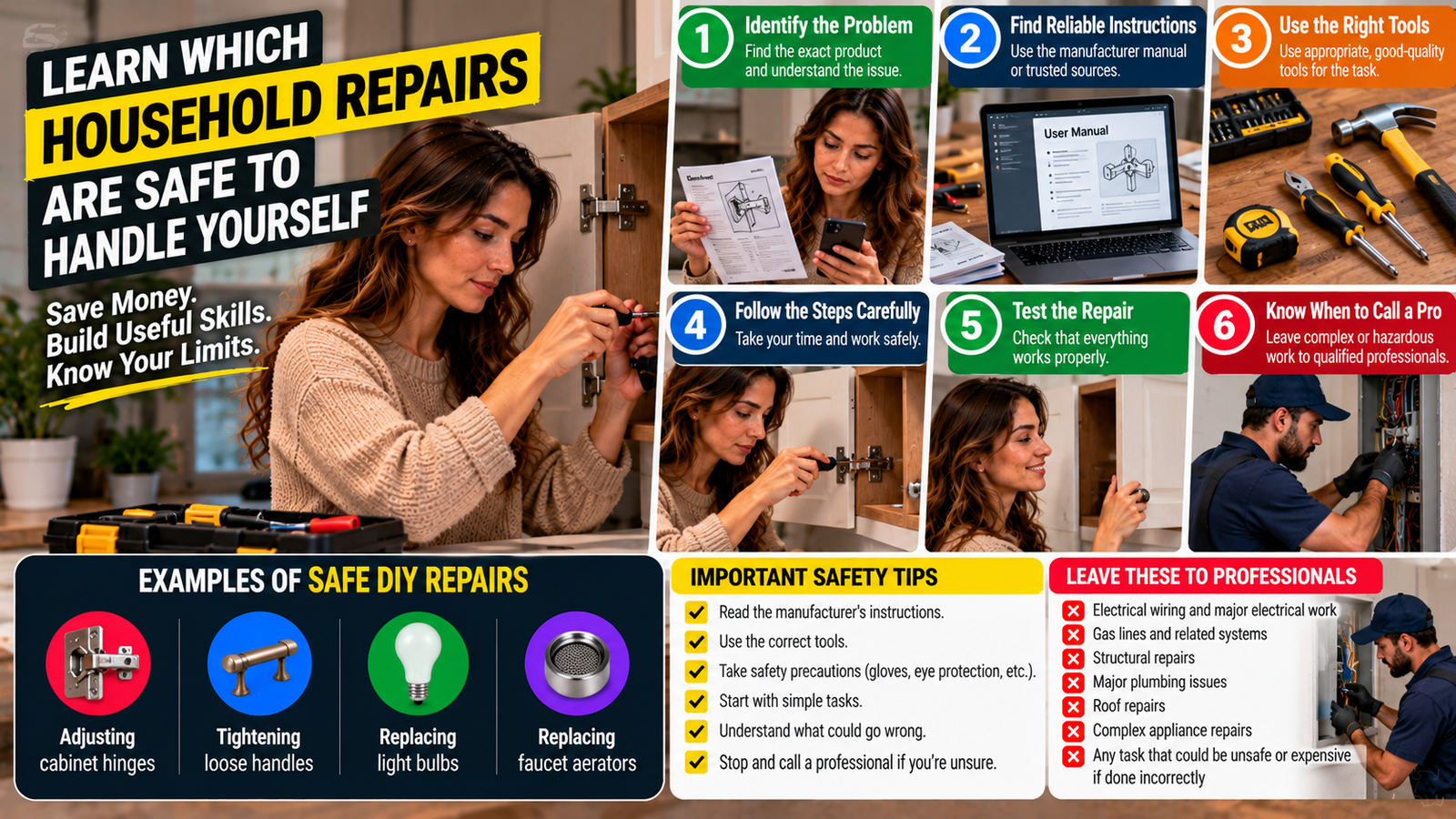
When something breaks at home, calling a professional may seem like the obvious first step.
Sometimes that’s absolutely the right decision. But certain minor maintenance tasks are simple enough to handle independently with appropriate guidance.
Tightening a loose furniture handle, replacing a basic removable accessory, or adjusting a cabinet hinge may require only common tools and a little patience.
Start by identifying the exact product and problem. Manufacturer instructions are generally a better first reference than an unrelated video demonstrating a different model.
Consider what could go wrong before beginning the repair.
Electrical wiring, gas lines, structural components, and other hazardous systems should be handled by qualified professionals.
A useful DIY skill is not just knowing how to fix something. It’s also recognizing when attempting a repair yourself would be unsafe or unnecessarily expensive.
18. Learn Basic Clothing Repairs to Extend the Life of Your Wardrobe
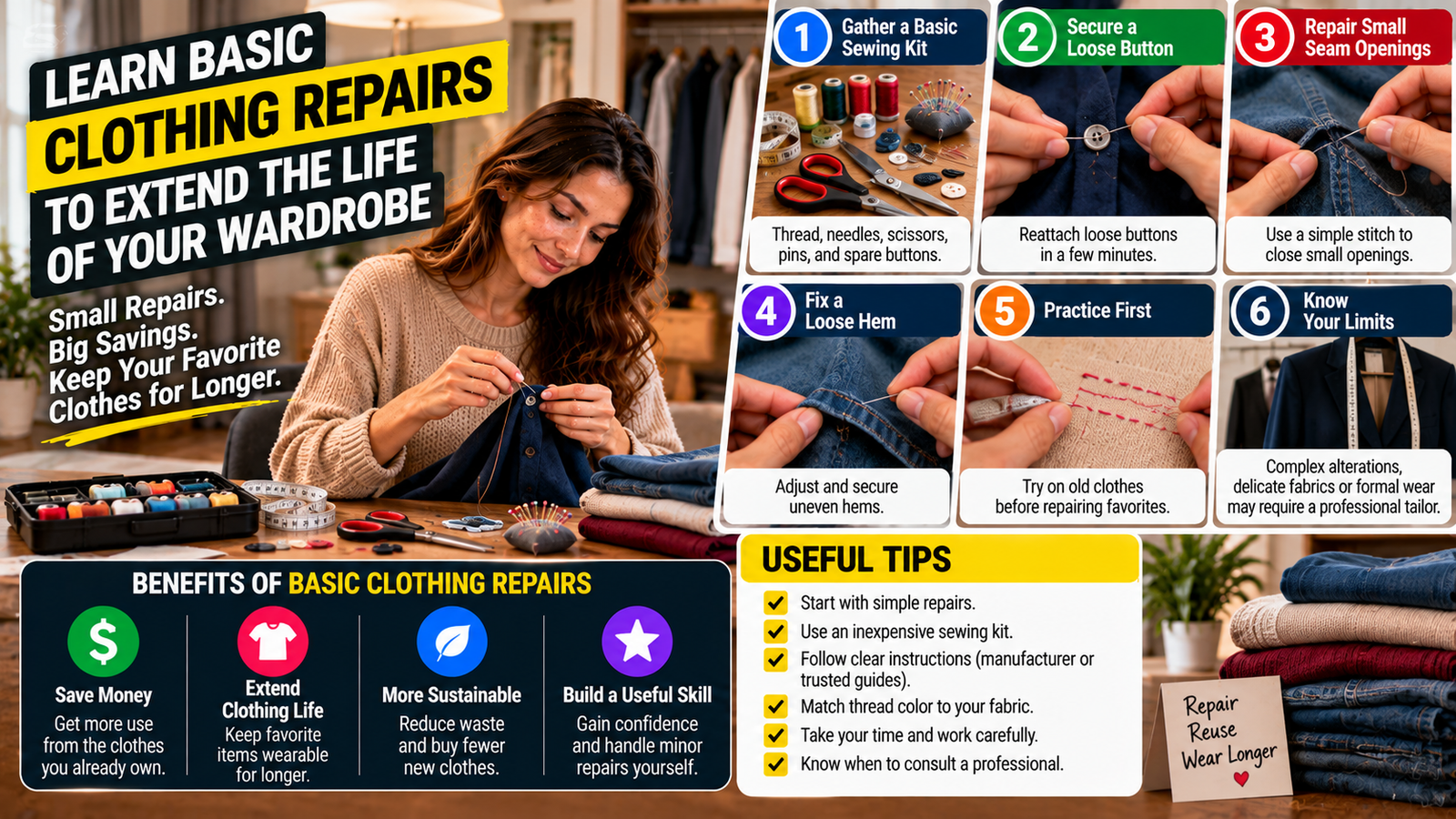
Clothes sometimes become difficult to wear because of surprisingly minor problems.
A loose button, small opening along a seam, or slightly uneven hem can make an otherwise good item seem unusable.
Learning basic sewing skills gives you another option besides replacing the garment.
Start with simple repairs using an inexpensive sewing kit. Practice on clothing you no longer wear before attempting an alteration on a favorite piece.
For example, securing a loose button might take only a few minutes once you understand the technique.
Complex alterations involving fitted jackets, formal clothing, or delicate fabrics may still require a tailor.
The advantage of basic clothing repair isn’t just financial. It also encourages you to make better use of things you already own instead of discarding them prematurely.
19. Learn to Cook Your Favorite Restaurant Meals at Home

A memorable restaurant meal can leave you wanting to order the same dish again and again.
But sometimes the more satisfying option is learning to prepare your own version.
Start by identifying the main ingredients and cooking techniques. Look for reliable recipes with clear instructions, ingredient quantities, and preparation times.
If the dish requires equipment or ingredients you don’t own, consider whether a simpler variation would work.
Don’t expect the first attempt to match the restaurant perfectly. Commercial kitchens may use specialized equipment, sauces, or techniques.
However, each attempt helps you understand how flavors and cooking methods work together.
Over time, home cooking can become more convenient, and you’ll gain greater control over ingredients and portions.
It may also save money when you’re preparing meals using items already available in your kitchen.
20. Explore the Unexpected Benefits of Your Local Public Library
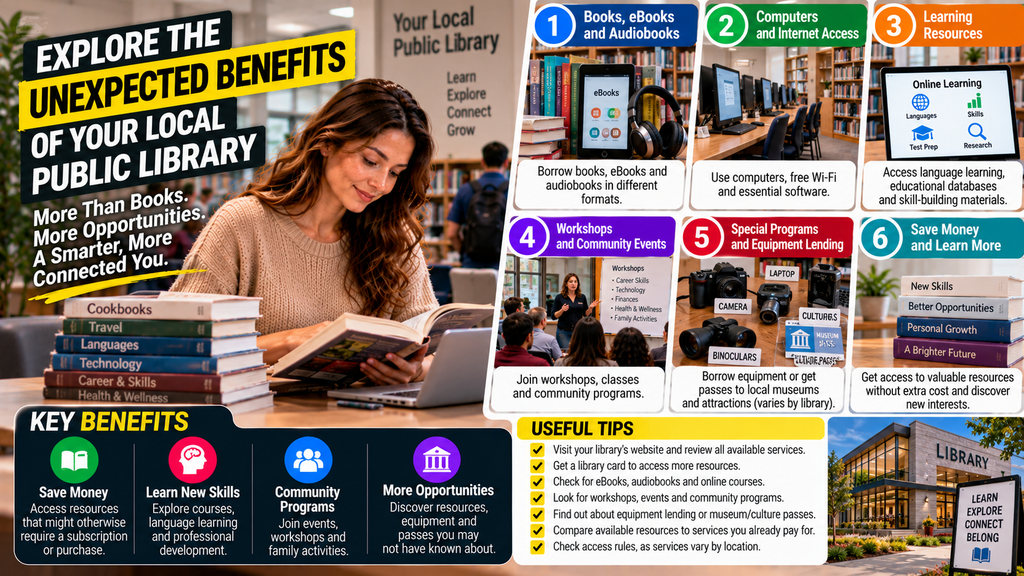
Public libraries offer much more than shelves filled with books.
Depending on your community, a library membership may provide access to ebooks, audiobooks, computers, educational databases, language-learning resources, and professional development materials.
Some public library systems also organize workshops, family activities, and community events.
A few even offer equipment lending programs or passes to participating cultural attractions.
Instead of assuming your library only offers traditional reading materials, visit its website and review the complete list of services.
This can be particularly useful when you’re interested in learning something new but don’t want to immediately pay for a subscription or course.
Access rules and available resources differ between libraries, so check what’s offered in your area.
You might discover that a service you’ve been paying for has an accessible library alternative.
21. Keep Receipts, Manuals, and Warranty Details in One Place
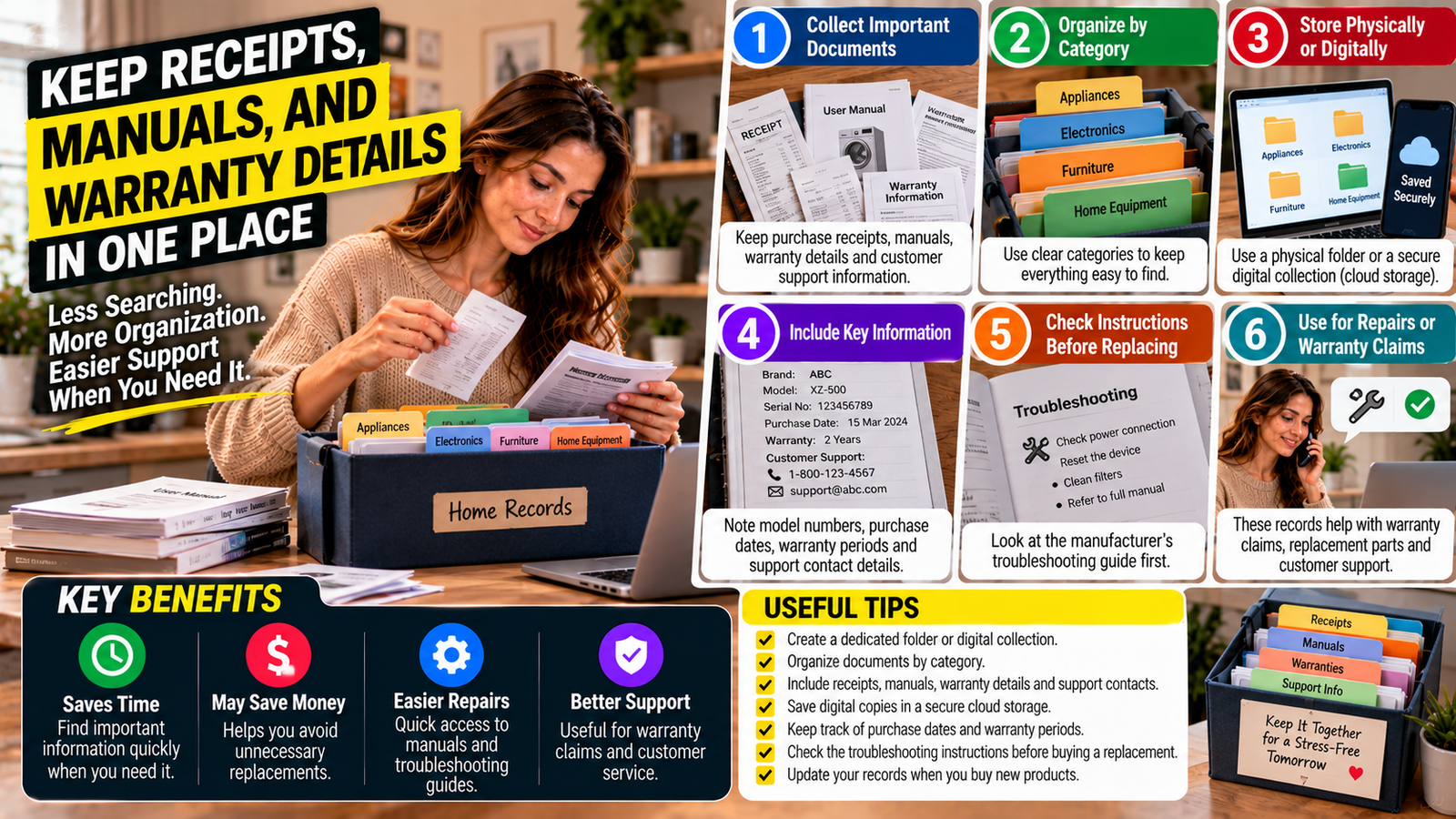
The instruction manual included with a new appliance may seem unimportant until the product develops a problem.
Suddenly, you’re searching for the correct model number, troubleshooting instructions, and warranty information.
An organized record system can make that situation much easier.
Create a physical folder or a secure digital collection containing purchase receipts, product manuals, warranty details, and important customer support information.
You can organize documents by category, such as kitchen appliances, electronics, furniture, and home equipment.
When something stops working, check the manufacturer’s troubleshooting instructions before purchasing a replacement.
Some repairs may be covered by warranty, while replacement parts might be available directly from the manufacturer.
Keeping these records won’t prevent products from breaking, but it can save time when you need assistance.
Everyday Communication Hacks That Help You Handle People Better
Many frustrating situations are made worse by misunderstandings, rushed reactions, or unclear expectations.
Improving communication doesn’t mean manipulating people or always agreeing with them. It means expressing your needs in ways that are respectful, direct, and more likely to lead to constructive conversations.
22. Be Respectful to Customer Service Workers, Even When You’re Frustrated
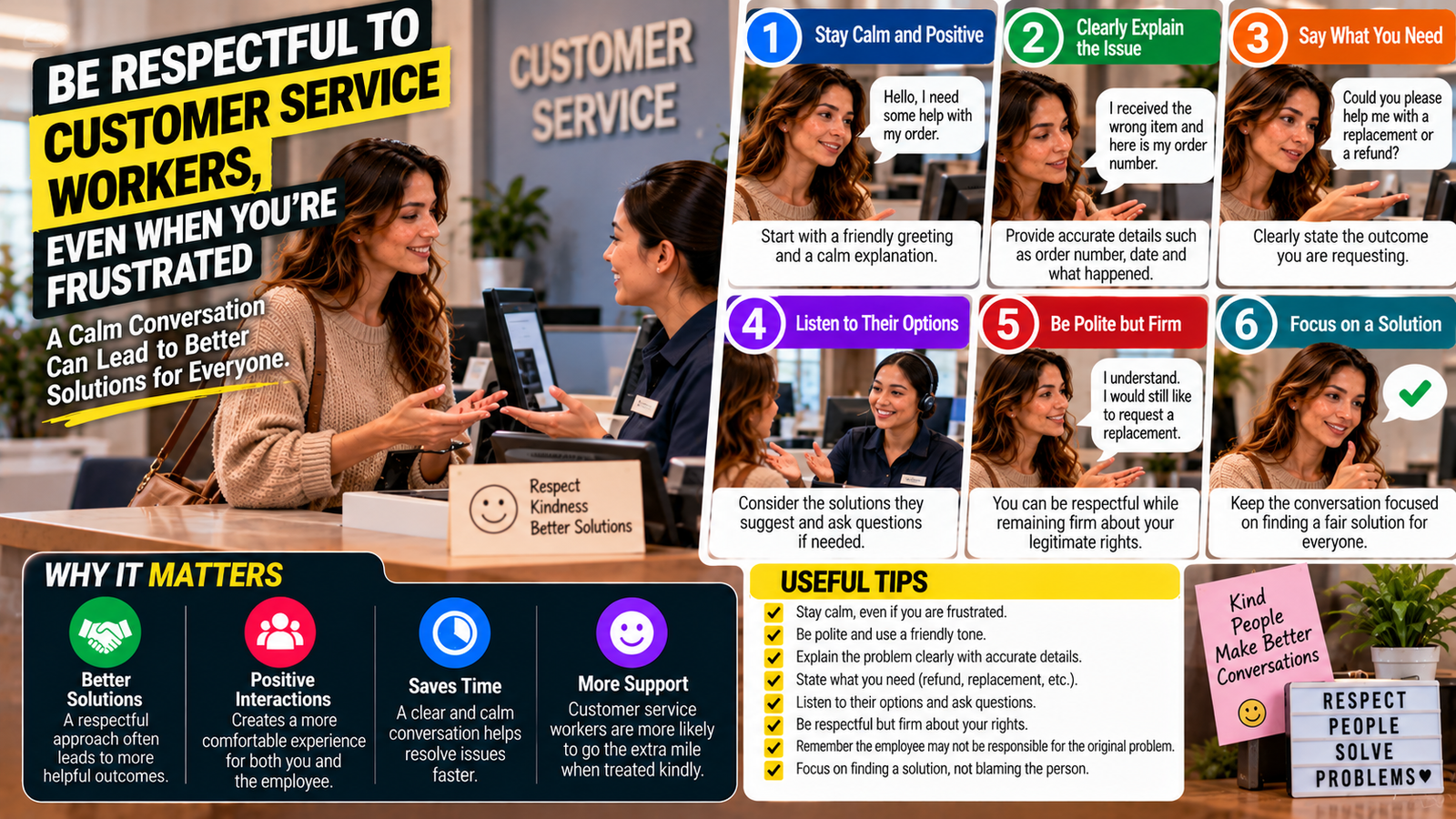
Receiving the wrong order or being charged incorrectly can be irritating, especially when you’re already having a stressful day.
But the employee helping you may not be responsible for the original problem.
Instead of beginning the conversation with an accusation, clearly explain what happened and what outcome you’re requesting.
For example, if an item arrives damaged, provide the order details and ask about the replacement or refund process.
A friendly greeting and a calm explanation can help keep the discussion focused on solutions.
This doesn’t mean you should accept poor treatment or abandon your consumer rights.
You can be polite while remaining firm about a legitimate complaint.
Respectful communication is valuable because it helps separate the problem from the person trying to resolve it.
23. Ask Solution-Focused Questions When Making a Complaint
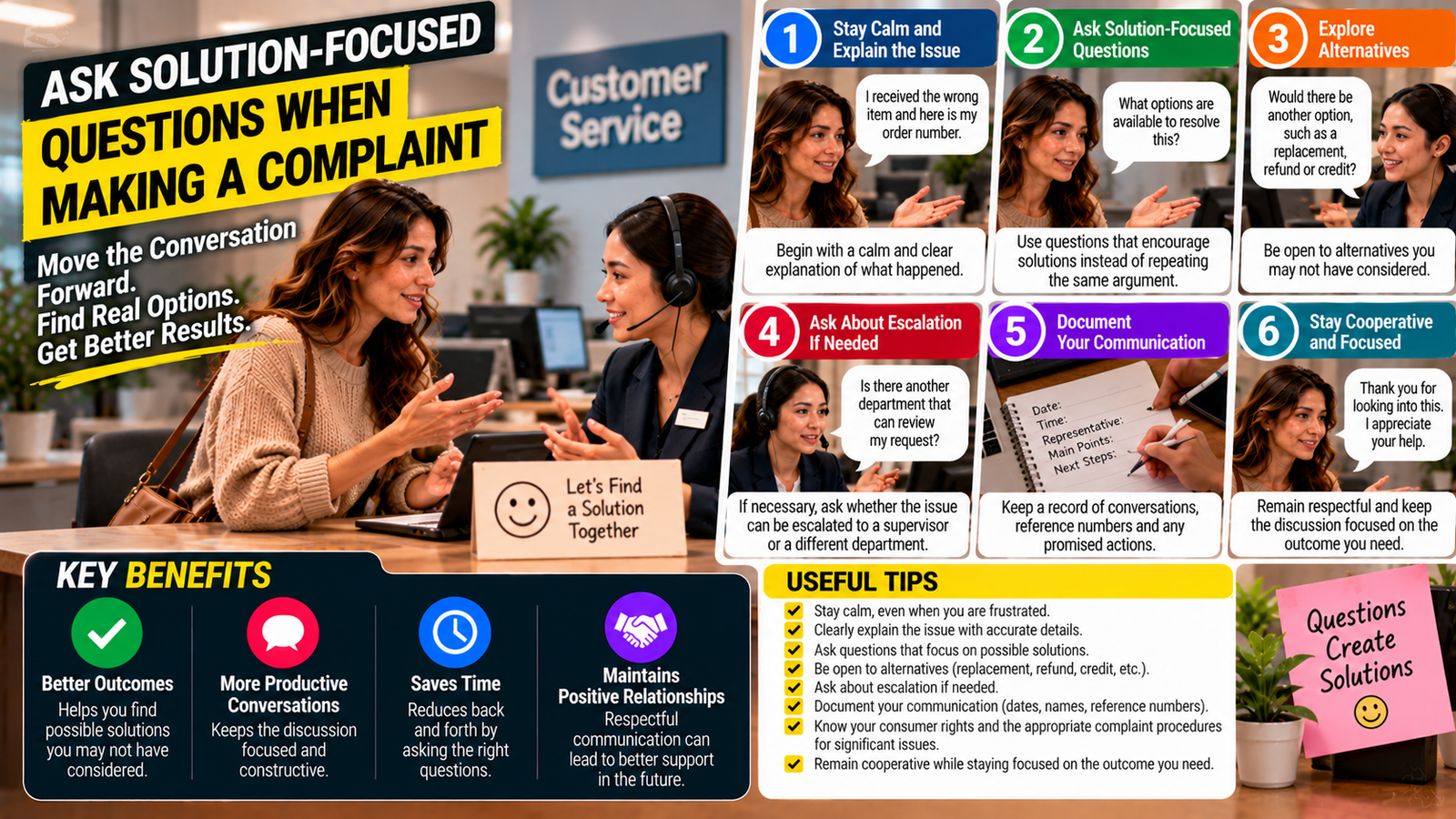
Sometimes a customer service conversation becomes unproductive because both sides keep repeating their positions.
You explain why something went wrong, while the representative continues referring to company policy.
Instead of repeating the same argument, consider asking a question that encourages the discussion to move forward.
For example, you might say, “What options are available to resolve this?” or “Is there another department that can review my request?”
These questions don’t guarantee a different result, but they may reveal alternatives you haven’t considered.
If the issue involves a significant amount of money or a potential violation of consumer protection rules, document your communication and review the appropriate complaint procedures.
The goal is to remain cooperative without losing sight of the outcome you need.
24. Ask for Reasonable Opportunities Instead of Assuming They Don’t Exist

It’s surprisingly easy to miss opportunities simply because you never ask about them.
Maybe your workplace offers training that isn’t widely advertised. Perhaps a local business has a discount program you haven’t heard about. Or a service provider might offer a more convenient appointment time upon request.
When the situation is appropriate, a polite question can help you discover what’s available.
For instance, you could ask your supervisor whether you’re eligible to participate in an upcoming project or receive training in a skill relevant to your work.
The answer might be no, but it could also lead to a useful conversation.
Keep requests reasonable and respect the other person’s decision.
The point isn’t to pressure people into agreeing. It’s to avoid missing possibilities because of unnecessary assumptions.
25. Set Personal Boundaries Without Creating Unnecessary Conflict

Balancing your own responsibilities with other people’s expectations can be difficult.
You may genuinely want to help a friend, coworker, or relative but simply lack the time or energy to take on another commitment.
Instead of reluctantly agreeing and becoming overwhelmed later, communicate your limits early.
For example, if someone asks you to attend an event when your schedule is already full, a respectful response might be, “Thanks for thinking of me, but I won’t be available that day.”
You don’t always need to provide a detailed explanation, particularly when the request is optional.
However, shared responsibilities and important relationships sometimes require a more thoughtful discussion.
Healthy boundaries are not about ignoring other people. They’re about making realistic commitments that you can actually honor.
26. Give Yourself Time Before Responding to an Upsetting Message
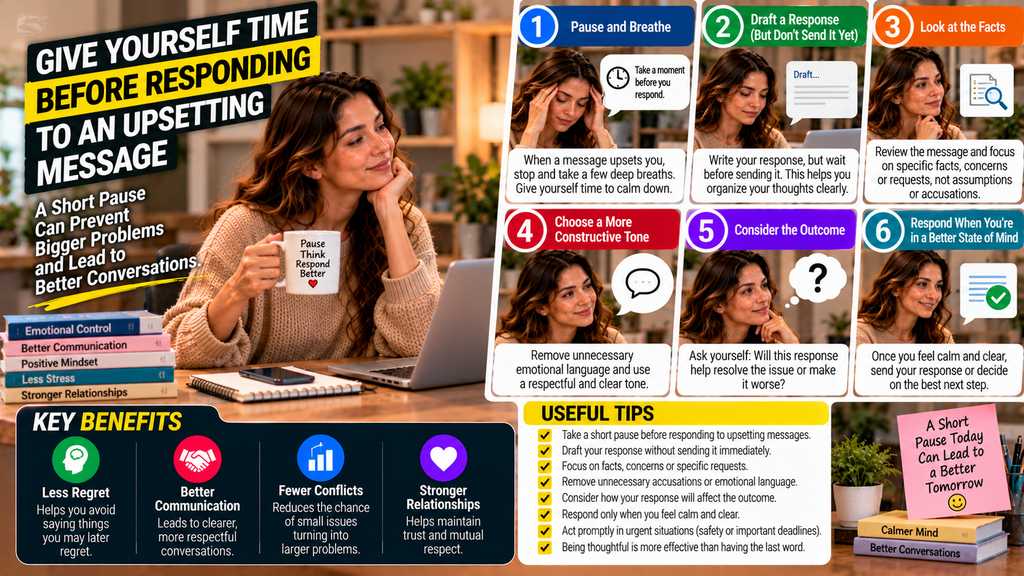
Messages sent in anger can be difficult to take back.
A critical email, an unexpected complaint, or an insensitive comment might create an immediate urge to respond defensively.
When the situation isn’t urgent, consider waiting until your emotions have settled before replying.
You can draft a response without sending it, take a brief walk, or write down the main point you want to communicate.
Then return to the message and ask yourself whether your wording will help resolve the issue.
Remove unnecessary accusations and focus on specific facts, concerns, or requests.
Some situations require prompt action, especially when safety or important deadlines are involved. But in ordinary disagreements, a short delay may prevent a minor misunderstanding from turning into a larger conflict.
Being thoughtful about your response can be more effective than having the last word.
Small Health and Wellness Hacks for a More Balanced Routine
Healthy habits often seem complicated because we’re surrounded by conflicting advice, expensive products, and unrealistic expectations.
In practice, manageable changes to your daily routine can be a useful starting point. The important thing is choosing habits that suit your needs rather than expecting every suggestion to work identically for everyone.
27. Spend Some Time Outdoors After Waking Up
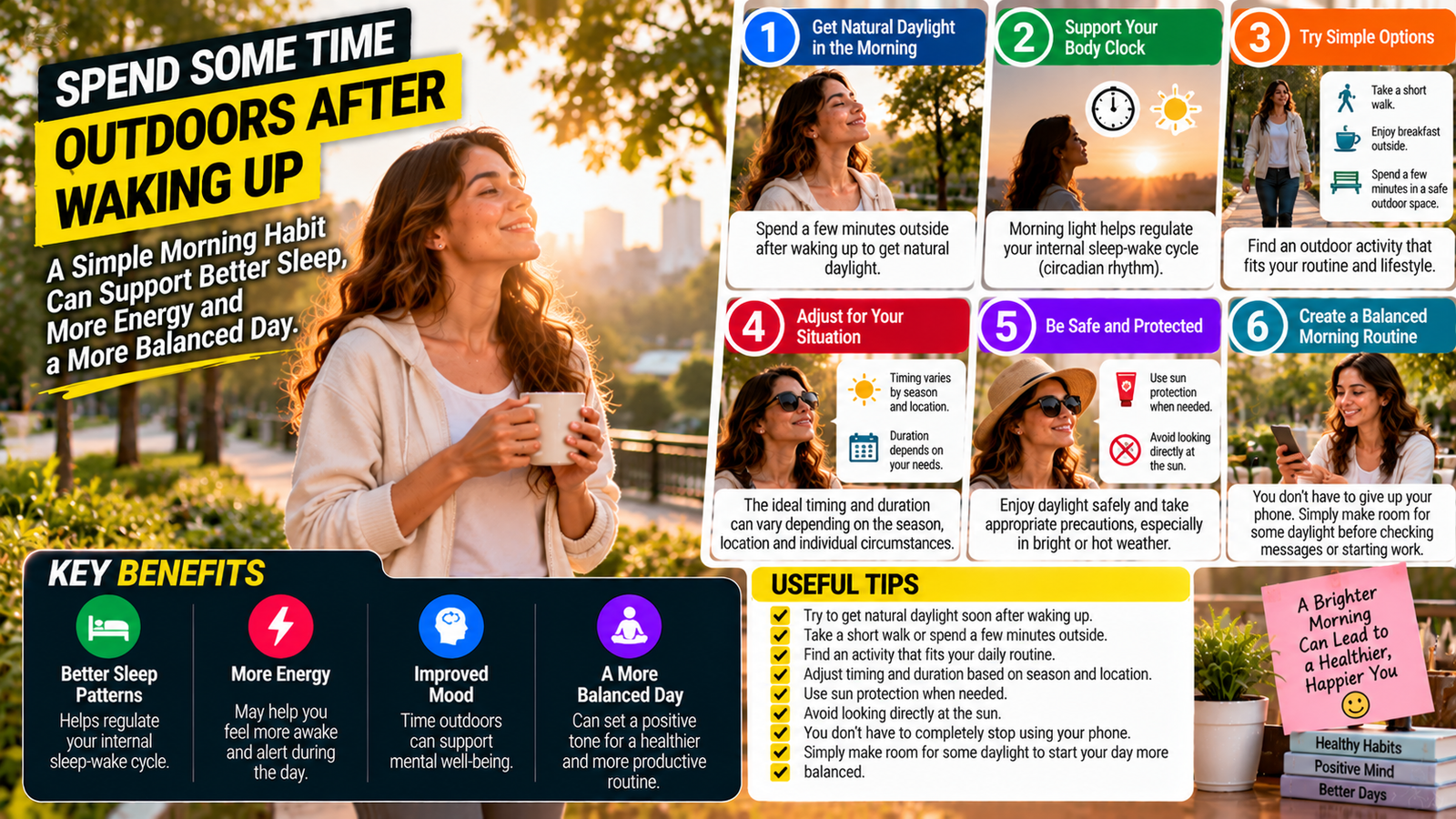
Many people reach for their phones within seconds of waking up.
Although checking messages may feel productive, beginning your day with a little natural daylight can be a useful alternative.
Exposure to daylight helps the body regulate its internal sleep-wake cycle. A consistent pattern of morning light and nighttime darkness can support healthy circadian rhythms.
You could try taking a short morning walk, stepping outside with your breakfast, or spending a few minutes in a safe outdoor space before starting work.
The ideal timing and duration vary according to season, location, and individual circumstances.
Avoid looking directly at the sun, and use appropriate sun protection when needed.
You don’t have to completely abandon your morning phone routine. Simply making room for some daylight may help you establish a more balanced start to the day.
28. Add Short Walks to Activities You Already Do
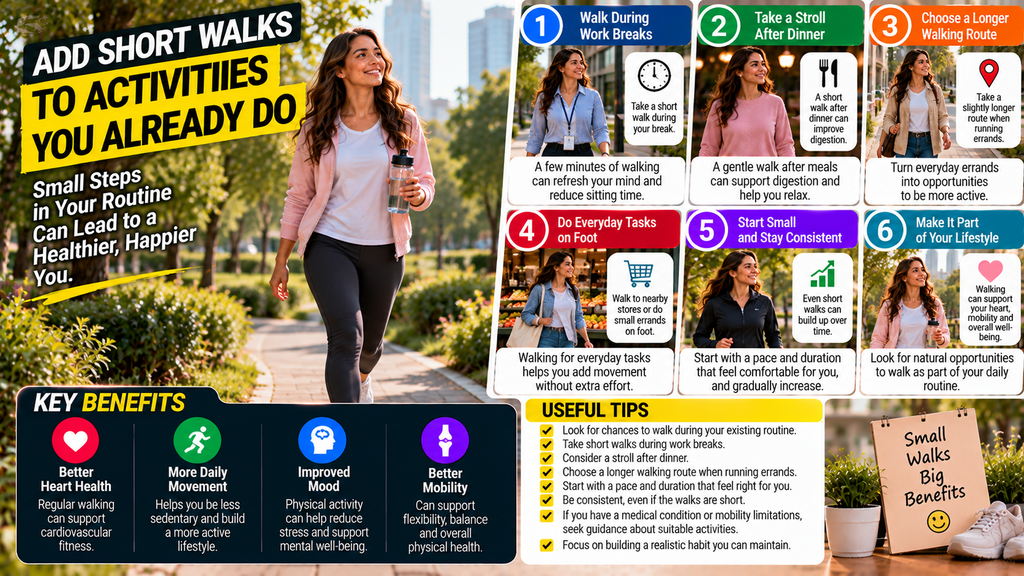
Finding time for regular physical activity can be challenging, particularly when your work involves sitting for long periods.
Instead of treating exercise as something that must happen during a dedicated gym session, look for opportunities to move during your existing routine.
You might walk during a work break, take a short stroll after dinner, or choose a slightly longer walking route when running errands.
Even modest amounts of movement can help you build toward a more active lifestyle.
Walking is accessible to many people and can support cardiovascular fitness, mobility, and general well-being when performed regularly.
Start at a pace and duration that feel appropriate for your abilities.
If you have a medical condition or mobility limitations, seek guidance about suitable activities.
The goal isn’t to complete an impressive workout every day. It’s to develop a realistic habit you can maintain.
29. Ask Your Pharmacist About Lower-Cost Generic Medicines

Medication expenses can become a significant burden, particularly for people managing ongoing health conditions.
In some situations, a pharmacist may be able to identify an approved generic medicine that costs less than a brand-name version.
Generic medications approved by regulators such as the U.S. Food and Drug Administration or Health Canada must meet applicable standards for quality and therapeutic equivalence.
However, not every product has an interchangeable generic alternative, and particular formulations may require additional consideration.
Before making a change, ask your pharmacist whether the alternative has the appropriate active ingredient, strength, dosage form, and intended effect.
Also discuss any concerns related to your medical history or other medications.
Never stop a prescribed treatment or change its dosage solely because another product appears cheaper.
The practical lesson is to ask informed questions about safe, affordable options rather than assuming the most expensive brand is always necessary.
30. Give Major Decisions Time Before Committing

Not every decision should be made immediately.
Whether you’re considering a large purchase, evaluating a job offer, or planning an important life change, emotional pressure can make it difficult to compare your options objectively.
When no genuine deadline requires an immediate answer, give yourself an opportunity to review the situation.
Write down what you hope to achieve, the costs involved, the possible disadvantages, and any information you’re still missing.
For particularly important choices, it may help to discuss the situation with someone who understands the subject and can offer an informed perspective.
Taking a night to think things through can create some distance from the excitement or frustration of the moment, although it doesn’t guarantee a better decision.
The important part is making a deliberate choice based on your priorities rather than reacting to temporary pressure.
How to Turn These Everyday Life Hacks Into Habits That Last
Reading a collection of useful tips is easy. Remembering to use them when the right situation arises is often more difficult.
That’s why trying to change 30 habits at once probably isn’t the most practical approach.
Instead, identify two or three suggestions that address problems you regularly experience.
If you frequently spend more than planned while shopping, begin with a grocery list and a waiting period for nonessential online purchases.
If your workday feels disorganized, try the two-minute starting method and a consistent email review routine.
If travel creates unnecessary stress, prepare a few useful resources before your next trip, such as your airline’s official app and a refillable water bottle.
Pay attention to whether these adjustments actually make your life easier. Some will fit naturally into your schedule, while others may turn out to be less useful than expected.
It’s also important to recognize that convenience isn’t the only consideration. Saving a few dollars isn’t worthwhile if it compromises safety, damages an important relationship, or creates additional responsibilities.
The most effective habits are usually those that solve a real problem without introducing a bigger one.
Why Small Changes Can Have a Meaningful Impact
We often associate personal improvement with dramatic transformations. People talk about completely reorganizing their lives, adopting strict routines, or making major financial commitments.
But everyday progress doesn’t always happen that way.
Sometimes it’s the result of noticing a problem and making one sensible adjustment.
A few minutes spent comparing products can prevent an unnecessary purchase. Learning to repair a loose button can extend the life of a favorite shirt. Asking a thoughtful question can improve a difficult conversation.
These actions may seem too small to matter individually, yet they can influence how smoothly you handle ordinary responsibilities.
Another advantage is that small changes tend to be easier to repeat.
You don’t have to become an entirely different person to shop more carefully, communicate more effectively, or build a healthier daily routine.
You simply need to notice where your current habits could work better.
Of course, not every popular life hack deserves to become part of your routine. Some online shortcuts are exaggerated, depend on very specific circumstances, or create risks that outweigh their benefits.
A genuinely useful tip should be practical, safe, and appropriate for the situation.
That’s why understanding when to use a suggestion is just as important as knowing what to do.
Final Thoughts: A Smarter Life Starts With Small Decisions
Making everyday life easier isn’t about discovering secret tricks that nobody else knows.
It’s about becoming a little more intentional with your time, money, energy, and decisions.
The next time you’re standing in a crowded parking lot, shopping online, dealing with a frustrating customer service issue, or putting off an important task, consider whether a small change in your approach might help.
You don’t need to apply every one of these 30 life hacks to benefit from them.
Start with the suggestions that address your most common frustrations. Give them a fair try, make adjustments when necessary, and keep the ones that genuinely improve your routine.
Over time, those small improvements may help you feel more organized, less rushed, and better prepared for the ordinary challenges life brings.
The best everyday life hack isn’t necessarily the cleverest shortcut. It’s the simple habit that solves a real problem and continues to work for you.
And sometimes, that useful habit is something you could have started years ago.
What’s One Everyday Life Hack You Wish You Had Learned Earlier?
Everyone discovers useful tricks through their own experiences.
Maybe you’ve found a better way to organize your kitchen, avoid unnecessary shopping expenses, manage a busy workday, or handle travel complications.
Which of these 30 tips would make the biggest difference in your life?
And do you have a practical life hack that other people might find helpful?
Share your favorite idea or personal experience in the comments. A small lesson you’ve learned might help someone else avoid a frustrating situation or discover an easier way to handle an everyday problem.