
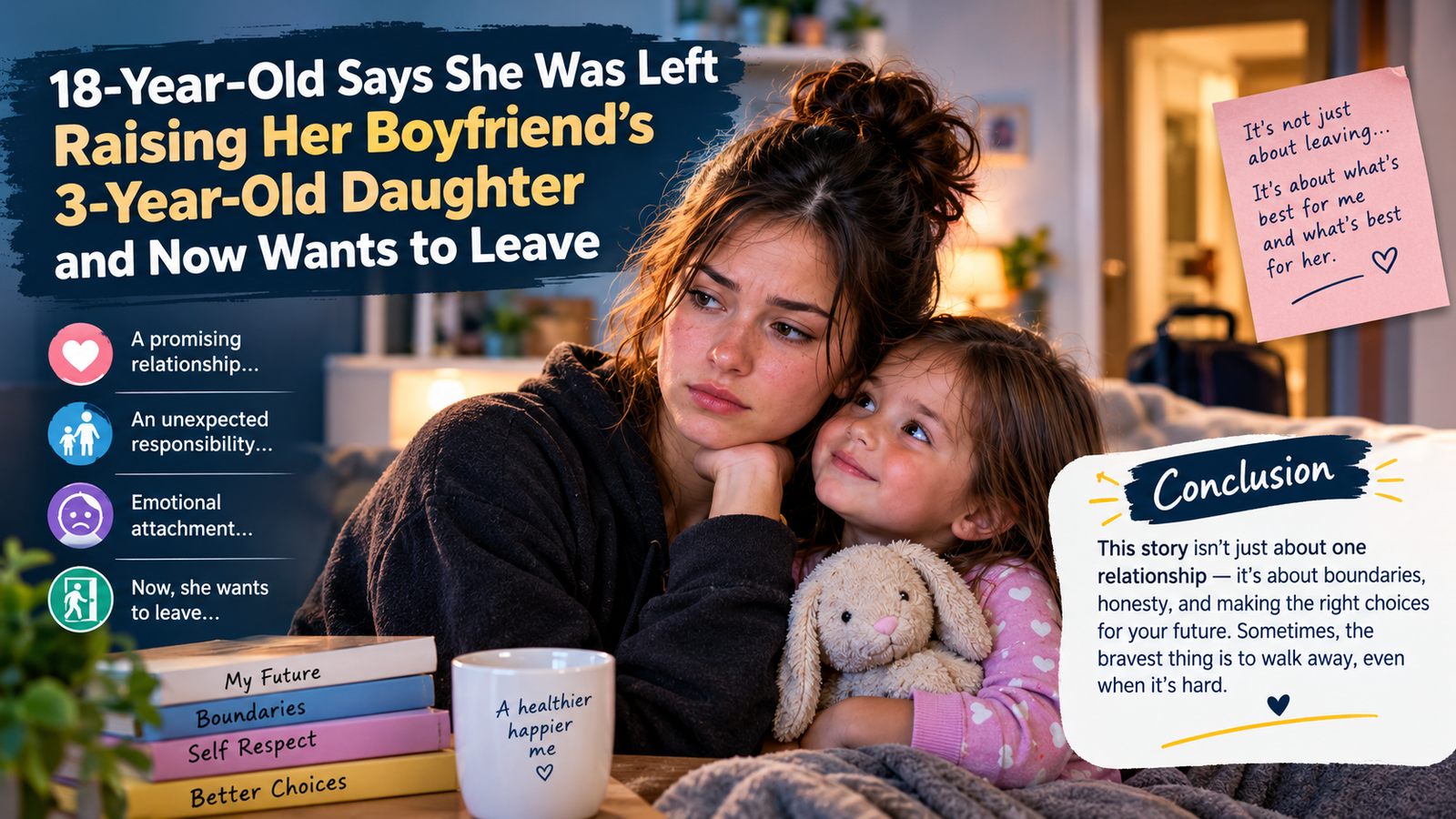
Moving in with someone you love is supposed to be an exciting step toward building a future together. For many couples, it represents growing trust, emotional commitment, and the opportunity to understand each other beyond occasional dates and conversations.
But for one 18-year-old woman, moving in with her boyfriend brought a responsibility she never expected.
Instead of enjoying the early stages of their relationship, she found herself preparing meals, managing household chores, handling preschool pickups, and providing daily care for her boyfriend’s three-year-old daughter.
The situation became even more complicated when the little girl started calling her “Mommy,” the child’s biological mother allegedly threatened her, and an ongoing custody dispute created tension between the adults.

What began as a romantic relationship gradually developed into an overwhelming family situation.
The young woman eventually turned to Reddit, asking whether she would be wrong to leave her boyfriend’s home without warning and contact Child Protective Services (CPS).
Her story raised difficult questions about parenting responsibilities, emotional attachment, age differences, and the boundaries that should exist when a new romantic partner becomes involved in a child’s life.
Most importantly, it revealed how an innocent child’s affection can make leaving an unhappy relationship far more emotionally complicated than anyone might expect.
How a Promising Relationship Became an Unexpected Family Responsibility
The young woman, who identified herself as Robin in her Reddit post, explained that she was 18 years old and earned money by creating online subscription content.
It was through that work that she first connected with a man she called Jeff.
According to Robin, Jeff regularly spent money on her content and initially appeared kind, attentive, and genuinely interested in getting to know her.
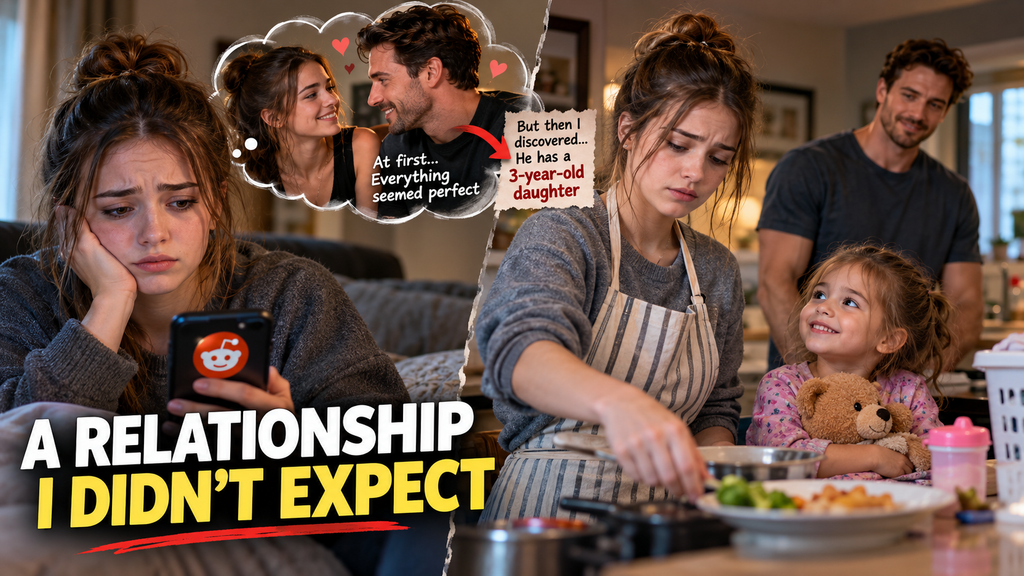
Their online interactions eventually developed into an in-person relationship.
After meeting, they began dating, and Robin initially believed things were going well.
The relationship seemed promising. Jeff appeared supportive, and the two were gradually spending more time together.
However, approximately two months after they started dating, Robin experienced financial difficulties.
At the time, moving into Jeff’s home seemed like a practical solution. She would have somewhere to stay while continuing her work and developing their relationship.
But shortly after moving in, Robin discovered something her boyfriend had never previously disclosed.
Jeff had a three-year-old daughter.
This revelation fundamentally changed her understanding of their relationship.
Having a child from a previous relationship is not inherently problematic. Millions of parents successfully establish new romantic relationships while raising children.
However, being a parent is a major part of someone’s life, particularly when their child regularly stays in their home.
Robin believed she should have been told about this responsibility before agreeing to live with Jeff.
The issue was not simply that he had a daughter. It was that Robin had entered a shared living arrangement without knowing that caring for a young child might become part of her everyday life.
Meeting the Three-Year-Old Girl Who Would Change Everything
Jeff’s daughter, whom Robin referred to by the nickname Bunny, followed a shared parenting arrangement.
Under that schedule, Bunny stayed with her father for two weeks before spending the following two weeks with her biological mother.
The arrangement continued on a rotating basis.
Robin said she had not known about this custody schedule before moving into Jeff’s home.
When she eventually met Bunny, however, the little girl quickly became comfortable around her.
Rather than treating Robin as an unfamiliar adult, Bunny seemed eager to spend time with her.
She followed Robin around the house, wanted to participate in whatever she was doing, and frequently sought physical affection.
Sometimes Bunny would sit on Robin’s lap. At other times, she would give her a kiss on the cheek or tell her how much she loved her.

These ordinary interactions gradually created an emotional connection.
For Bunny, Robin was becoming a familiar and comforting presence.
For Robin, however, that developing attachment came with unexpected complications.
The Little Girl Began Calling Robin Her Mother
One of the first signs that the relationship was becoming emotionally complicated was Bunny’s choice of words.
The child began calling Robin “Mama” and “Mommy.”
She also reportedly introduced Robin to other people as her stepmother.
Robin tried to correct this misunderstanding.
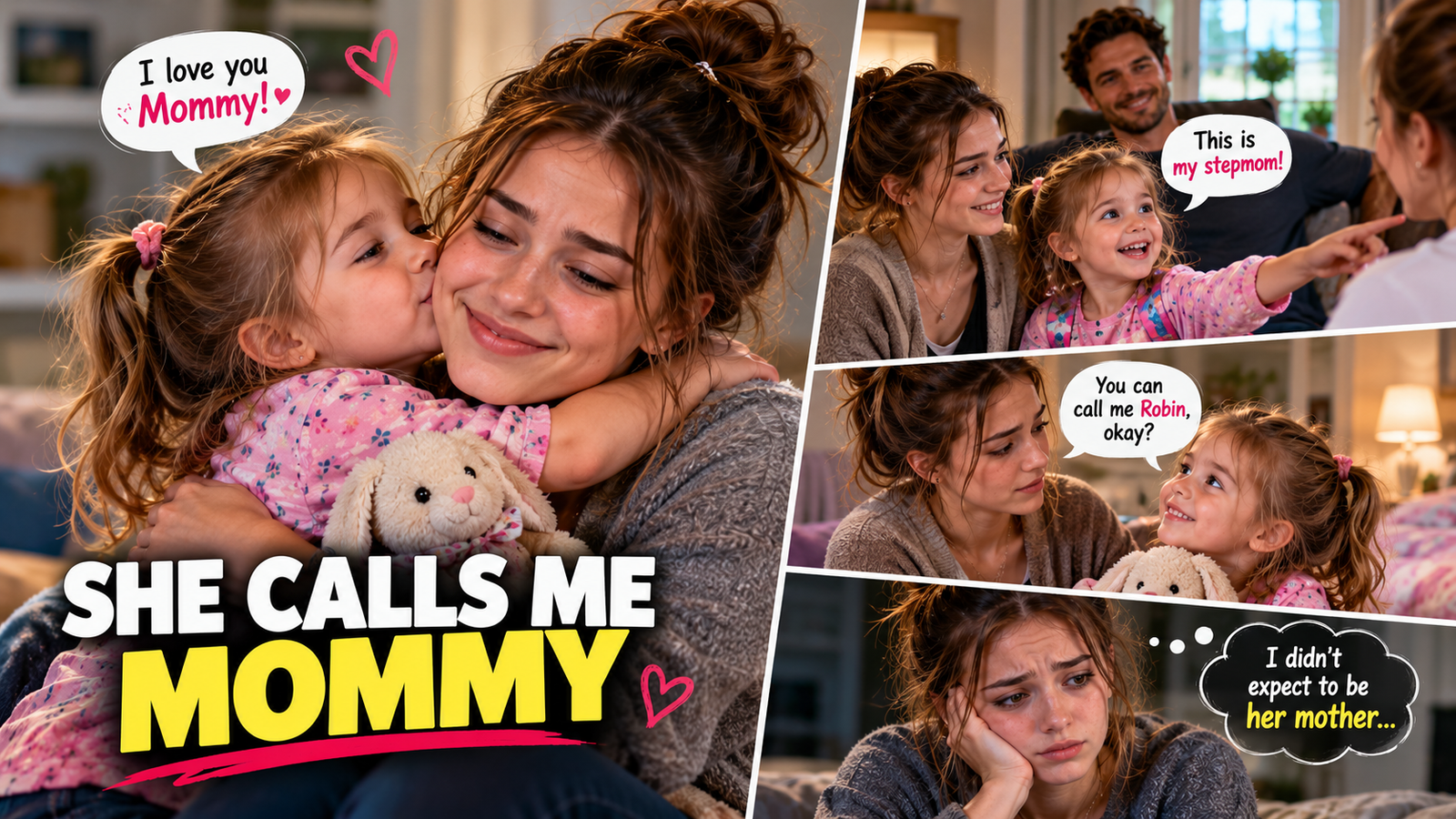
She explained to Bunny that she was not her biological mother and encouraged the little girl to call her Robin instead.
But Bunny continued using parental terms.
At three years old, children are still developing their understanding of family relationships and the different roles adults play in their lives.
They may form strong attachments to people who consistently offer attention, affection, and care.
Robin had become one of those people.
Although she appreciated Bunny’s affection, she was increasingly concerned about being placed in a parental role she had never agreed to take on.
She was Jeff’s girlfriend, not Bunny’s mother or legal guardian.
And she had only recently become involved in the family’s life.
When Helping With Childcare Turned Into Doing Almost Everything
According to Robin, the biggest problem was not Bunny’s affection.
It was the amount of responsibility she found herself carrying whenever the child stayed with Jeff.
Because Robin lived in his home, she already contributed to household responsibilities.
She washed dishes and completed many everyday chores.
However, when Bunny arrived for her two-week visits, Robin’s workload increased significantly.
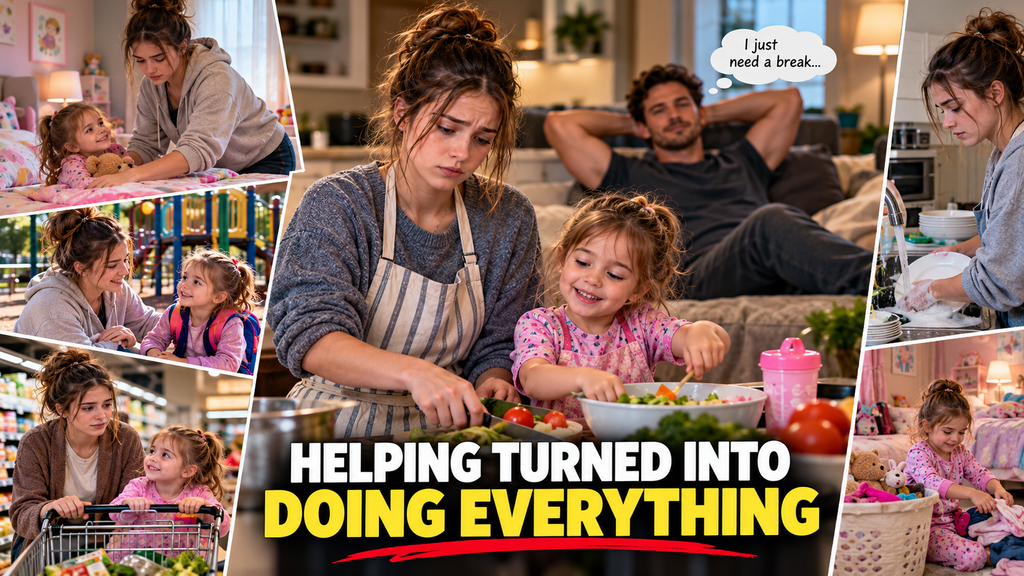
She described becoming responsible for preparing the child’s meals, cleaning her bedroom, making her bed, and helping with everyday activities.
She also played with Bunny, took her to the park, accompanied her on shopping trips, and collected her from preschool.
These tasks became part of Robin’s regular routine.
Meanwhile, Jeff frequently told her that he needed a break.
Robin began questioning why she was handling so many responsibilities when Bunny’s father was present.
The Difference Between Helping and Becoming the Main Caregiver
There is an important distinction between occasionally helping a partner care for a child and becoming responsible for most of that child’s daily needs.
In healthy relationships, partners may willingly share household responsibilities, including childcare.
Some couples gradually build blended families in which stepparents and other caregivers play deeply meaningful roles.
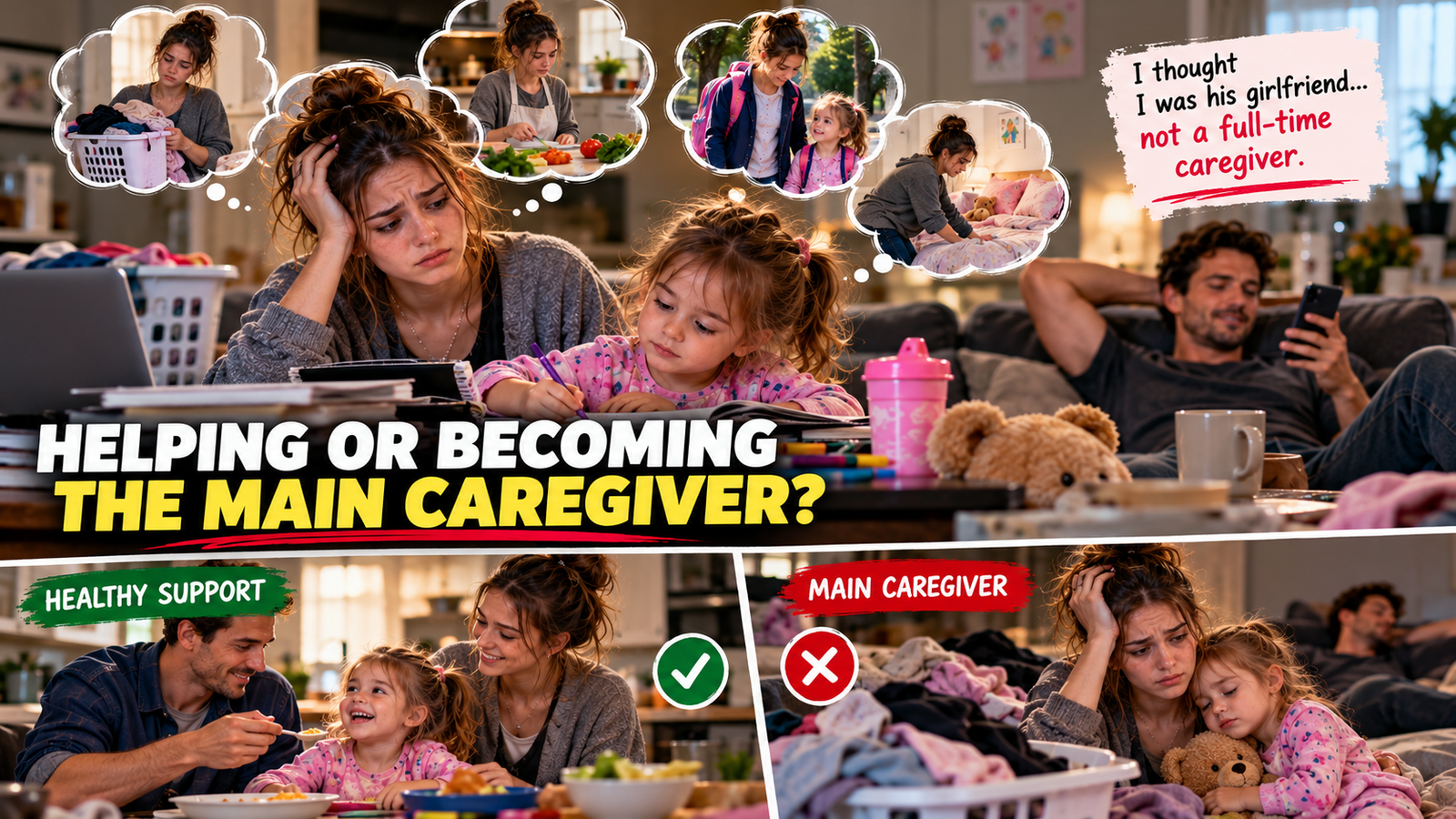
But those arrangements generally work best when expectations are discussed openly.
A person should understand what is being asked of them and have an opportunity to decide whether they are comfortable accepting that role.
Robin felt she had not been given that opportunity.
She had moved in expecting to develop a romantic relationship, not to become the primary person managing Bunny’s everyday routine.
At just 18, she was still navigating her own financial circumstances and personal future.
The additional responsibilities were becoming overwhelming.
Her experience illustrates how resentment can develop when one partner assumes that another will provide substantial unpaid domestic or caregiving labor without a clear agreement.
Providing support can strengthen a relationship.
Expecting support without discussing its limits can create serious tension.
A Confrontation With Bunny’s Biological Mother Made Matters Worse
As Robin struggled to manage her growing responsibilities, she encountered another challenge.
Bunny’s biological mother, identified in the Reddit account as Aubrey, was reportedly 38 years old.
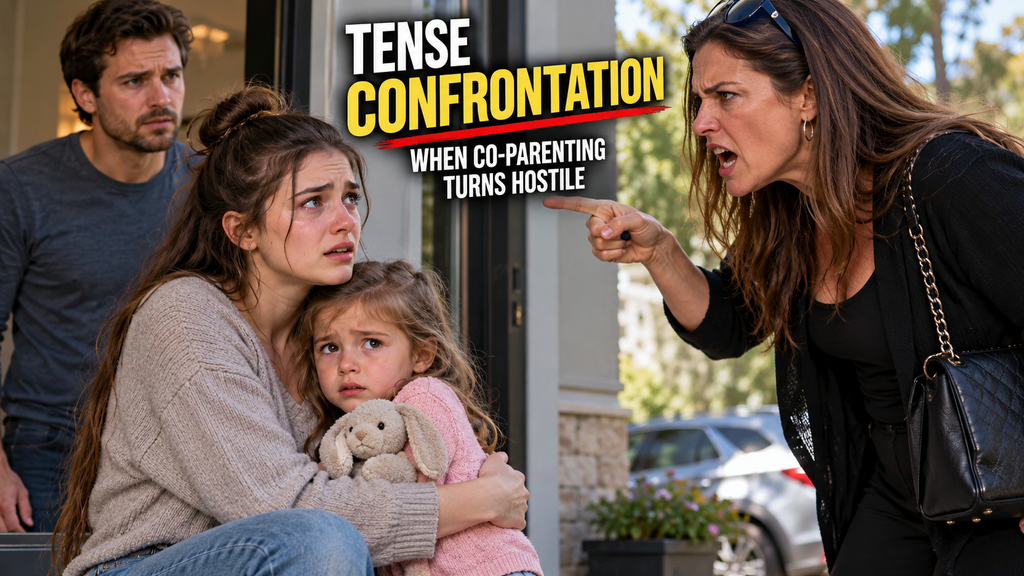
According to Robin, Aubrey arrived at Jeff’s home one day and found her spending time with Bunny.
Rather than having a calm conversation about her daughter’s relationship with Robin, Aubrey allegedly became angry.
Robin claimed that Aubrey insulted her, criticized her work, and made several deeply offensive remarks.
The confrontation reportedly escalated into a serious threat.
Robin alleged that Aubrey threatened to kill her.
That allegation has not been independently verified, but it was a significant part of the distress Robin described in her Reddit post.
What troubled her further was that Bunny was allegedly present during the confrontation.
The little girl was only three years old.
Why Adult Conflicts Can Affect Young Children
Arguments between adults are not unusual, particularly when former partners are navigating custody arrangements and new relationships.
However, there is a meaningful difference between ordinary disagreement and behavior involving intimidation, threats, or repeated hostility.
Children need an environment in which they can feel reasonably safe and supported.
According to the Centers for Disease Control and Prevention (CDC), witnessing violence in the home or community can be an adverse childhood experience. Unstable family circumstances may also affect a child’s sense of safety and security.
That does not mean every argument causes lasting psychological harm.
The circumstances, frequency, intensity, and support available to a child all matter.
Nevertheless, conflicts involving threats should be taken seriously.
In Robin’s situation, the reported confrontation added another burden to an already difficult living arrangement.
She was neither Bunny’s biological mother nor a party to the custody dispute.
Yet she was increasingly caught between the child’s parents.
A Preschool Invitation Created an Unexpected Emotional Dilemma
Not long after the confrontation, Bunny came home from preschool carrying a paper announcing a special school event.
The event was intended to give children an opportunity to bring their parents to school.
Bunny was excited.
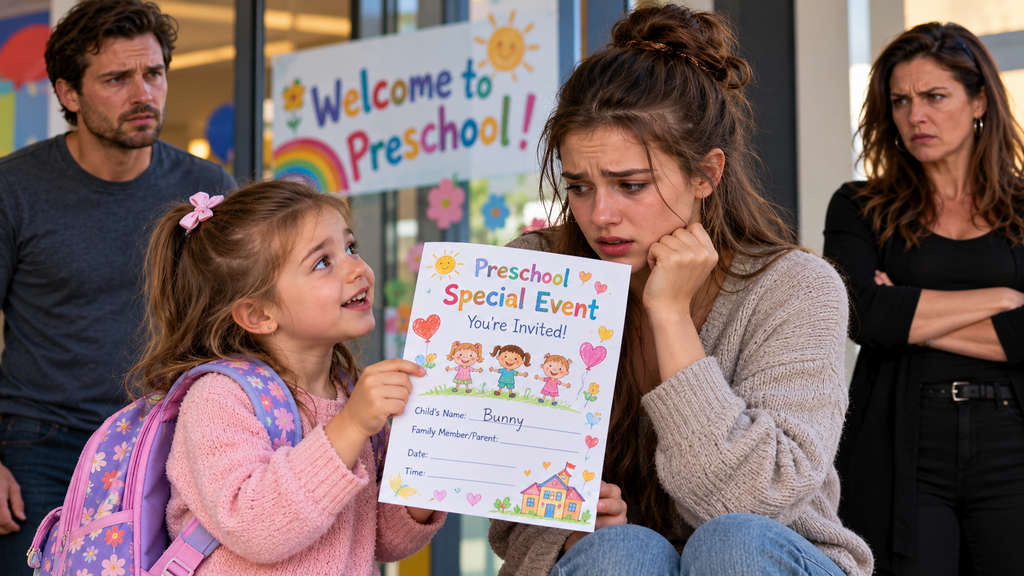
But instead of asking only for her biological parents to attend, she wanted Robin to accompany her.
According to Robin, the preschool had even indicated that she could participate because Bunny regularly described her as her stepmother.
The invitation may have seemed like a small, ordinary moment in a child’s life.
For Robin, it represented something much more complicated.
The little girl was no longer simply enjoying her father’s girlfriend’s company.
She was identifying Robin as someone who occupied an important parental position in her world.
Robin cared about Bunny and did not want to disappoint her.
However, attending the event could potentially reinforce a family role that Robin herself had never formally accepted.
Caught Between the Child’s Wishes and Her Mother’s Objections
The situation became more difficult when Aubrey reportedly confronted Robin again.
According to Robin, Aubrey made it clear that she did not want her spending time with Bunny.
This created competing expectations.
Bunny wanted Robin in her life
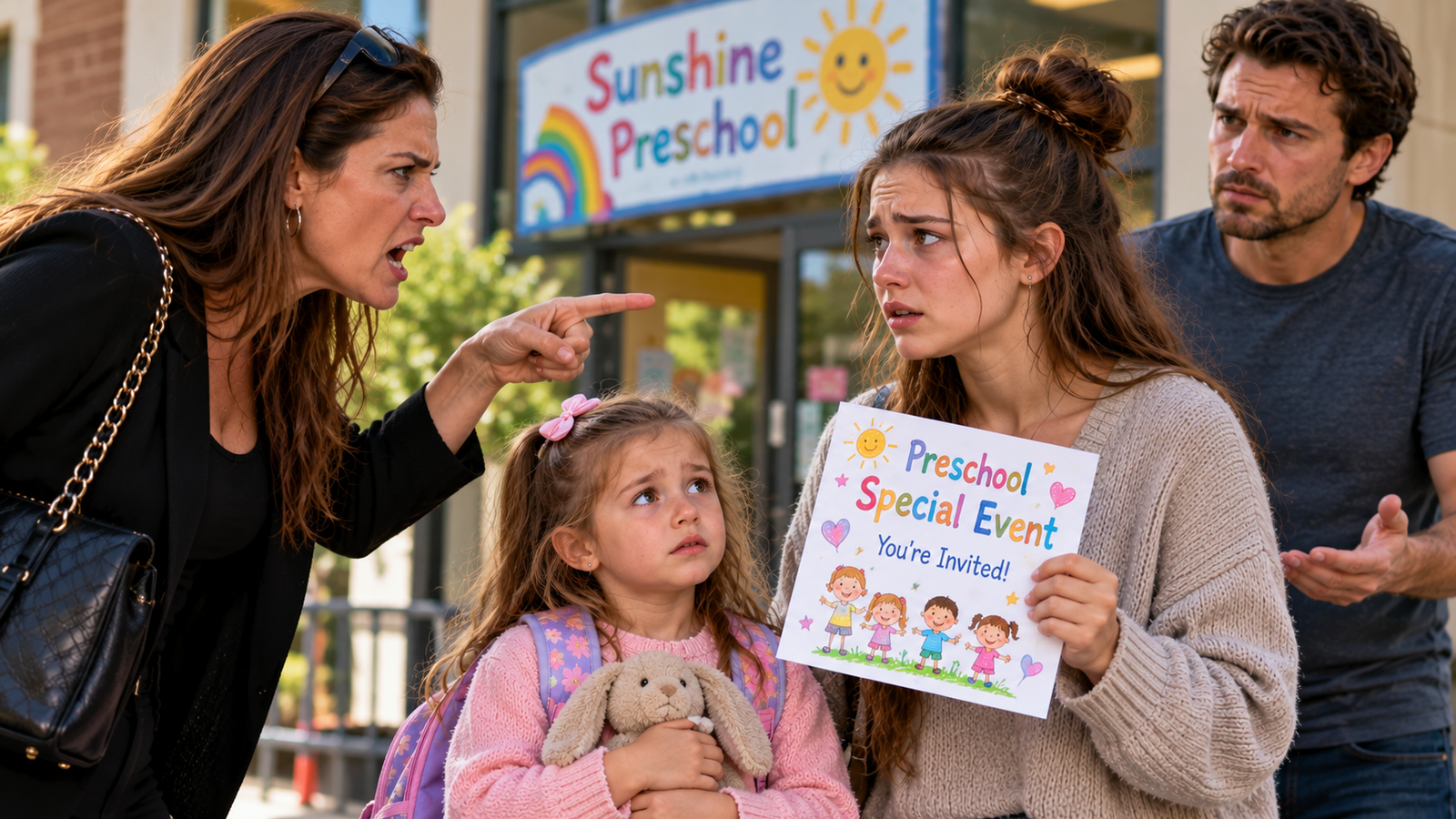
Her biological mother opposed the relationship.
Robin wanted to be kind to the child but was increasingly uncomfortable with the conflict.
Jeff, meanwhile, was the adult who had brought Robin into the household and was responsible for parenting Bunny during his scheduled time.
He was in the strongest position to clarify Robin’s role, discuss appropriate boundaries, and address the conflict with Bunny’s mother.
According to Robin, however, she was not receiving the support or reassurance she needed.
The preschool invitation had exposed a larger problem: the adults had not established a shared understanding of Robin’s place in the child’s life.
An Ongoing Custody Dispute Added Another Layer of Stress
Robin also explained that Jeff and Aubrey were involved in a legal dispute over custody arrangements.
Although Bunny had been alternating between her parents’ homes every two weeks, that schedule had reportedly become a source of disagreement.
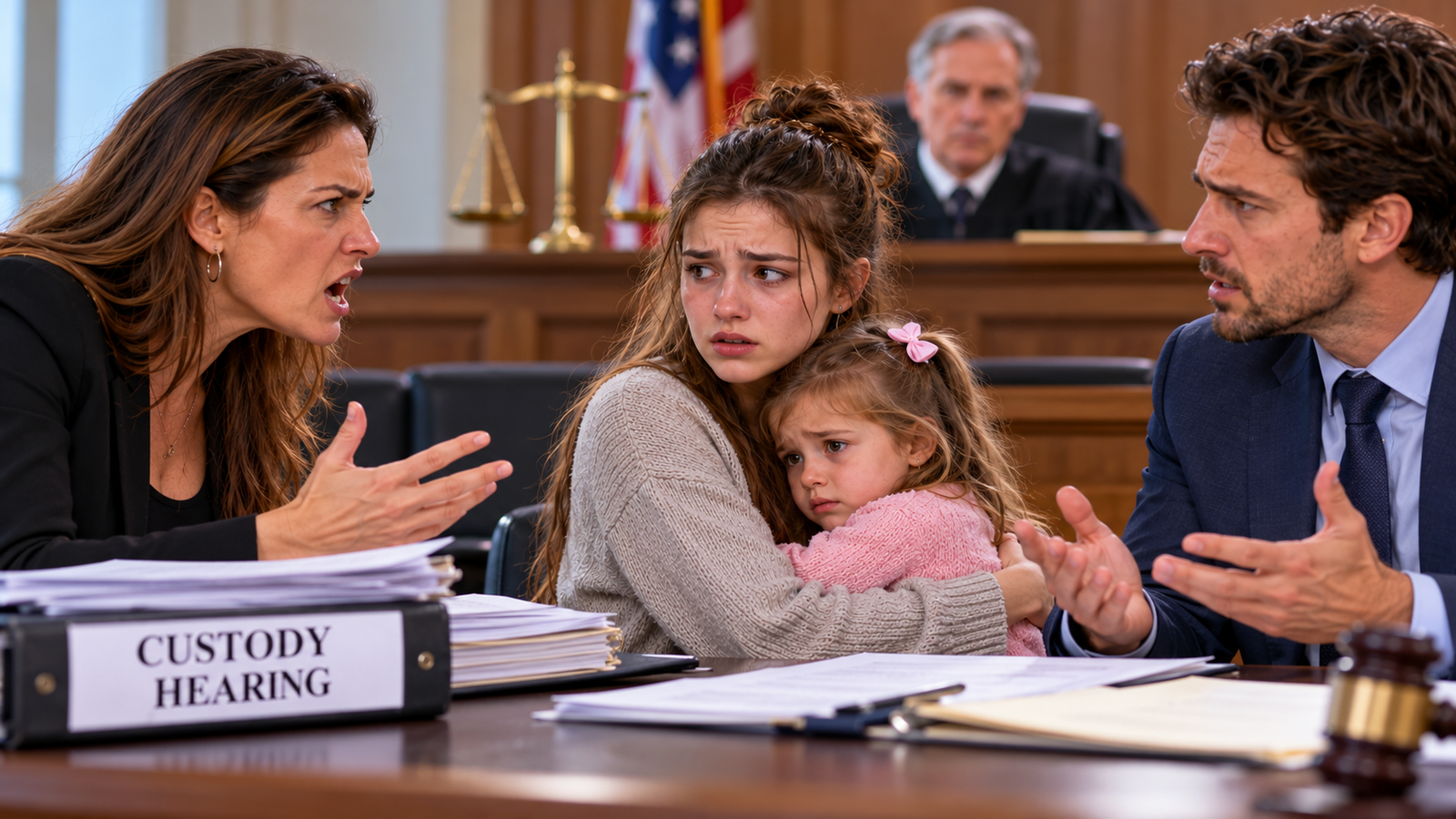
The parents were now addressing their differences in court.
Custody disagreements can involve complicated questions about parenting time, living arrangements, communication, and the child’s best interests.
The relevant laws differ depending on the jurisdiction.
The United States, Canada, and the United Kingdom each have their own legal frameworks, and individual circumstances may significantly affect the outcome of a custody case.
In this particular story, the dispute was described in an American context because Robin specifically referred to CPS.
Robin was not a legal party to the custody proceedings.
Yet the disagreement between Bunny’s parents was affecting her everyday life.
She was caring for the child while navigating hostility from the mother and what she regarded as inadequate involvement from the father.
Bunny Wanted to Stay With Robin
One of the most emotional details in Robin’s account was Bunny’s repeated desire to remain with her.
According to Robin, the little girl frequently expressed how much she wanted to live with her and stay close to her.
For Robin, those expressions of affection made the situation particularly painful.
She understood that Bunny had become emotionally attached.
At the same time, she knew the child was not legally her responsibility.
That difference matters.
A person may develop genuine affection for a partner’s child without acquiring the same responsibilities or decision-making authority as a parent or legal guardian.
In a custody dispute, the adults responsible for a child must work toward arrangements that protect the child’s welfare.
A new romantic partner should not automatically be expected to resolve the parents’ disagreements or become a substitute for their involvement.

Jeff Was Talking About Marriage While Robin Was Thinking About Leaving
According to Robin, Jeff continued discussing the possibility of marriage.
He spoke about their future together and suggested that she could continue creating online content after they married.
However, Robin was becoming increasingly uncomfortable with their current relationship.
She felt burdened by the household responsibilities.
She was distressed by Aubrey’s alleged threats.
And she believed Jeff was failing to take an active role in resolving the conflict.
When Robin raised concerns about Aubrey’s behavior, Jeff reportedly encouraged her to ignore the situation.
For Robin, that response was not enough.
A serious threat, if made, is not simply an ordinary disagreement that can always be resolved through avoidance.
Nor can ongoing childcare responsibilities be addressed by assuming that one partner will continue handling everything.
Why Marriage Would Not Automatically Solve These Problems
Marriage can provide a framework for a long-term partnership, but it does not automatically improve communication, settle disagreements, or create an equitable division of responsibilities.
When significant problems already exist, making a larger commitment without addressing them may create additional difficulties.
In Robin’s case, the issues involved more than ordinary relationship frustrations.
They included transparency, parenting expectations, household responsibilities, personal boundaries, and safety concerns.
Before making a long-term commitment, couples generally benefit from discussing how those matters will be handled.
Robin was increasingly questioning whether she wanted to remain in the relationship at all.
Jeff was talking about building a future together, while she was wondering how to leave.
That contrast highlighted the growing distance between their expectations.
The Age Difference Raised Concerns Among Reddit Readers
One detail that emerged in the comments attracted considerable attention.
When readers asked about Jeff’s age, Robin stated that he was 36 and would turn 37 in approximately two months.
Robin was only 18.
The two were therefore separated by roughly 18 years.
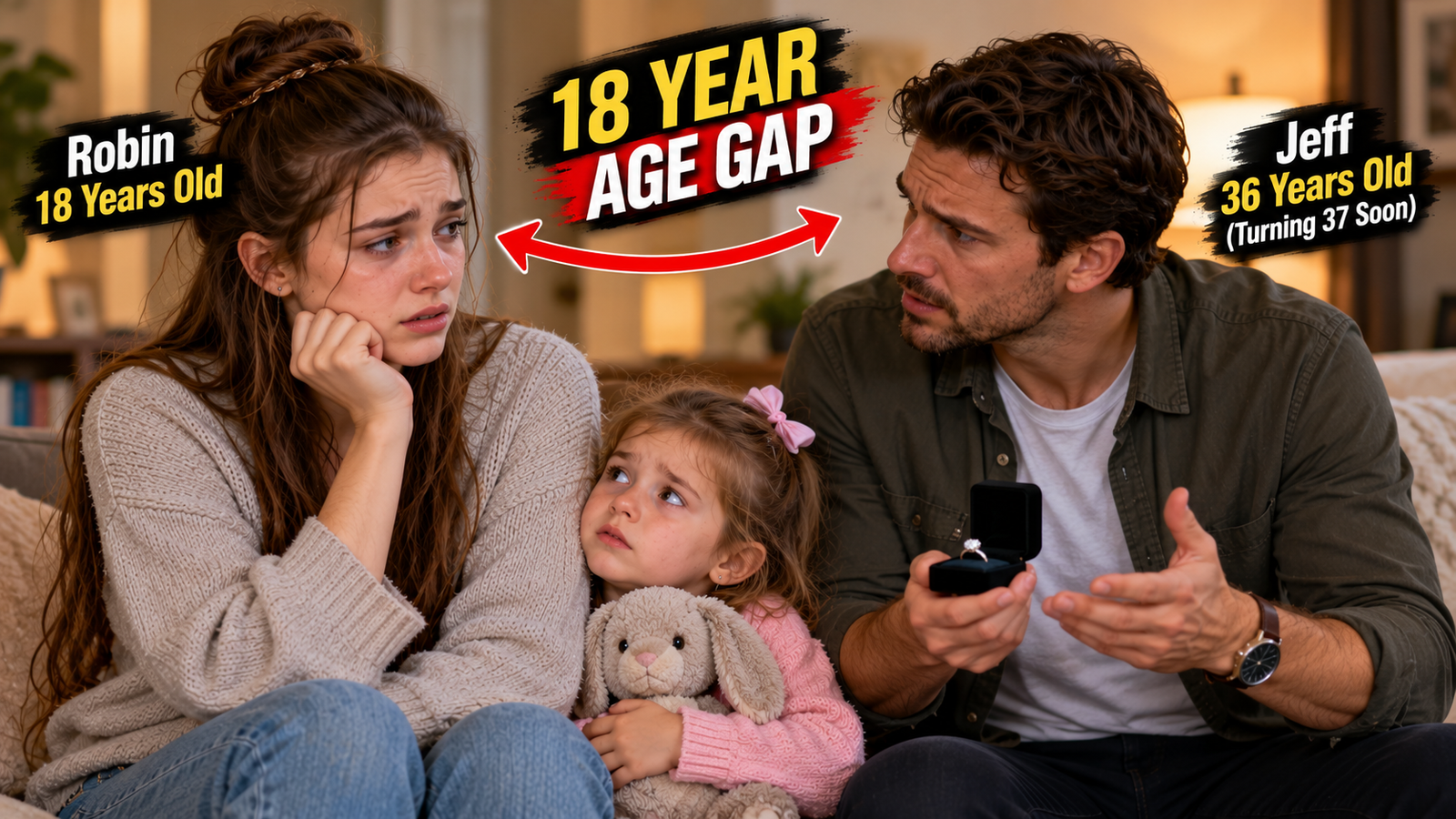
An age difference does not automatically make a relationship unhealthy.
Adults of different ages can establish respectful and mutually supportive partnerships.
However, age may become relevant when other factors create an imbalance in experience, resources, or decision-making power.
In this situation, Robin had moved into Jeff’s home because she was experiencing financial difficulties.
She had also discovered his parenting responsibilities only after moving in.
Over time, she felt that many household and childcare duties had fallen to her.
Together, these circumstances prompted questions about whether the relationship was operating on equal terms.
Financial Dependence Can Make Leaving More Difficult
Financial circumstances often influence relationship decisions.
Someone who relies on a partner for accommodation may face practical difficulties when considering separation.
They may need to find somewhere else to live, arrange transportation, maintain access to their belongings, and ensure they can support themselves.
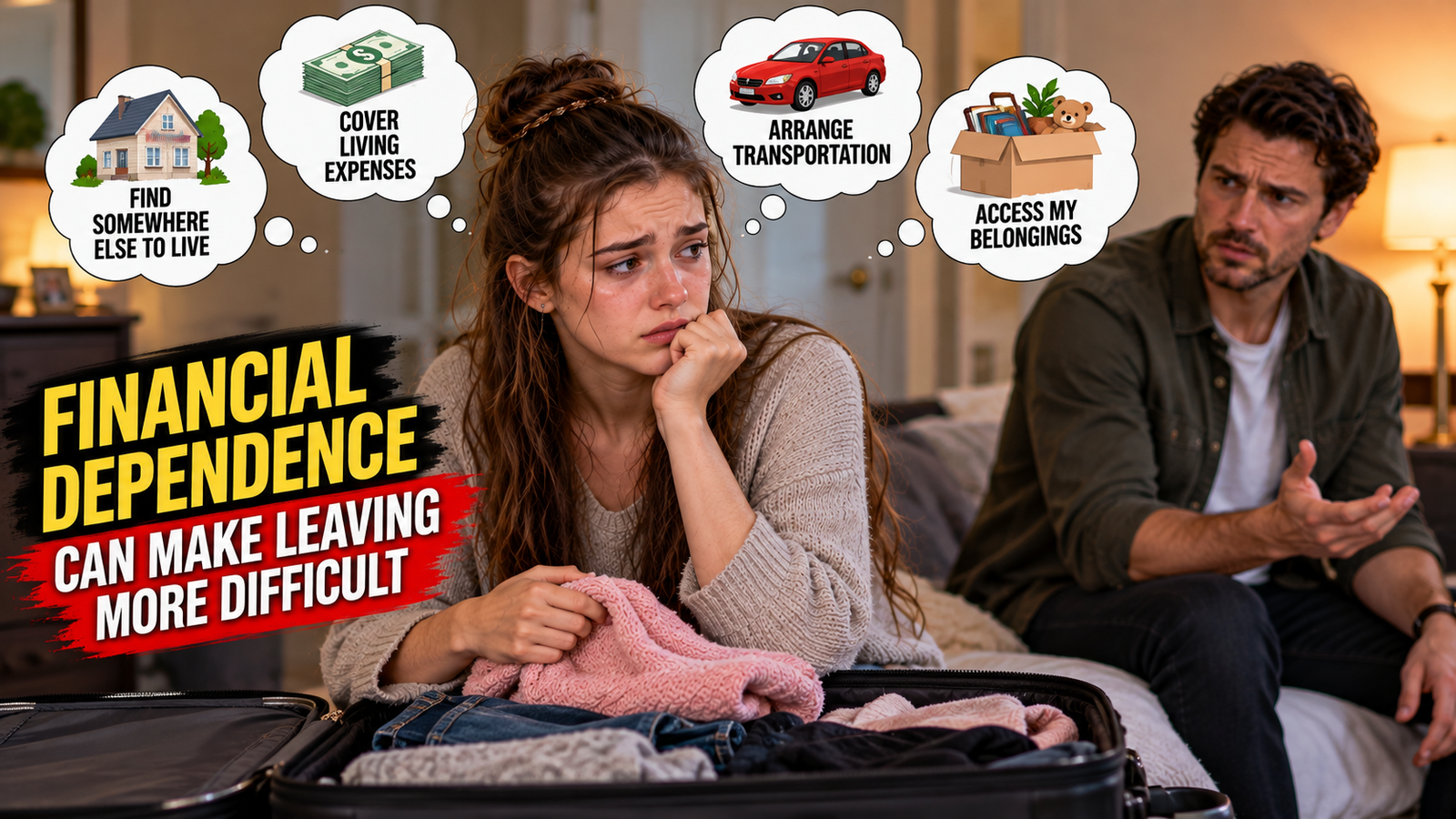
These concerns do not necessarily mean that financial control or coercion is taking place.
Robin’s account does not independently establish that Jeff intentionally used her financial situation against her.
However, her experience shows why financial independence and clear expectations can be important in a relationship.
Having the practical ability to leave may influence whether someone feels free to make decisions about their future.
For Robin, the problem was no longer simply whether she loved Jeff.
It was whether remaining in his home was compatible with the kind of life she wanted to build.
Why Robin Considered Leaving in the Middle of the Night
By the time Robin shared her story on Reddit, she was expressing intense frustration.
She had attempted to write about her situation before but reportedly became so upset that she deleted what she had written.
Eventually, she asked whether leaving during the night without telling anyone would be wrong.
Her question reflected the extent of her discomfort.
But leaving was not emotionally straightforward.
Robin had developed genuine affection for Bunny.
The child had become accustomed to Robin’s presence and treated her as someone important.
If Robin ended her relationship with Jeff, she could also lose contact with Bunny.
That possibility made the decision especially difficult.

Loving a Child Does Not Mean Accepting Every Responsibility
One of the central issues in this story is the difference between emotional attachment and parental responsibility.
Robin could care about Bunny without agreeing to become her permanent caregiver.
She could recognize the child’s affection without making a lifelong commitment to Jeff.
And she could feel sadness about leaving while still believing that separation might be the right decision for her own circumstances.
The needs of children should always be treated seriously.
But those needs should be addressed primarily by responsible parents and guardians through stable, appropriate arrangements.
When a romantic relationship becomes the foundation of a child’s caregiving routine, changes in that relationship can create difficult consequences.
That is why adults need to consider children’s emotional stability when introducing new partners into family life.
Robin’s situation demonstrates how quickly an informal caregiving arrangement can become emotionally significant.
Why She Considered Calling Child Protective Services
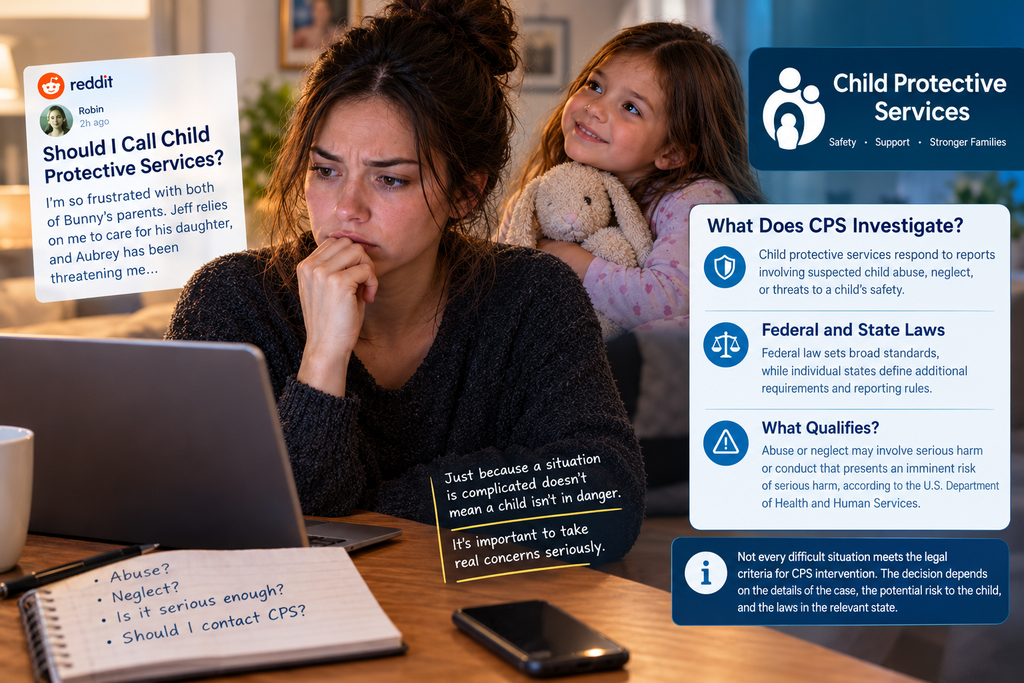
Robin’s initial Reddit post also raised the possibility of contacting Child Protective Services, commonly known as CPS in the United States.
She was frustrated with both of Bunny’s parents.
She believed Jeff was relying heavily on her to care for his daughter, while Aubrey had allegedly behaved in a threatening manner.
Robin questioned whether the situation justified involving child protection authorities.
However, determining whether a child has experienced abuse or neglect requires more than identifying troubling behavior.
What Does Child Protective Services Actually Investigate?
In the United States, child protective services agencies respond to reports involving suspected child abuse, neglect, or threats to a child’s safety.
Federal law provides broad standards, while individual states establish additional definitions and reporting requirements.
According to the U.S. Department of Health and Human Services, abuse or neglect may involve serious harm or conduct that presents an imminent risk of serious harm.
The details of a particular case matter.
A parent asking another adult to help with childcare is not automatically committing legal neglect.
Similarly, a parent making poor decisions does not necessarily mean the child meets the legal criteria for protective intervention.
However, legitimate concerns about a child’s safety should not be dismissed simply because the situation is complicated.
The appropriate response depends on the available information, the potential risk to the child, and the laws governing the relevant jurisdiction.
Robin’s online account alone does not establish that either parent legally neglected or abused Bunny.
Robin Later Clarified That She Would Not Contact CPS
An important development appeared in Robin’s replies to other Reddit users.
Although she initially considered reporting both parents, she later indicated that she did not intend to contact CPS.
In one response, she acknowledged that she did not believe there was a sufficient reason to involve the agency.
In another, she explicitly confirmed that she was not making a CPS report.
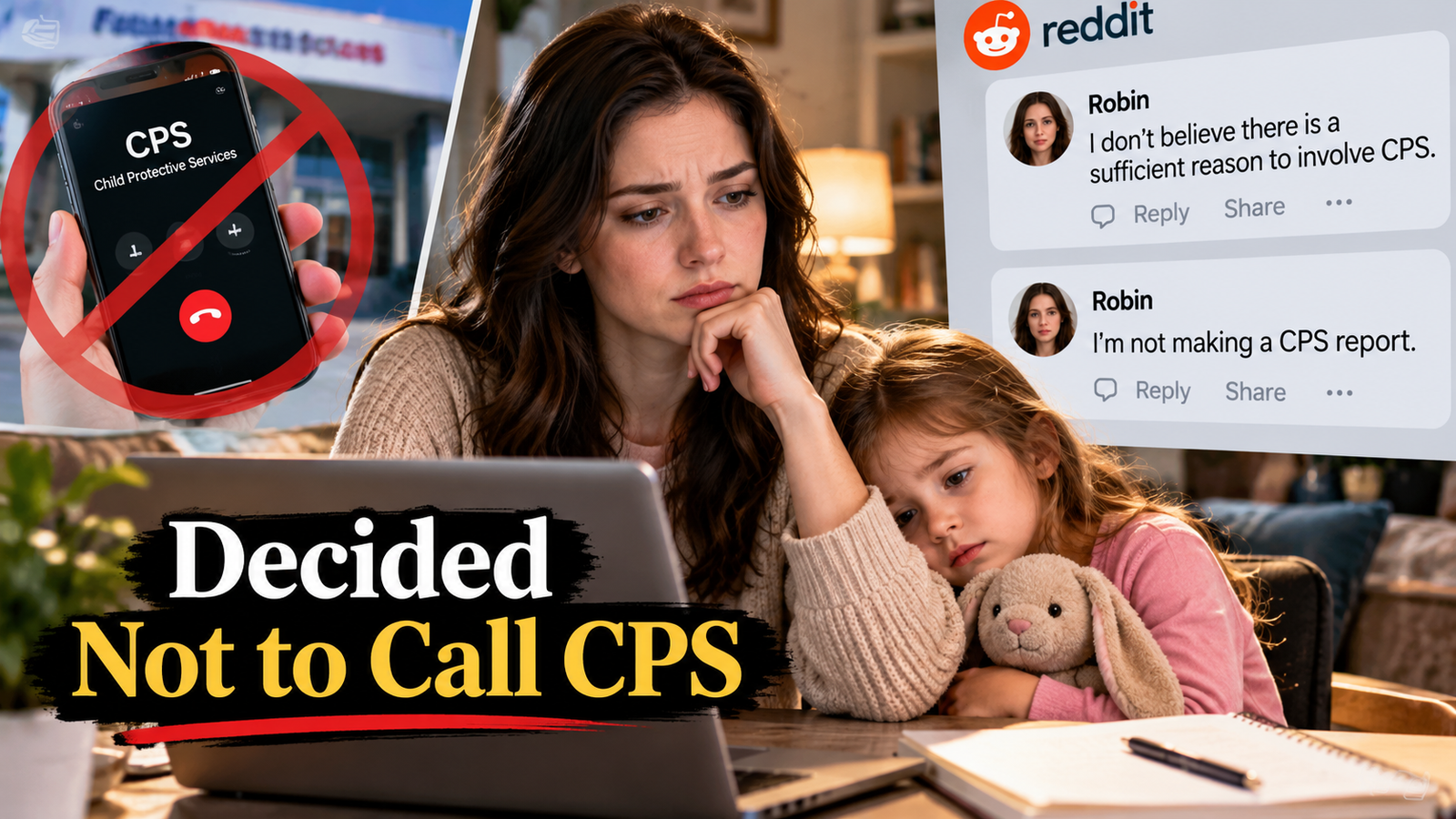
This distinction matters when understanding the full story.
The original post presented contacting CPS as a possibility, not an action that had already occurred.
The later comments showed that Robin reconsidered that idea after discussing the circumstances.
There is no confirmed evidence in the available discussion that she ultimately filed a report.
Nor does the available account establish that an investigation took place.
Reddit Users Debated Whether She Should Stay or Leave
Robin’s account prompted a wide range of responses.
Many readers believed that she should leave the relationship and focus on her own future.
Some were particularly concerned by the combination of her age, financial difficulties, and the responsibilities she had assumed.
Others argued that Jeff should have been more transparent about having a child before inviting Robin into a shared living arrangement.
The amount of childcare Robin described also attracted criticism.
Several commenters questioned why Bunny’s father appeared to be relying so heavily on his much younger girlfriend to manage his daughter’s daily routine.
Some Readers Focused on Robin’s Independence
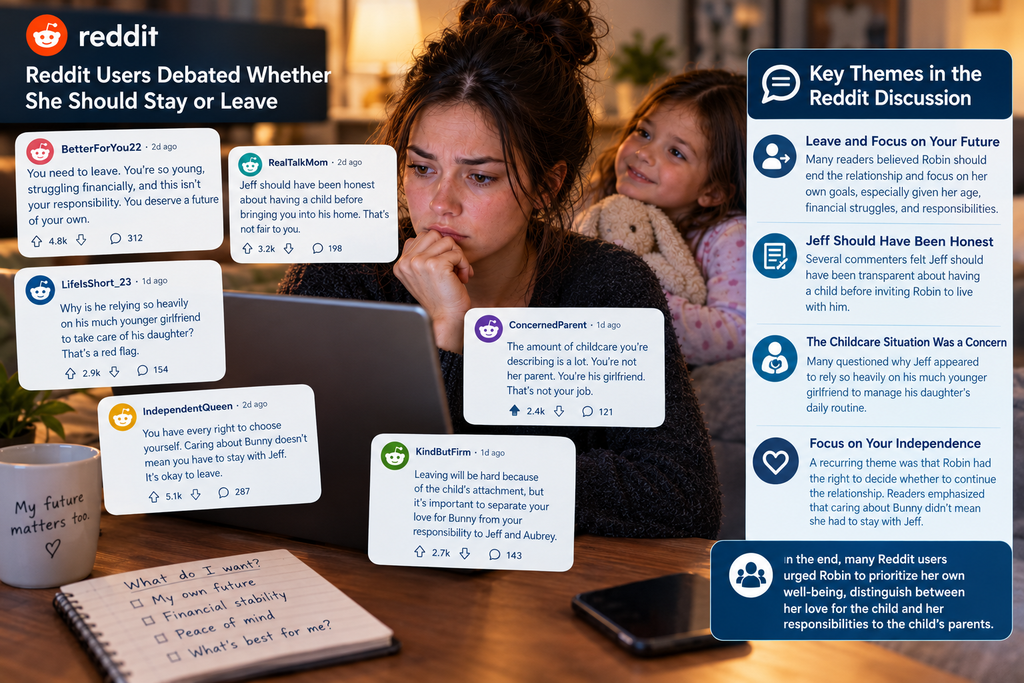
A recurring theme in the discussion was that Robin had the right to decide whether she wanted to continue the relationship.
Readers emphasized that caring about Bunny did not mean she had to remain with Jeff indefinitely.
They also recognized that leaving would be emotionally difficult because of the child’s attachment.
For many participants, the priority was helping Robin distinguish between her affection for the little girl and her responsibilities toward the child’s parents.
Others Questioned Whether CPS Was Necessary
The CPS issue generated a more divided discussion.
Some readers believed the alleged threats and the family’s conflict were serious enough to justify seeking professional guidance.
Others argued that Robin had not described clear evidence of child abuse or neglect.
Several commenters pointed out that the decision to leave Jeff and the decision to report the family were separate matters.
A person may have valid reasons to end a relationship without necessarily having evidence that child protection authorities should intervene.
The disagreement reflected the complexity of the situation.
While readers could offer opinions based on Robin’s account, they did not have direct access to the family’s circumstances, the custody proceedings, or independent evidence about Bunny’s care.
The Three-Year-Old Child at the Center of the Conflict
Although Robin’s experience was the focus of the Reddit discussion, Bunny’s situation deserves equal consideration.
At three years old, she could not reasonably be expected to understand the legal, emotional, and practical complexities surrounding the adults in her life.
She knew that Robin played with her, prepared her meals, accompanied her on outings, and spent time with her.
These everyday experiences helped create a meaningful connection.
Bunny’s affectionate behavior suggested that she regarded Robin as an important person in her routine.
However, the available information does not allow anyone to determine precisely how Bunny understood the relationship or how she would respond to a possible separation.
Why Stable Caregiving Relationships Matter
Young children benefit from predictable routines and relationships with adults who respond consistently to their needs.
The CDC emphasizes the importance of safe, stable, and nurturing relationships in supporting healthy childhood development.
Instability, violence, and other potentially traumatic experiences can place children at greater risk of emotional and developmental difficulties.
However, a change in family circumstances does not automatically cause lasting harm.
Many children adjust to separation, relocation, and new living arrangements with appropriate support and dependable care.
What matters is how the adults manage those transitions.
In Bunny’s case, her parents would have primary responsibility for maintaining a safe and supportive environment.
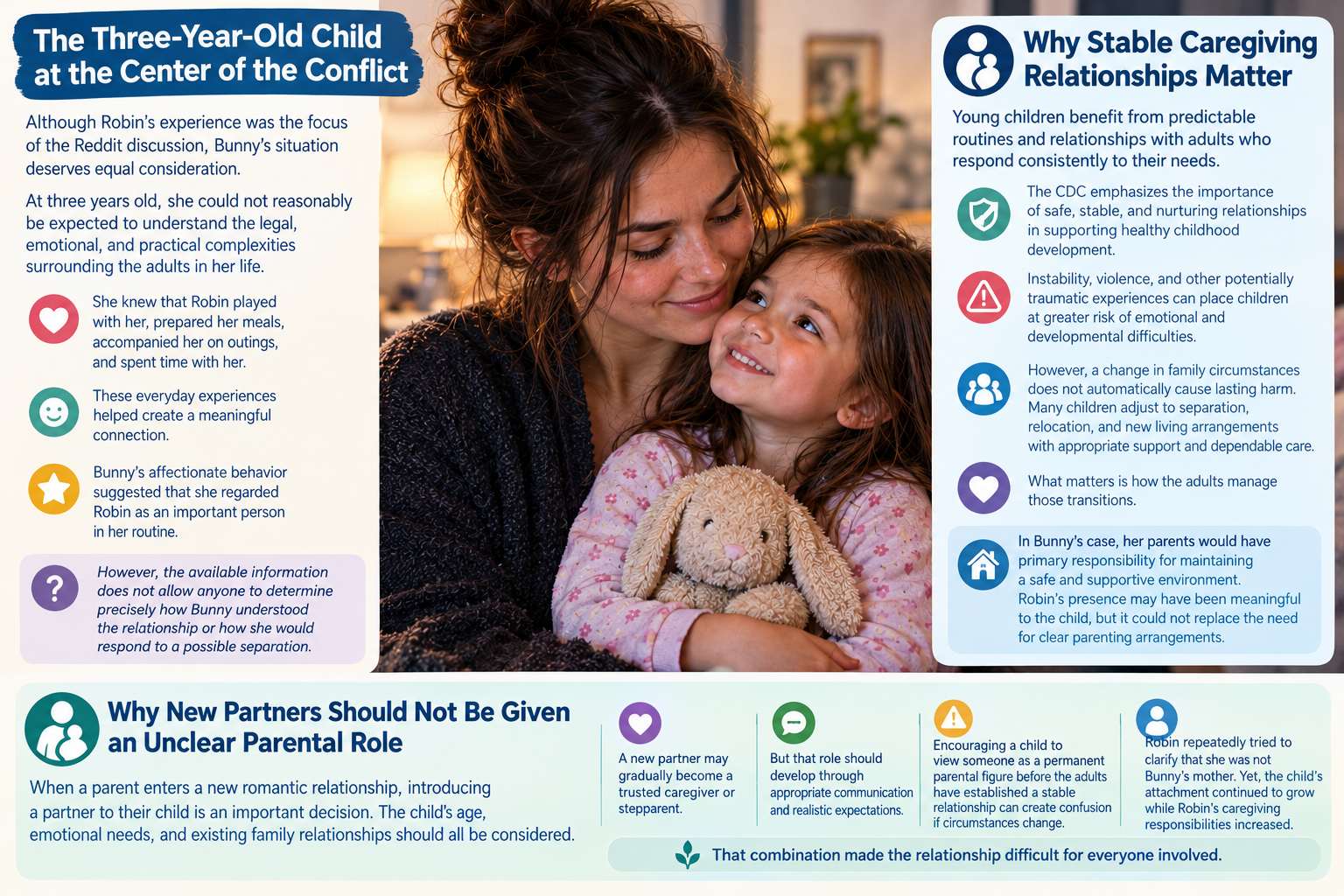
Robin’s presence may have been meaningful to the child, but it could not replace the need for clear parenting arrangements.
Why New Partners Should Not Be Given an Unclear Parental Role
When a parent enters a new romantic relationship, introducing a partner to their child is an important decision.
The child’s age, emotional needs, and existing family relationships should all be considered.
A new partner may gradually become a trusted caregiver or stepparent.
But that role should develop through appropriate communication and realistic expectations.
Encouraging a child to view someone as a permanent parental figure before the adults have established a stable relationship can create confusion if circumstances change.
Robin repeatedly tried to clarify that she was not Bunny’s mother.
Yet the child’s attachment continued to grow while Robin’s caregiving responsibilities increased.
That combination made the relationship difficult for everyone involved.
What This Story Reveals About Parenting and Relationship Boundaries
Robin’s experience raises several questions that extend beyond one Reddit post.
How much childcare should someone reasonably expect from a boyfriend or girlfriend?
When should a parent introduce a new partner to their child?
How can couples share household responsibilities without creating resentment?
And what happens when a child becomes emotionally attached to an adult whose long-term role remains uncertain?
There are no universal answers, but the story highlights several principles that can help families avoid similar misunderstandings.
Honesty Should Come Before Major Relationship Decisions
A person’s children are an important part of their life.
Before moving in together, partners should discuss relevant family responsibilities and living arrangements.
This includes whether children will regularly stay in the home, how childcare is organized, and what level of involvement is expected from the new partner.
Such conversations help both people make informed decisions.
They can also prevent one partner from discovering major responsibilities only after making a financial or emotional commitment.
Childcare Responsibilities Should Be Clearly Discussed
Helping a partner raise children can be a meaningful part of a relationship.
But it should not be assumed that sharing a home automatically makes someone responsible for every aspect of a child’s care.
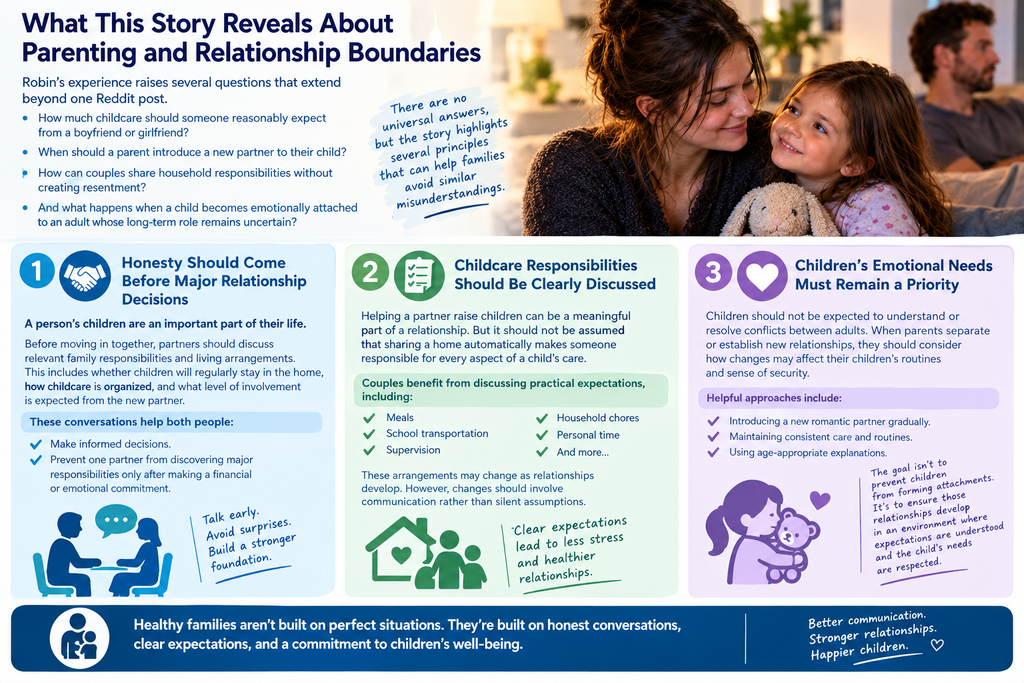
Couples benefit from discussing practical expectations, including meals, school transportation, supervision, household chores, and personal time.
These arrangements may change as relationships develop.
However, changes should involve communication rather than silent assumptions.
Children’s Emotional Needs Must Remain a Priority
Children should not be expected to understand or resolve conflicts between adults.
When parents separate or establish new relationships, they should consider how changes may affect their children’s routines and sense of security.
Introducing a new romantic partner gradually, maintaining consistent care, and using age-appropriate explanations can help children navigate family changes.
The goal is not to prevent children from becoming attached to caring adults.
It is to ensure those relationships develop in an environment where expectations are understood and the child’s needs are respected.
Personal Boundaries Are Part of a Healthy Relationship
Saying no to a responsibility does not necessarily mean someone lacks compassion.
People can be generous, supportive, and affectionate while maintaining limits around what they are willing or able to do.
For someone in Robin’s situation, setting boundaries could involve discussing childcare expectations, household responsibilities, safety concerns, and future plans.
Whether those conversations would resolve the relationship’s problems cannot be determined from the available account.
Nevertheless, the underlying principle remains important: a healthy relationship should allow both partners to express concerns without being pressured into roles they never agreed to accept.
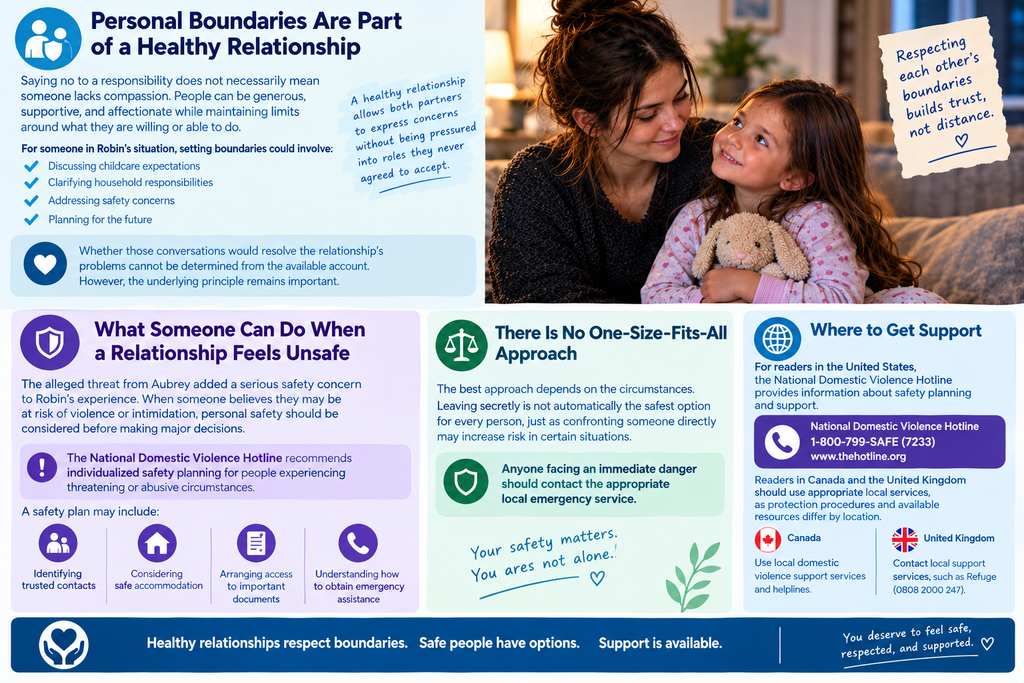
What Someone Can Do When a Relationship Feels Unsafe
The alleged threat from Aubrey added a serious safety concern to Robin’s experience.
When someone believes they may be at risk of violence or intimidation, personal safety should be considered before making major decisions.
The National Domestic Violence Hotline recommends individualized safety planning for people experiencing threatening or abusive circumstances.
Depending on the situation, a safety plan may include identifying trusted contacts, considering safe accommodation, arranging access to important documents, and understanding how to obtain emergency assistance.
The best approach depends on the circumstances.
Leaving secretly is not automatically the safest option for every person, just as confronting someone directly may increase risk in certain situations.
Anyone facing an immediate danger should contact the appropriate local emergency service.
For readers in the United States, the National Domestic Violence Hotline provides information about safety planning and support.
Readers in Canada and the United Kingdom should use appropriate local services, as protection procedures and available resources differ by location.
Would Leaving Be Unfair to Bunny?
Perhaps the most emotionally difficult question raised by Robin’s experience is whether leaving the relationship would be unfair to the little girl.
Bunny had developed a strong attachment to her.
She called Robin her mother, wanted her at school events, and expressed a desire to stay with her.
Walking away from that relationship could be painful for both of them.
But the situation also requires acknowledging Robin’s position.
She was an 18-year-old woman who had not entered the relationship knowing she would be expected to provide extensive childcare.
She was not Bunny’s biological parent or legal guardian.
And she had become uncomfortable with the household arrangements and conflict between the child’s parents.
Remaining in an unhappy relationship solely to preserve contact with a child is not necessarily a sustainable solution.
A more important consideration is whether the adults legally and practically responsible for the child can provide consistent, appropriate care.
Robin could care deeply about Bunny while still deciding that her relationship with Jeff was no longer right for her.
Those feelings are not mutually exclusive.
Her affection for the child does not erase her right to make decisions about her own future.
Frequently Asked Questions
Why did the 18-year-old want to leave her boyfriend?
Robin said she felt overwhelmed by the childcare responsibilities she had assumed, conflict with her boyfriend’s former partner, and a lack of support from Jeff. She was also concerned about an alleged threat made against her.
Did Robin know her boyfriend had a daughter before moving in?
According to her Reddit account, she did not. Robin said she learned about Jeff’s three-year-old daughter only after moving into his home during a period of financial difficulty.
How old was Robin’s boyfriend?
Robin later stated in the Reddit comments that Jeff was 36 years old and approaching his 37th birthday. Robin was 18 at the time.
Why did Bunny call Robin her mother?
According to Robin, Bunny became attached to her and began calling her “Mama” and “Mommy.” Robin repeatedly encouraged the child to use her name, but Bunny continued referring to her in parental terms.
The available account does not establish exactly why the child developed that understanding.
Did Robin contact Child Protective Services?
There is no confirmed report that she did. Although Robin initially considered contacting CPS, she later stated in the comments that she did not intend to report the family.
Is relying on a partner for childcare considered child neglect?
Not automatically. Parents may rely on other responsible adults to help care for their children.
Whether a particular situation qualifies as neglect depends on the child’s circumstances, potential harm or risk, and the laws of the relevant jurisdiction.
Did Robin eventually leave Jeff?
The available Reddit post and related comments do not confirm her final decision. She indicated that she was considering packing her belongings and leaving, but a verified outcome was not provided.
Final Thoughts: When Caring for a Child Makes Leaving More Complicated
Robin’s story began with what appeared to be a promising relationship.
She met someone who seemed caring, began dating him, and eventually moved into his home while facing financial difficulties.
But shortly afterward, she discovered an unexpected family responsibility.
Her boyfriend had a three-year-old daughter who regularly stayed with him.
The child quickly developed a strong attachment to Robin, while Robin began handling a significant share of her everyday care.
As the relationship continued, a custody dispute, confrontation with the child’s mother, and disagreements over responsibilities left Robin questioning her future.
Her boyfriend spoke about marriage.
She was considering leaving.
And between those conflicting expectations stood a little girl who had come to regard Robin as an important parental figure.
The full outcome remains unknown.
There is no verified confirmation that Robin left Jeff, and her later comments indicated that she did not plan to contact CPS.
What the story does reveal is a difficult emotional reality.
Love, responsibility, and personal boundaries do not always fit neatly together.
A person can care deeply about a child without being prepared to become that child’s parent.
A partner can offer support without accepting unlimited responsibilities.
And someone can decide that a relationship is no longer right for them even when leaving may affect people they care about.
For parents, the story emphasizes the importance of honesty, stable caregiving arrangements, and protecting children from adult conflicts.
For people entering relationships with parents, it highlights the value of understanding expectations before making major commitments.
And for anyone navigating an unhealthy or overwhelming relationship, it raises an important question about the difference between compassion and obligation.
Ultimately, the most difficult part of Robin’s situation may not have been deciding whether she wanted to leave Jeff.
It may have been accepting that leaving him could also mean saying goodbye to a child who had never asked to be placed in the middle of their problems.
If a young child had come to see you as a parent, would you remain in an unhappy relationship to preserve that bond, or would you choose a different future even if saying goodbye was heartbreaking?
Editorial Note and Sources
This article is based on a first-person account posted on Reddit. The names Robin, Jeff, Aubrey, and Bunny are those used in the original account. The described events, personal relationships, and allegations reflect the poster’s perspective and have not been independently verified.
The article includes additional editorial analysis of parenting responsibilities, relationship boundaries, and child welfare. It does not establish legal wrongdoing or make a psychological diagnosis of any individual.
Primary source: Original Reddit discussion — r/amiwrong
Additional references:
Centers for Disease Control and Prevention — About Adverse Childhood Experiences
U.S. Department of Health and Human Services — What Is Child Abuse or Neglect?
National Domestic Violence Hotline — Safety Planning and Support
This article is intended for general informational and editorial purposes. It is not a substitute for professional legal, medical, or mental health advice.