
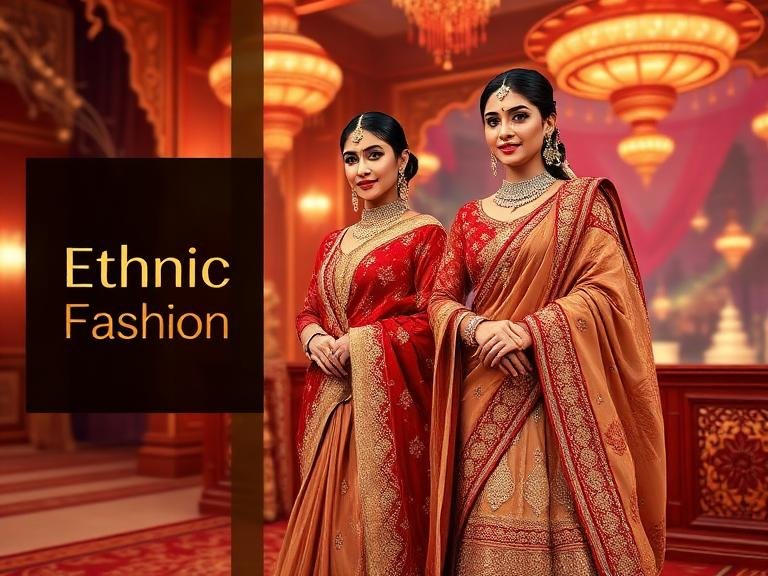
Ethnic Fashion Network – Celebrating the Soul of What Our Mothers Wore
Look, there is something profoundly moving about draping a saree that your grandmother once wore, or fastening a hand-embroidered shalwar kameez that carries the scent of home. The thing is, ethnic fashion is never just fabric; it is a living, breathing archive of who we are, where we come from, and the generations of women whose hands stitched, dyed, and loved these garments into existence. Actually, an Ethnic Fashion Network is a vibrant, global sisterhood that honours traditional attire from the intricate lehengas of South Asia to the flowing boubous of West Africa, from the elegant kimonos of Japan to the beautifully embroidered huipils of Latin America. To be honest, I started Women Life Network with a burning desire to create a space where these cultural treasures are not just preserved but celebrated, modernised, and shared among women who understand their soul-deep value. In my opinion, ethnic fashion is where our identities live out loud, and building a network around it is one of the most powerful acts of cultural pride and feminine connection we can undertake. Let me explain how this beautiful network operates and how you can become a vital thread in its fabric.
What an Ethnic Fashion Network Truly Represents
You know that quiet rush of pride when you wear a traditional outfit and suddenly feel connected to women you’ve never met ancestors, artisans, and sisters across borders who share the same love for heritage textiles? The truth is, an ethnic fashion network transforms a piece of clothing into a shared story. I personally experienced the emotional power of this when I saw a young student wear a beautifully restored Ajrak shawl to a university event and explain its centuries-old Sindhi origins to a captivated international audience. Keep in mind, this network is not about freezing traditions in time; it is about keeping them alive, relevant, and accessible for modern women who walk in two worlds. Here is what lies at the heart of this richly woven sisterhood.
- Cultural preservation through personal style: The network encourages women to wear, document, and share their traditional garments, ensuring that embroidery techniques, weaving methods, and regional designs do not fade into obscurity.
- Fusion and respectful modernisation: Women exchange creative ideas on how to pair a handloom dupatta with a contemporary dress, or style a vintage kente cloth skirt for a modern workplace, breathing new life into heirloom pieces.
- Artisan appreciation and ethical support: The network values the hands behind the craft the weavers, dyers, embroiderers and shares information on how to support ethical, fair-trade ethnic brands and local artisans.
- Cross-cultural learning and exchange: Women from one cultural background learn about the ethnic attire of another, fostering deep respect, understanding, and a beautiful exchange of styling wisdom.
- Body-positive and age-positive ethnic styling: The network celebrates how traditional attire flatters women of all sizes, ages, and life stages, dismantling the myth that certain garments are only for certain body types or youth.
How Women Life Network Nurtures This Global Ethnic Circle
Let me take you behind the scenes of how our platform actively builds this ethnic fashion network. The thing is, I never wanted our traditional wear section to feel like a dusty museum exhibit. Actually, the most powerful content we produce comes from real women who write to us with photos of their wedding lehengas, their mother’s vintage sarees, their hand-me-down kente cloth, their carefully preserved Palestinian thobes, and their locally tailored modern kurtis. In my opinion, the magic truly ignites when a reader from Delhi sees how a woman in Nairobi styles her kitenge for a formal dinner, and she adapts that vibrant colour-blocking idea to her own churidar kurta. Here is how we bring this living, breathing network to life.
- Reader-submitted ethnic style diaries: We actively invite women to share photos and stories of themselves in traditional attire at weddings, festivals, Eid, Diwali, cultural ceremonies, or simply a beautiful ordinary day.
- Regional ethnic deep dives: We explore the history, regional variations, and modern interpretations of garments like the saree, shalwar kameez, abaya, boubou, kimono, hanbok, dirndl, and more, always consulting women from within those cultures.
- Artisan spotlight series: We feature the stories of the craftspeople behind the craft the block printers, the Phulkari embroiders, the handloom weavers and share how our readers can support their work ethically.
- Fusion fashion challenges: Our community loves a good creative prompt. We invite women to style one traditional heirloom piece with their everyday wardrobe and share the results, sparking a global conversation about heritage and creativity.
- Direct reader collaboration: Through mastermunirtool@gmail.com, women send detailed accounts of their cultural garments, ask for help identifying vintage pieces, and even connect with artisans or tailors recommended by the community.
Real Stories – The Ethnic Fashion Network in Action
I want to share some genuine, heart-stirring stories because I know that real narratives make the network feel alive and personal. The thing is, these are not glossy editorials; they are messages that landed in my inbox, often written late at night by women who felt a deep need to share a piece of their soul. To be honest, each story reminded me that ethnic fashion is a love letter between generations. Actually, these examples illustrate exactly how a women’s ethnic fashion network uplifts, connects, and heals. Here are a few that have stayed with me.
- Sana from Lahore wrote to us about her nani’s decades-old gara saree, embroidered with pure silver thread, which she wore for her own valima. She said, “My grandmother passed away before my wedding, but when I wrapped myself in her saree, I felt her presence so strongly. The women in your network understood that feeling immediately they called it ‘textile inheritance of love.’” Her post inspired a wave of women sharing their own inherited garments and the rituals they created around them.
- Fatima, a Nigerian-British woman in London shared how she navigated wearing her mother’s aso-oke and gele to a mixed-culture wedding. She told us, “I was nervous about standing out, but after reading stories on your platform of other women proudly wearing their heritage, I walked in with my head held high. I ended up explaining the meaning of my outfit to half the guests, and I’ve never felt so powerful.” Her story prompted a rich conversation about wearing ethnic attire in multicultural spaces.
- A group of university students in Bangladesh collectively sent us a project they had done: documenting their grandmothers’ wedding saris, complete with photographs and oral histories. They wanted to share it with a global audience, and we gladly featured it. The post went viral within our community, inspiring similar projects in India, Pakistan, Sri Lanka, and among the diaspora.
- An older Japanese reader, Mrs. Tanaka shared a delicate, beautiful photo of herself in a kimono that had been passed down through four generations of women in her family. She wrote, “I am the last woman in my family to wear this kimono, as my children have moved abroad. I wanted to share its story with women around the world before it is preserved in a chest forever. Thank you for giving me a place to honour it.” Her message brought tears to many eyes, and women from various cultures responded with their own stories of “the last garment.”
Practical Tips for Building Your Own Ethnic Fashion Network
Look, you don’t need a massive platform or a museum-quality collection to start experiencing the deep joy of an ethnic fashion sisterhood. This really works: it begins in your own family, with the women whose hands and hearts have shaped your understanding of beauty. The truth is, the most meaningful ethnic fashion networks start small a conversation with your mother about her wedding outfit, a photo shared with cousins, a trip to a local artisan market. Keep in mind, every time you document a traditional garment or pass along a styling tip, you are weaving a new thread into a network that spans generations. Here are some practical, doable steps to begin.
- Document your family’s textile heritage: Interview the older women in your family about their traditional clothing. Take photos, record their stories, and compile them into a simple digital or printed album. This act alone is a priceless contribution to the network.
- Organise a cultural clothing show-and-tell: Invite friends from different backgrounds to bring a traditional garment and share its story where it’s from, who made it, when it’s worn, and what it means. It’s a beautiful, bonding way to learn.
- Support local artisans together: Gather a group of women and visit a local craft market, weaver’s village, or artisan fair. Share your finds, recommend ethical sellers, and spread the word about preserving endangered crafts.
- Create a “heritage styling” group chat: Share photos of how you’re wearing your ethnic pieces in everyday life a handloom dupatta with jeans, a block-printed kurti for work, traditional jewellery with a modern outfit. Inspire each other.
- Contribute your ethnic fashion story to our global network: Send photos, the history behind your favourite traditional outfit, or a question about caring for vintage textiles to mastermunirtool@gmail.com. Your story will become part of a worldwide tapestry of cultural pride.
Why an Ethnic Fashion Network Matters Now More Than Ever
Here’s something important I want to leave with you. The truth is, in a rapidly globalising world, traditional crafts and garments are at risk of being lost not just the physical items, but the stories, meanings, and skills attached to them. An ethnic fashion network is a quiet, powerful act of preservation. In my opinion, when a young woman chooses to wear her grandmother’s Banarasi weave for her graduation, or a diaspora daughter learns to drape a saree from YouTube and shares it with pride, she is doing something revolutionary. Actually, I’ve seen women who once felt disconnected from their culture rediscover a profound sense of belonging simply by engaging with the ethnic fashion stories on our platform. This network heals the small fractures that distance and time create.
A Final Key Message – Wear Your Heritage Like the Crown It Is
The thing is, whether you are wearing a heavily embroidered lehenga for your wedding, a simple cotton kurti for a casual day, or a vintage kente cloth dress that your aunt brought from Accra, you are not just wearing an outfit you are wearing history, love, and the quiet resilience of the women who came before you. Women Life Network is simply the gathering place, but the real Ethnic Fashion Network lives in every thread, every story, every “I wore my mother’s dupatta today” shared between women. Actually, I built this platform because I believe that the world needs more spaces where a woman’s cultural identity is celebrated, not diluted. So, wear your ethnic pieces with pride, share their stories generously, and remember that a vast, warm, global sisterhood is wrapping itself around you like the softest handloom shawl.
With deep reverence for heritage and hope,
Munir Ahmad
Founder, Women Life Network
Share your ethnic fashion story with us: mastermunirtool@gmail.com
Ethnic Fashion Network
Celebrate heritage with style explore 40 ethnic fashion categories from timeless sarees and lehengas to fusion trends, regional textiles, jewellery and bridal wear. Plus the AI Beauty Studio for your harmony score.
Traditional Staples
Sarees & Drapes
Six yards of grace — from Kanjeevaram to chiffon, master every drape.
Lehengas & Cholis
Royal skirts and fitted cholis that define festive and wedding wear.
Salwar Kameez Suits
Versatile suit styles — from everyday cotton to heavily embellished.
Kurtis & Kurtas
The backbone of Indian fashion — for college, office, and casual days.
Ghagra Choli Sets
Folk‑inspired full skirts with vibrant colours and mirror work.
Sharara & Gharara Sets
Flared pants and short kurtis — the iconic Mughal‑inspired silhouette.
Palazzo Suit Sets
Comfortable wide‑leg pants paired with trendy short kurtas.
Pathani Suit Styles
Bold, unisex ethnic sets that bring a regal touch to any wardrobe.
Fusion & Contemporary Ethnic
Indo‑Western Dresses
Where East meets West — gowns, jackets, and dresses with Indian motifs.
Dhoti & Tulip Pants
Modern bottoms that add a twist to traditional kurtas.
Ethnic Jacket Sets
Layered elegance with open jackets, capes, and long waistcoats.
Ethnic Co‑ord Sets
Perfectly paired crop tops and skirts or pants for a chic ethnic look.
Capes & Overlays
Swap the dupatta for a stylish cape or sheer overlay.
Saree Gowns
Pre‑draped saree‑style gowns for effortless elegance.
Lehenga Saree Fusion
The best of both worlds — a lehenga skirt with a saree pallu.
Ethnic Crop Tops
Playful cropped blouses and cholis for a contemporary edge.
Fabrics, Prints & Crafts
Silk & Brocade Weaves
The finest silks from Kanchi, Banaras, and beyond.
Handloom Cotton Styles
Breathable, sustainable cotton weaves with traditional charm.
Bandhani & Tie‑Dye
Vibrant tie‑dye techniques from Gujarat and Rajasthan.
Leheriya Patterns
Wavy, striped patterns that capture the spirit of the desert.
Ikat & Patola Weaves
Intricate resist‑dyed patterns from Odisha and Gujarat.
Kalamkari Art Fabric
Hand‑painted mythological motifs on soft cotton and silk.
Chikankari Embroidery
Delicate white‑on‑white threadwork from Lucknow.
Zardozi & Gota Work
Opulent gold and silver embroidery for royal celebrations.
Occasion & Bridal Wear
Bridal Ethnic Wear
The ultimate bridal trousseau — from the ceremony to the reception.
Wedding Guest Dressing
Stand out respectfully with curated guest‑of‑honour looks.
Mehndi & Haldi Looks
Playful greens, yellows, and oranges for pre‑wedding rituals.
Sangeet & Cocktail Attire
Shimmering, dance‑ready outfits for musical celebrations.
Festive Collection
Outfits that light up Diwali, Eid, Navratri, and every celebration.
Ethnic Party Wear
Glamorous evening looks with Indian silhouettes.
Temple Jewellery Sets
Divine gold jewellery inspired by South Indian temple art.
Polki & Kundan Jewellery
Uncut diamonds and glass stones set in gold — the heritage of royalty.
Jewellery & Accessories
Jhumkas & Chandbalis
Timeless earrings that frame the face with tradition.
Maang Tikkas & Matha Pattis
Forehead ornaments that complete any bridal or festive look.
Bangles & Choora Sets
Stacked beauty — glass, metal, and lac bangles for every occasion.
Kamarbandh & Waist Chains
Cinched elegance that defines the silhouette.
Anklets & Payals
Silvery melodies for the feet — simple to bridal designs.
Bindi & Forehead Accessories
From tiny red dots to crystal‑studded stickers.
Potli & Batua Bags
Embroidered drawstring pouches that hold your essentials in style.
Juttis & Khussas
Handcrafted leather flats and heels that step up your ethnic game.
AI Beauty Studio
Let our AI analyse your features. Select your attributes below and discover your Beauty Harmony Score — a scientifically crafted formula evaluating facial balance, perfect for complementing your ethnic elegance.
Leave a Reply