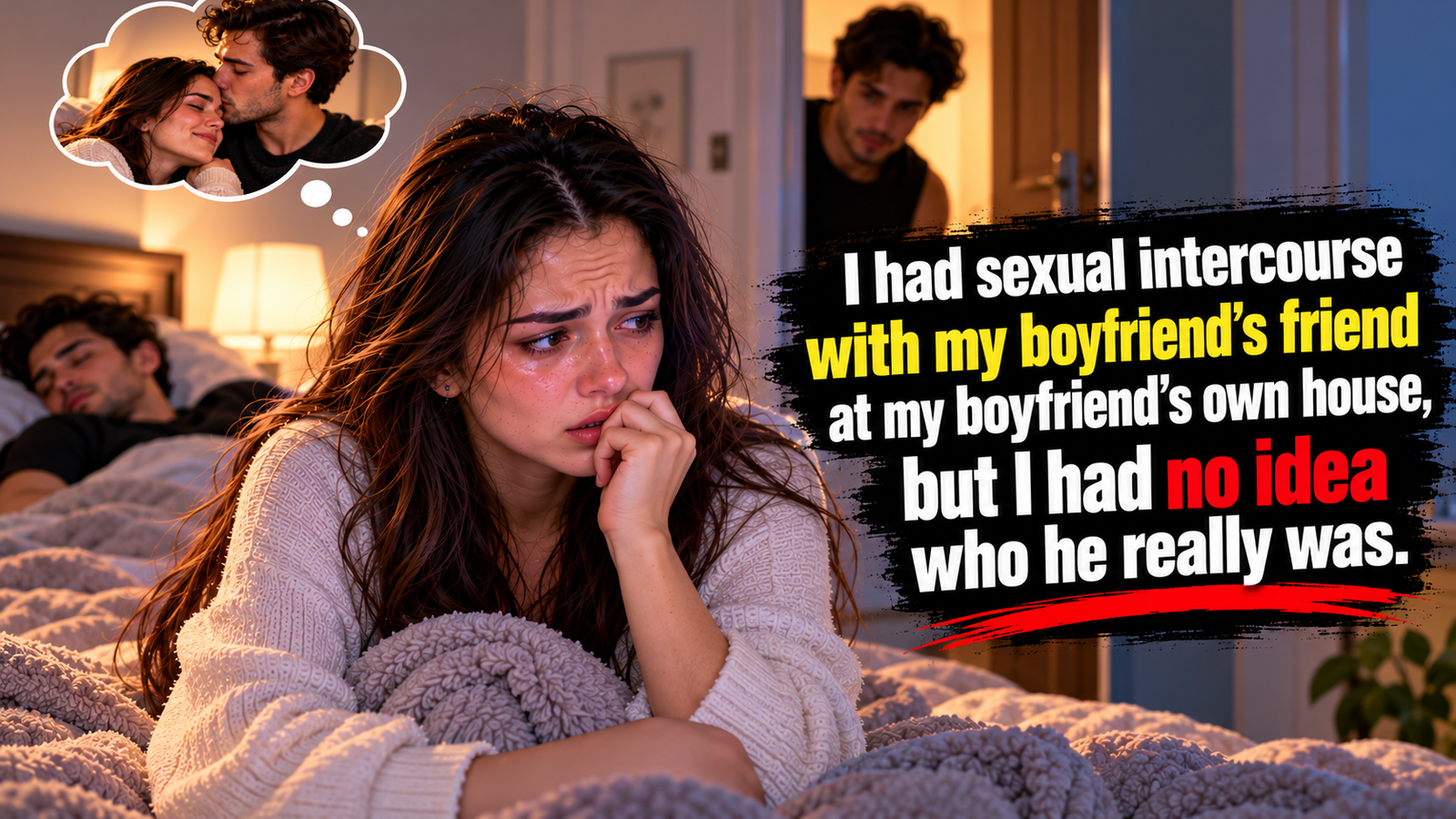
The morning after my unexpected visit to my boyfriend’s house was supposed to be peaceful.
I had imagined waking up, enjoying breakfast with him, and perhaps spending another hour together before returning home.
Instead, I found myself standing in a house that suddenly felt unfamiliar, trying to understand a confession that had changed everything I believed about the previous night.
My boyfriend’s friend had just told me that he was the person who had entered my bedroom.
He was the person who had blindfolded me.
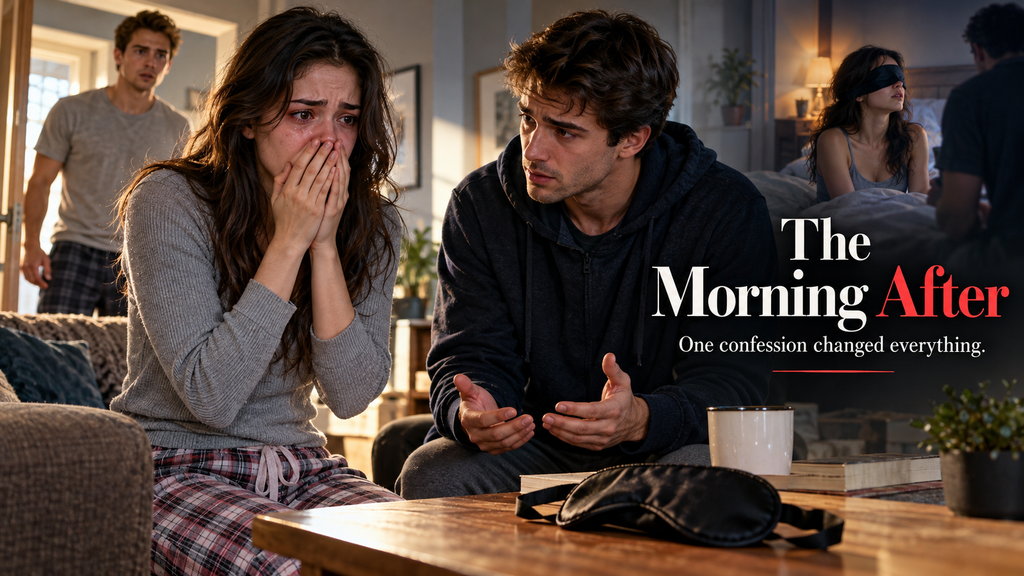
And he was the person who had spent those intimate hours with me while I believed he was my boyfriend.
For several moments, I could barely speak.
The worst part was that he seemed to think his confession was something I would accept without question.
He even told me that he had enjoyed the night.
But I wasn’t thinking about whether he had enjoyed anything. I was trying to understand how someone I had met only hours earlier could deliberately hide his identity from me.
Most importantly, I had to decide how to tell my boyfriend what had happened.
I knew our relationship might never be the same.
The Morning Confession That Made Me Question Everything I Remembered About the Previous Night
The first thing I remember after hearing his confession was the silence.
It felt as though the entire room had suddenly become smaller.
I looked at him, waiting for some explanation that would make his words less shocking.
“You’re joking, right?” I finally asked.
He shook his head.
“No. It was me.”
I stared at him.
“But I thought you were my boyfriend.”
“I know,” he answered.
Those two words affected me more deeply than anything else he had said.
He knew.
He had known throughout the night that I believed I was with someone else.
For a brief moment, I couldn’t decide whether to shout, cry, or leave the room.
“Then why didn’t you tell me?”
He looked uncomfortable but did not immediately answer.
I repeated the question.
“Why did you let me think you were him?”
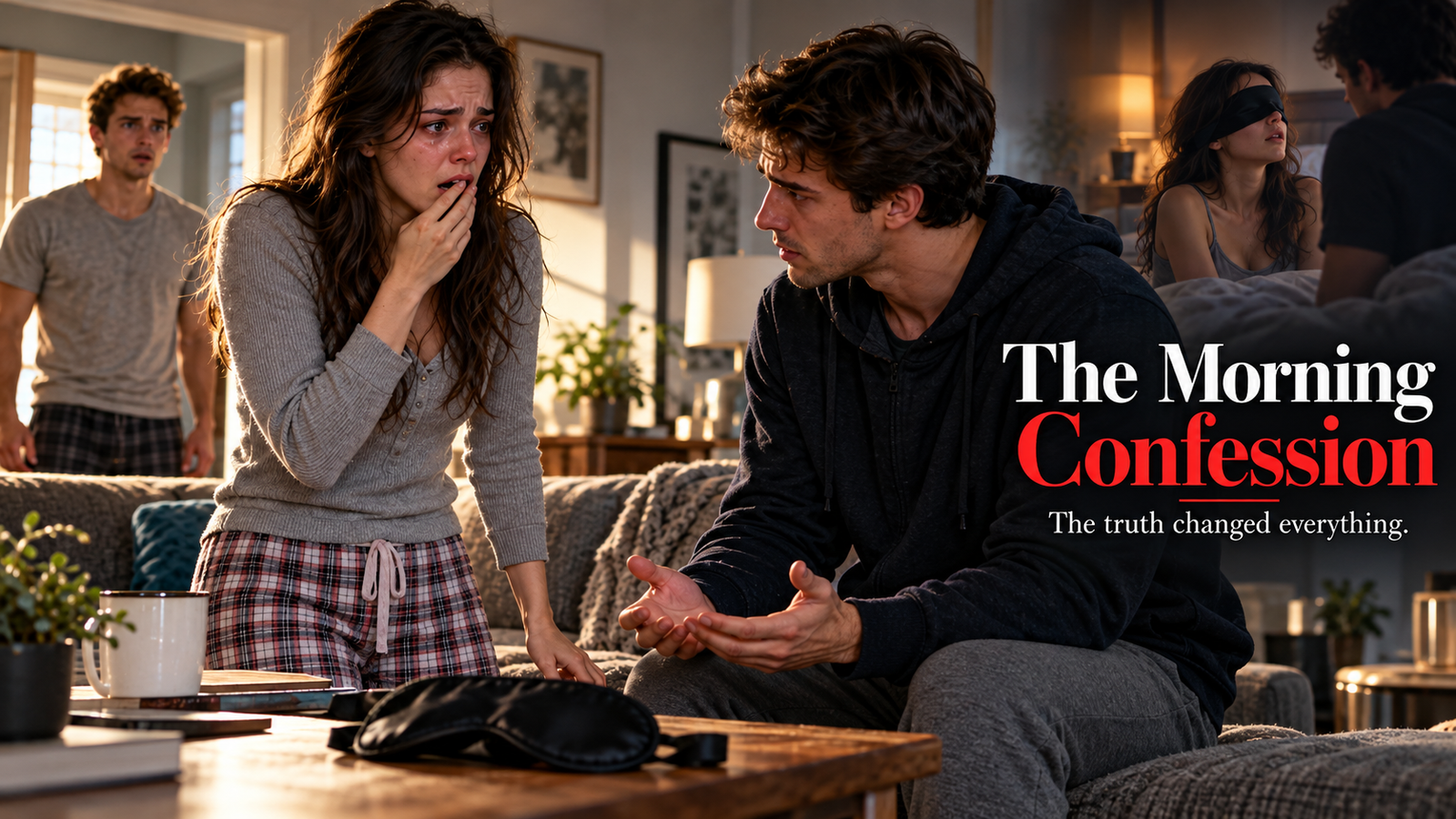
He tried to explain that everything had happened unexpectedly and that he hadn’t planned for the situation to develop the way it did.
But his explanation made little sense.
He had entered my bedroom while I was resting.
He had approached me without identifying himself.
He had placed a blindfold over my eyes.
And he had continued the encounter while knowing that I had mistaken him for his friend.
That wasn’t a simple misunderstanding between two people.
He had possessed information that I did not have, and he had chosen to keep it from me.
I began to realize that the experience I remembered and the reality of what had happened were two very different things.
Why His Casual Attitude About the Night Made the Confession Even More Disturbing
I expected him to understand why I was upset.
Instead, he tried to make the situation sound less serious.
He suggested that because I had not recognized him or objected during the night, there was no reason for me to be so shocked afterward.
I couldn’t believe what I was hearing.
“Do you understand that I thought you were my boyfriend?” I asked.
He looked away.
“I didn’t know you would react like this.”
His response frustrated me.
My reaction wasn’t the problem.
The problem was that he had allowed me to believe something false while making a deeply personal decision.
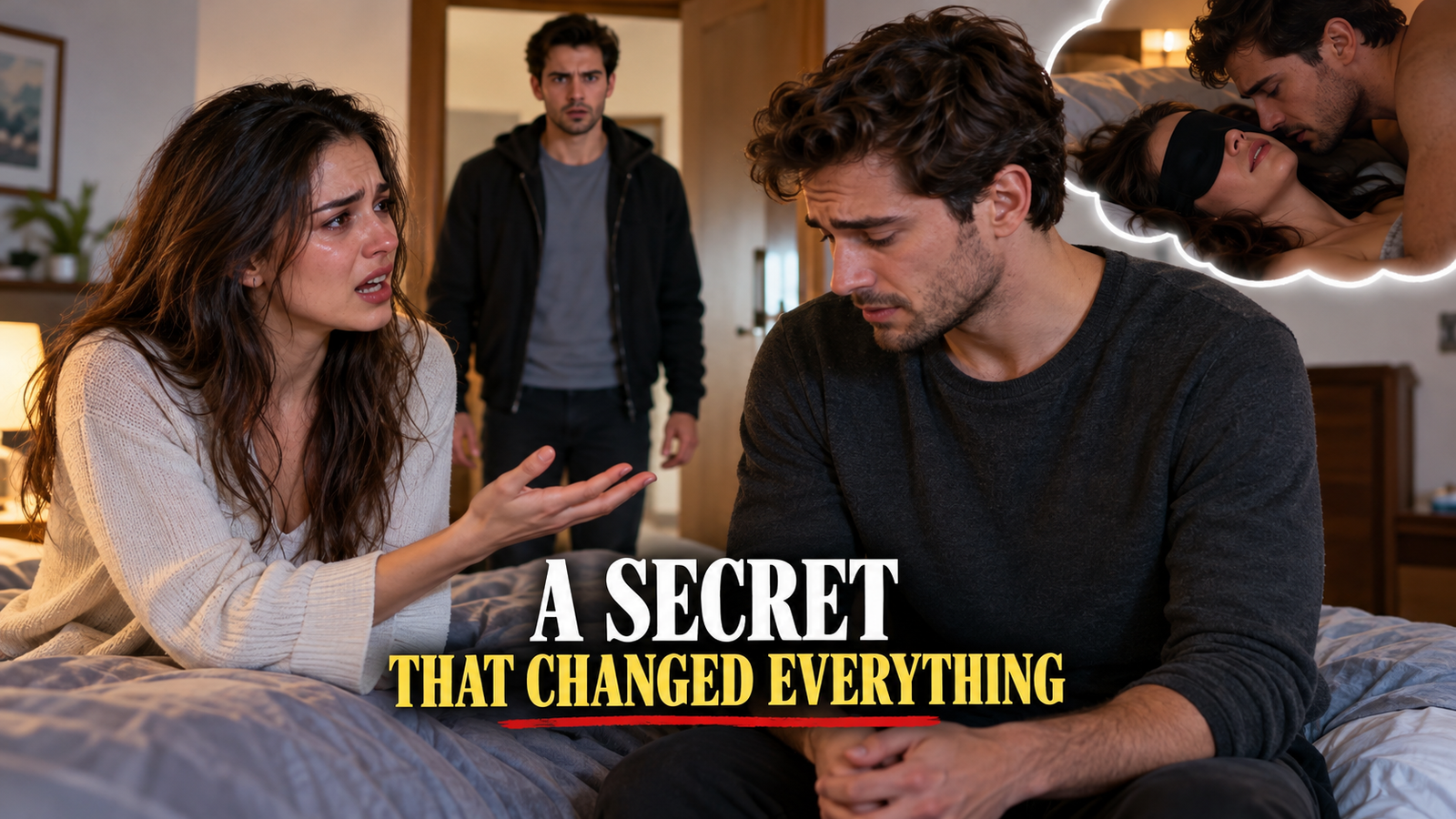
I tried to explain that I had never agreed to be intimate with him.
I had trusted the person I believed was beside me.
That trust belonged to my relationship with my boyfriend, not to a stranger I had only recently met.
He seemed more concerned about how the situation might affect him than about what I had just discovered.
Eventually, he asked whether I intended to tell my boyfriend.
That question changed my understanding of his attitude.
He was not simply confused about how I felt.
He was worried about the consequences of what he had done.
“I need to speak to him,” I replied.
He immediately looked nervous.
And for the first time that morning, I understood that the next conversation could be even more difficult than the first.
Walking Toward My Boyfriend’s Bedroom While Wondering Whether He Would Believe Me
I left the room and walked slowly down the hallway.
My heart was beating so quickly that I could feel it in my chest.
Part of me wanted to collect my belongings, get into my car, and go home without speaking to anyone.
But I knew that leaving without an explanation would create more questions.
I also believed my boyfriend deserved to know what had happened in his house.
At the same time, I was terrified of his reaction.
- Would he believe me?
- Would he think I had knowingly been involved with his friend?
- Would he accuse me of betraying him?
I stopped outside his bedroom.
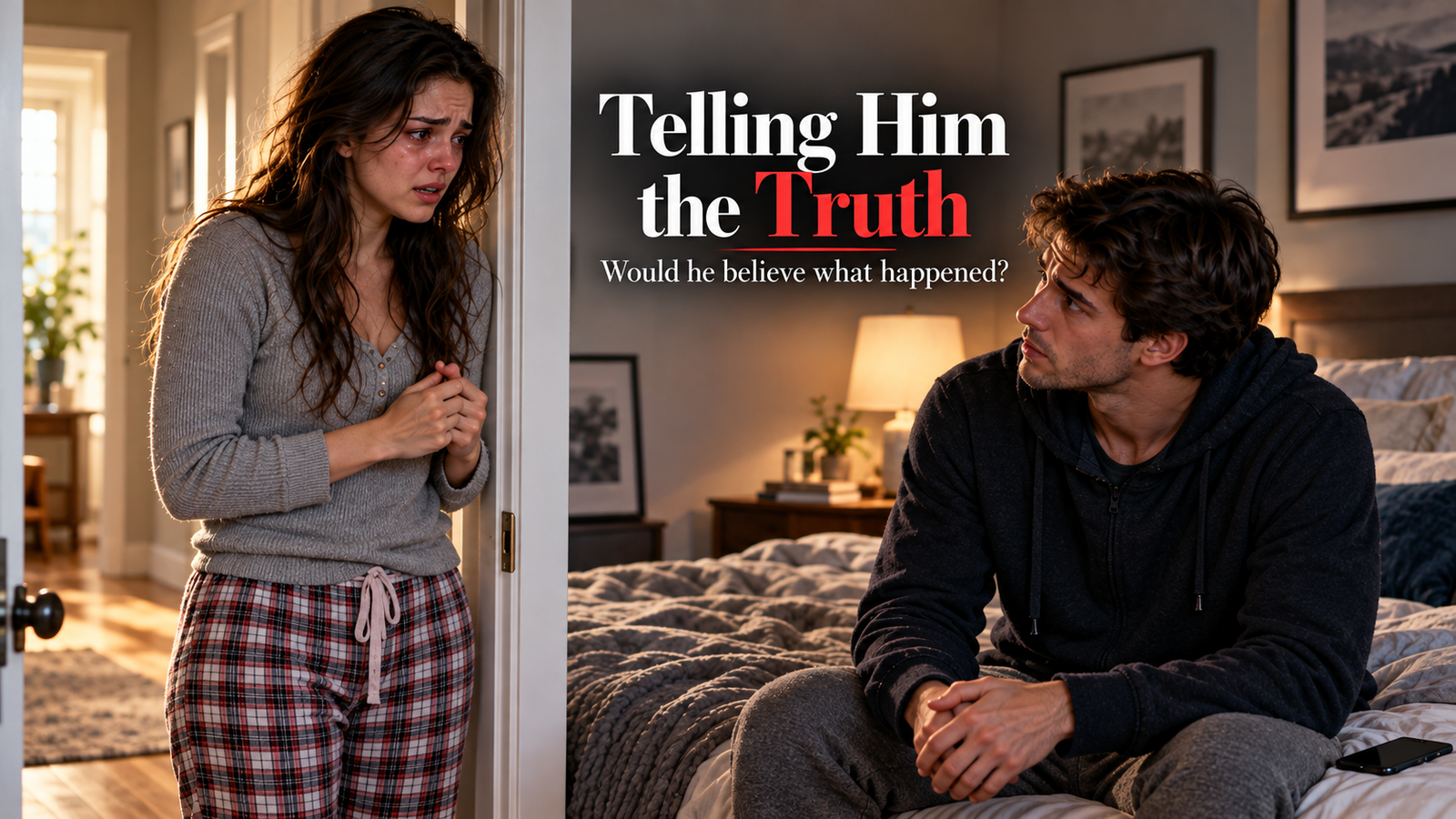
For a moment, I hesitated.
Then I knocked.
“Come in,” he called.
When I opened the door, he was sitting on the edge of the bed, looking at his phone.
He smiled when he saw me.
“Good morning. Did you sleep well?”
It was such an ordinary question.
Only a few hours earlier, I would have answered it with a smile.
Now I couldn’t.
He noticed my expression immediately.
“What’s wrong?”
I closed the door behind me.
“I need to tell you something.”
His smile disappeared.
He put his phone aside and looked directly at me.
“What happened?”
I sat down in a chair opposite him.
And then I began explaining the night I had experienced, and the truth I had only just discovered.
Telling My Boyfriend That I Had Mistaken His Friend for Him During the Night
At first, I struggled to find the right words.
I explained that someone had entered my bedroom during the night.
I told him that I had believed the person was him.
I described how I had kept my eyes closed and how the blindfold had prevented me from seeing who was actually there.
Then I told him that an intimate encounter had followed.
My boyfriend’s expression changed.
He looked confused.
“What are you saying?” he asked.
I took a breath.
“Your friend told me this morning that it was him.”
For several seconds, he didn’t respond.
Then he asked a question that made my stomach tighten.
“Did you know it was him?”
“No,” I replied immediately.
“I thought it was you. The entire time.”
He stood up and walked toward the window.
I could see him trying to process what I had said.
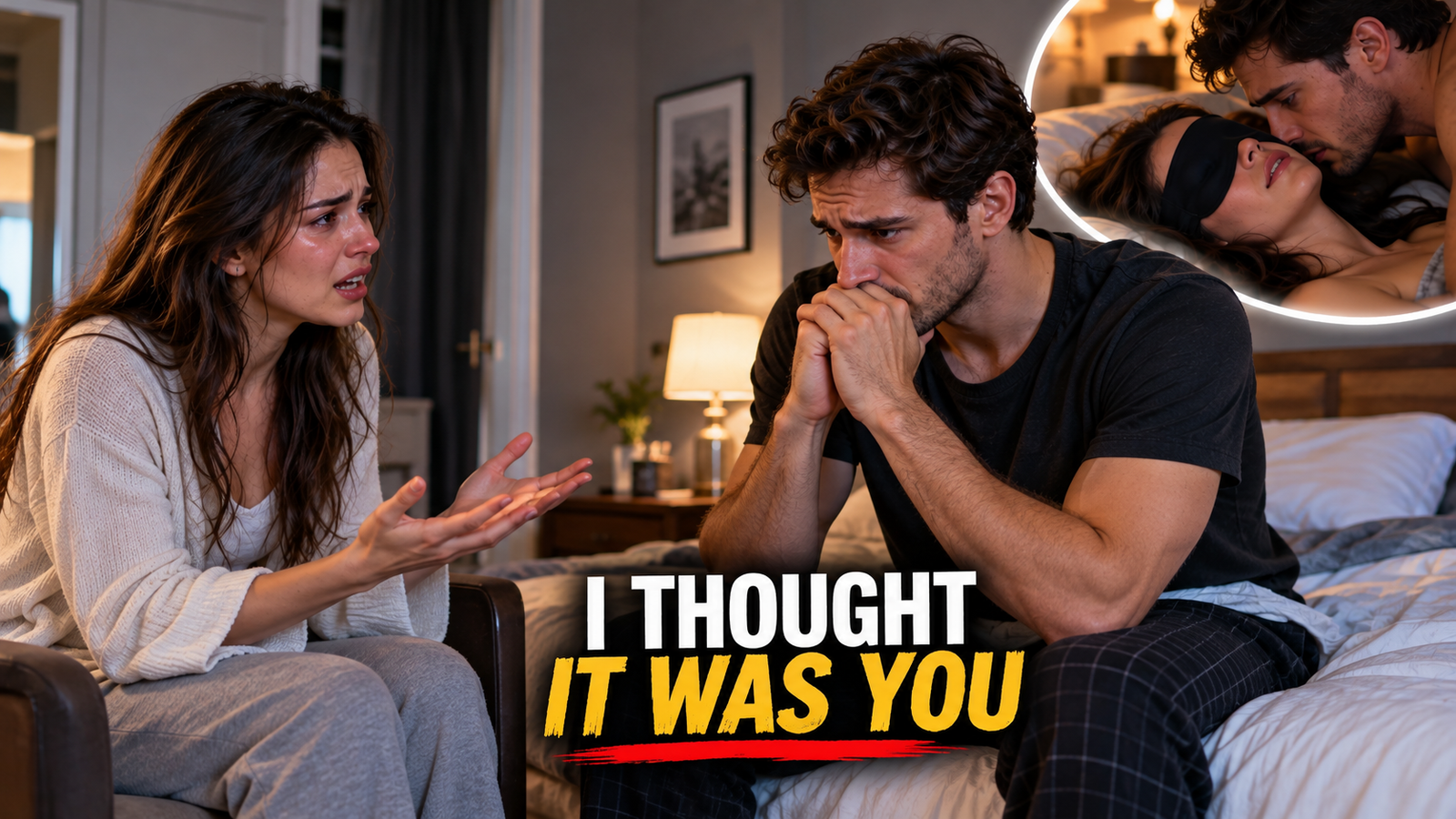
“I was sleeping,” he said quietly. “I never came into your room.”
“I know that now.”
He turned back toward me.
“Did he actually tell you that he was the one with you?”
I nodded.
“He admitted it this morning.”
My boyfriend looked stunned.
I had never seen him react that way before.
He was angry, but his anger seemed mixed with disbelief.
This was someone he had considered a friend.
Someone he had welcomed into his home.
Someone he trusted enough to share a room with overnight.
And now that same person had confessed to deceiving his girlfriend.
The Difficult Questions My Boyfriend Asked Before Understanding What Had Really Happened
My boyfriend sat down again.
He needed time to understand the sequence of events.
He asked when the person had entered my room and why I had assumed it was him.
I explained everything as clearly as I could.
“I heard someone come near me. I thought you wanted to spend some time together. I didn’t expect anyone else.”
He nodded slowly.
“And you never saw his face?”
“No. I had my eyes closed at first. Then he put a blindfold on me.”
My boyfriend lowered his head.
I could tell the detail disturbed him.
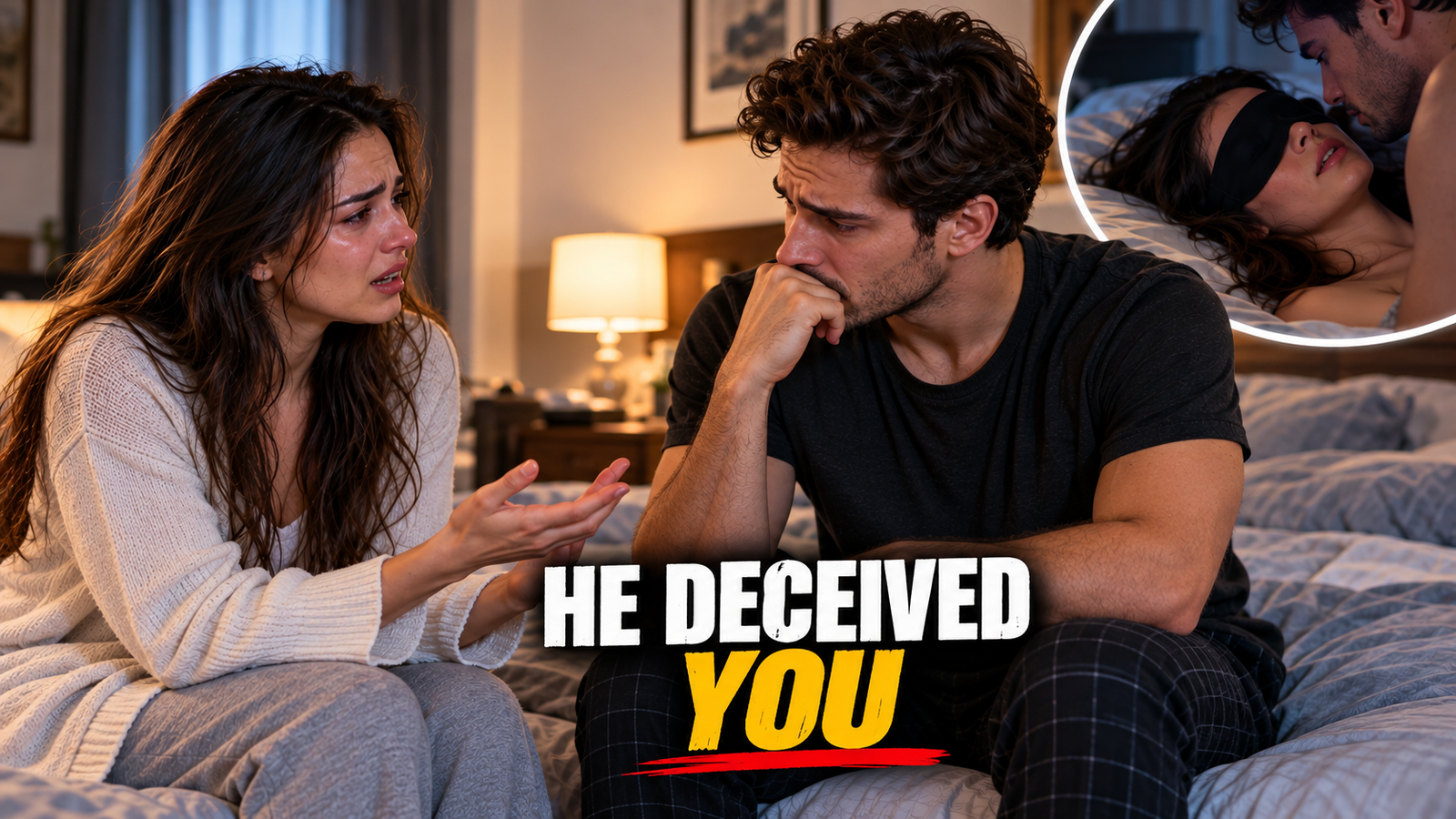
For a moment, neither of us spoke.
Then he asked whether I had agreed to anything with his friend.
I looked at him.
“How could I agree to something with him when I didn’t even know it was him?”
He didn’t answer immediately.
I continued.
“I wasn’t choosing your friend. I thought I was with you.”
There was a long silence.
Finally, he said something that I badly needed to hear.
“Then he deceived you.”
I felt tears forming in my eyes.
Until that moment, I had feared that my boyfriend would blame me.
Instead, he was beginning to understand the difference between what I believed was happening and what had actually occurred.
It didn’t erase the experience.
But it meant I wasn’t facing the truth entirely alone.
When My Boyfriend Confronted His Friend, the Situation Became Even More Serious
My boyfriend wanted to speak to his friend immediately.
I was frightened that the conversation might turn into a physical confrontation.
“Please don’t fight with him,” I said.
He looked at me.
“I need to hear what he has to say.”
I asked him to remain calm.
He agreed, although I could see that he was struggling with his emotions.
We walked into the living room.
His friend was sitting on the sofa.
When he saw us together, his expression changed.
My boyfriend stood near the doorway.
“Did you go into her room last night?”
His friend hesitated.
“Yes.”
“Did you know she thought you were me?”
There was another pause.
Then he admitted that he had realized she might have mistaken him for my boyfriend.
I couldn’t believe how calmly he said it.
My boyfriend asked why he had not corrected the misunderstanding.
His friend began offering excuses.
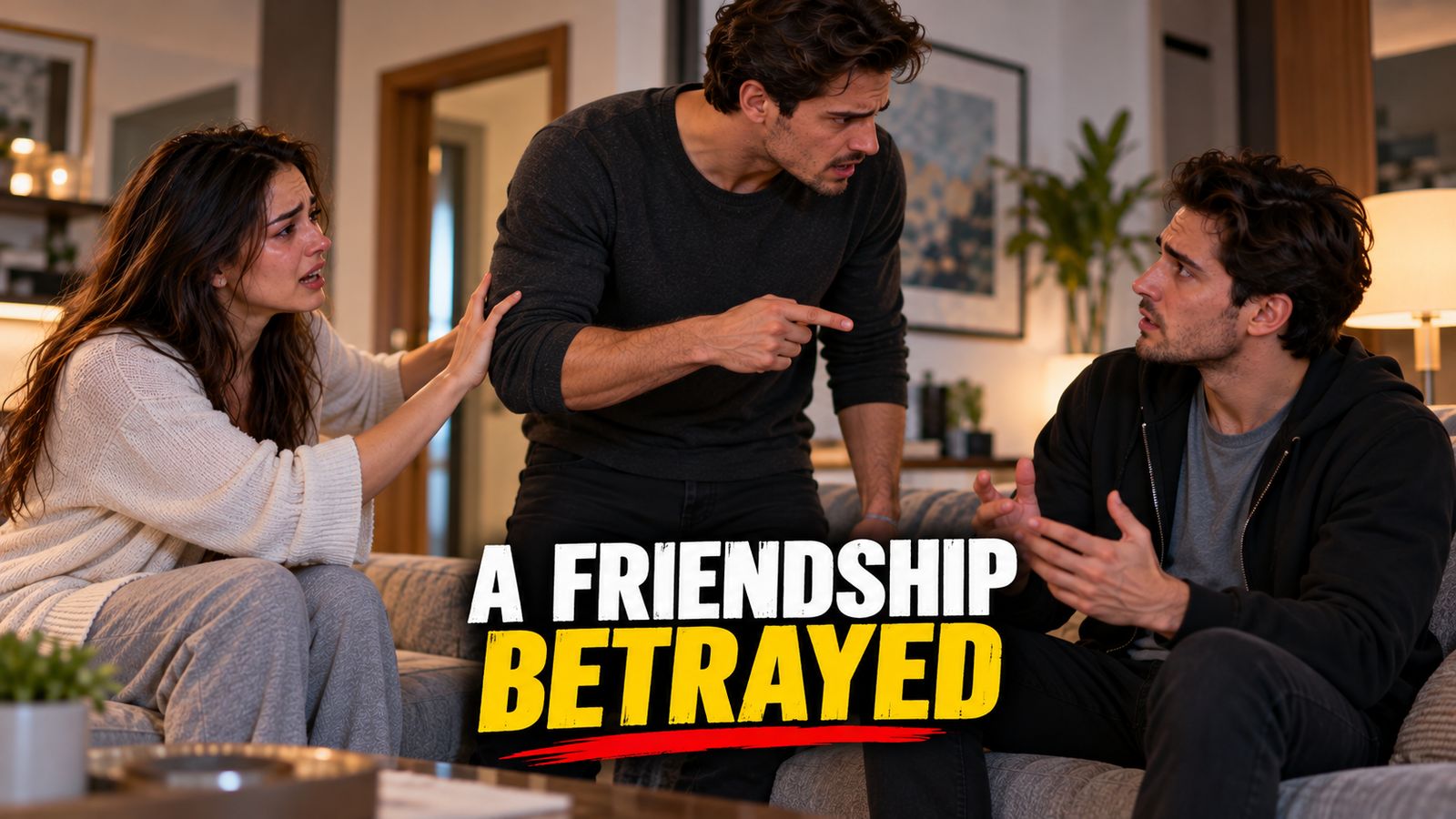
He claimed that he had not expected the situation to become so serious.
He also suggested that I had seemed comfortable at the time.
I interrupted him.
“Because I thought you were my boyfriend.”
The room fell silent.
My boyfriend looked directly at his friend.
“You knew she didn’t recognize you, and you continued anyway?”
His friend didn’t provide a convincing answer.
My boyfriend stepped back.
“I trusted you in my house,” he said.
His voice was low, but the anger was unmistakable.
The Moment I Realized That My Boyfriend’s Anger Was Not Directed at Me
I had been afraid that my boyfriend might treat the situation as an ordinary case of infidelity.
But as the conversation continued, he made an important distinction.
He understood that I had not knowingly chosen to become involved with another person.
I had been deceived about who was beside me.
He turned toward me.
“I’m sorry this happened here.”
I didn’t know what to say.
He continued.
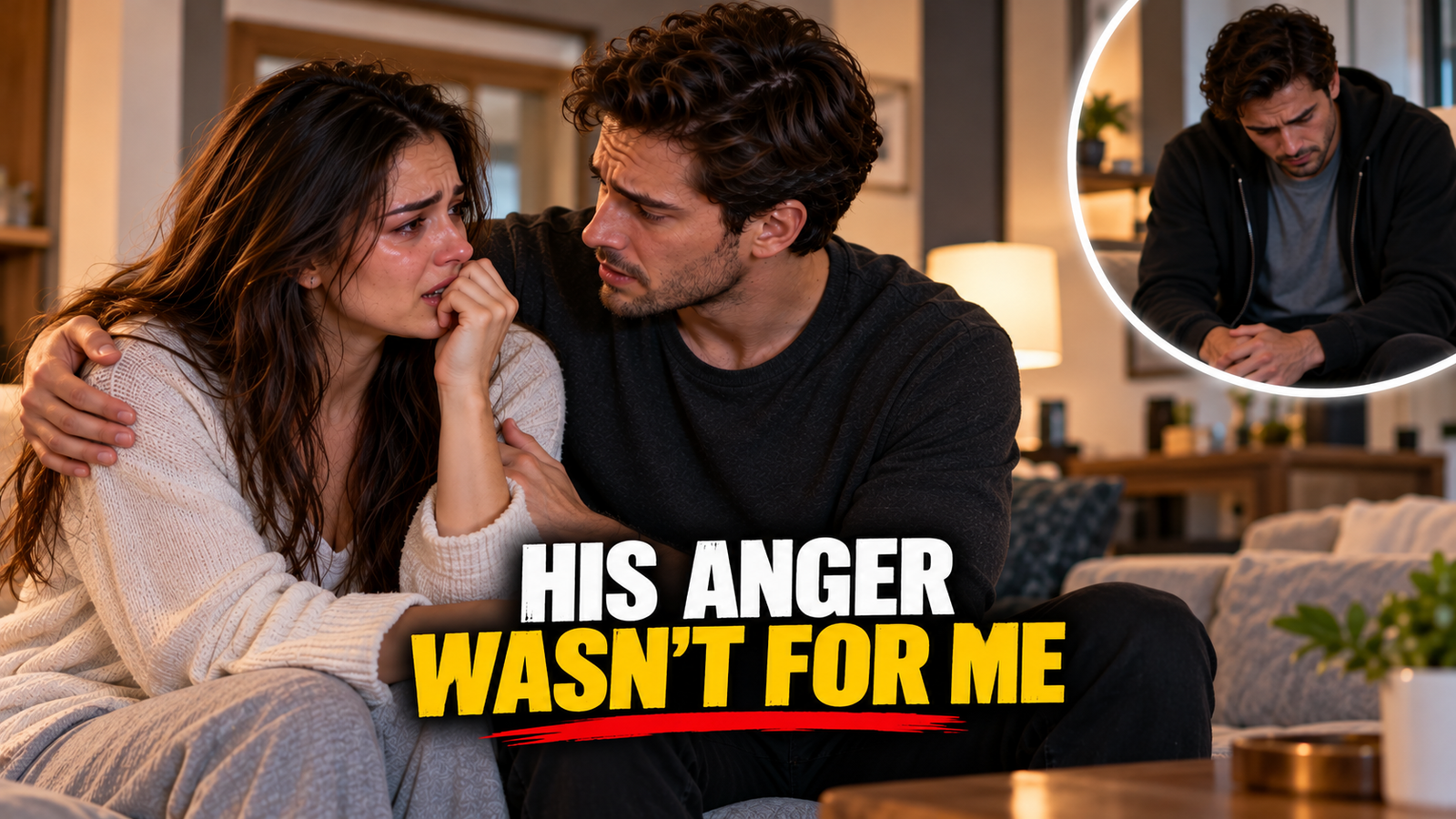
“I should have been able to trust my friend, but that doesn’t mean you’re responsible for what he did.”
Those words affected me deeply.
For hours, I had been questioning whether keeping my eyes closed or allowing the blindfold somehow made the situation my responsibility.
Hearing him acknowledge the deception helped me recognize that my confusion had been understandable.
However, I also noticed that he was struggling with his own feelings.
He had learned that someone close to him had violated a boundary involving the person he loved.
He was angry at his friend.
He was upset that the situation had happened in his home.
And he was worried about me.
I could see that he wanted answers.
But answers alone weren’t going to undo what had happened.
Why I Asked My Boyfriend Not to Make Decisions About the Incident Without Me
My boyfriend eventually told his friend that he needed to leave.
Before the man collected his belongings, my boyfriend wanted to continue questioning him.
I interrupted.
“I don’t want to keep talking to him right now.”
My boyfriend looked at me.
“Are you sure?”
“Yes.”
I was exhausted.
I had already listened to excuses, explanations, and attempts to minimize what had happened.
I didn’t want another argument.
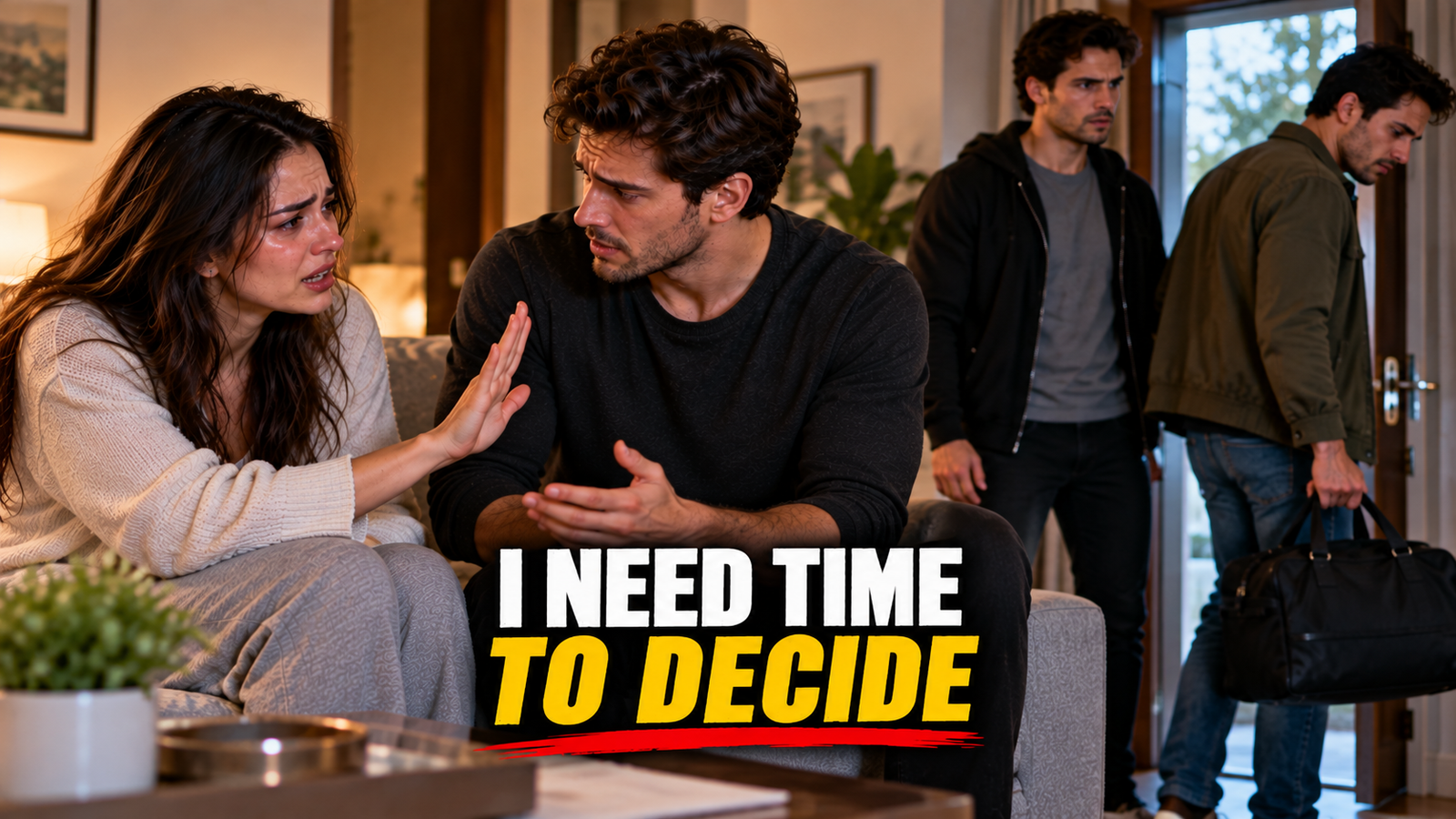
I wanted distance.
My boyfriend nodded and told his friend to collect his things and leave the house.
The man hesitated, as though he expected someone to ask him to stay.
Nobody did.
Once he had gone, the house became quiet again.
My boyfriend returned to the living room.
He asked whether I wanted him to contact someone or report what had happened.
I wasn’t ready to answer.
“I need time to think,” I said.
He agreed.
For the first time that morning, I felt that someone was allowing me to decide what happened next.
That mattered.
The previous night had involved someone taking advantage of my lack of information.
I didn’t want my decisions taken away from me again, even by someone who wanted to help.
Leaving the House and Realizing That Everything Looked Different in the Morning Light
I eventually decided that I wanted to go home.
My boyfriend offered to drive me.
I told him that I needed a little space, but I agreed that driving while so upset might not be a good idea.
We arranged for me to get home safely.
Before leaving, I returned to the guest bedroom to collect my belongings.
The room looked almost exactly as it had when I first entered it.
The bed was still there.
My overnight clothes were beside my bag.
Morning sunlight was coming through the curtains.
Nothing about the room’s appearance explained why it suddenly felt so different.
I stood near the doorway for a moment.
The night before, I had entered that room believing I was safe.
I had fallen asleep expecting an ordinary morning.
Now I was leaving with questions I hadn’t imagined I would ever need to ask.
My boyfriend appeared behind me.
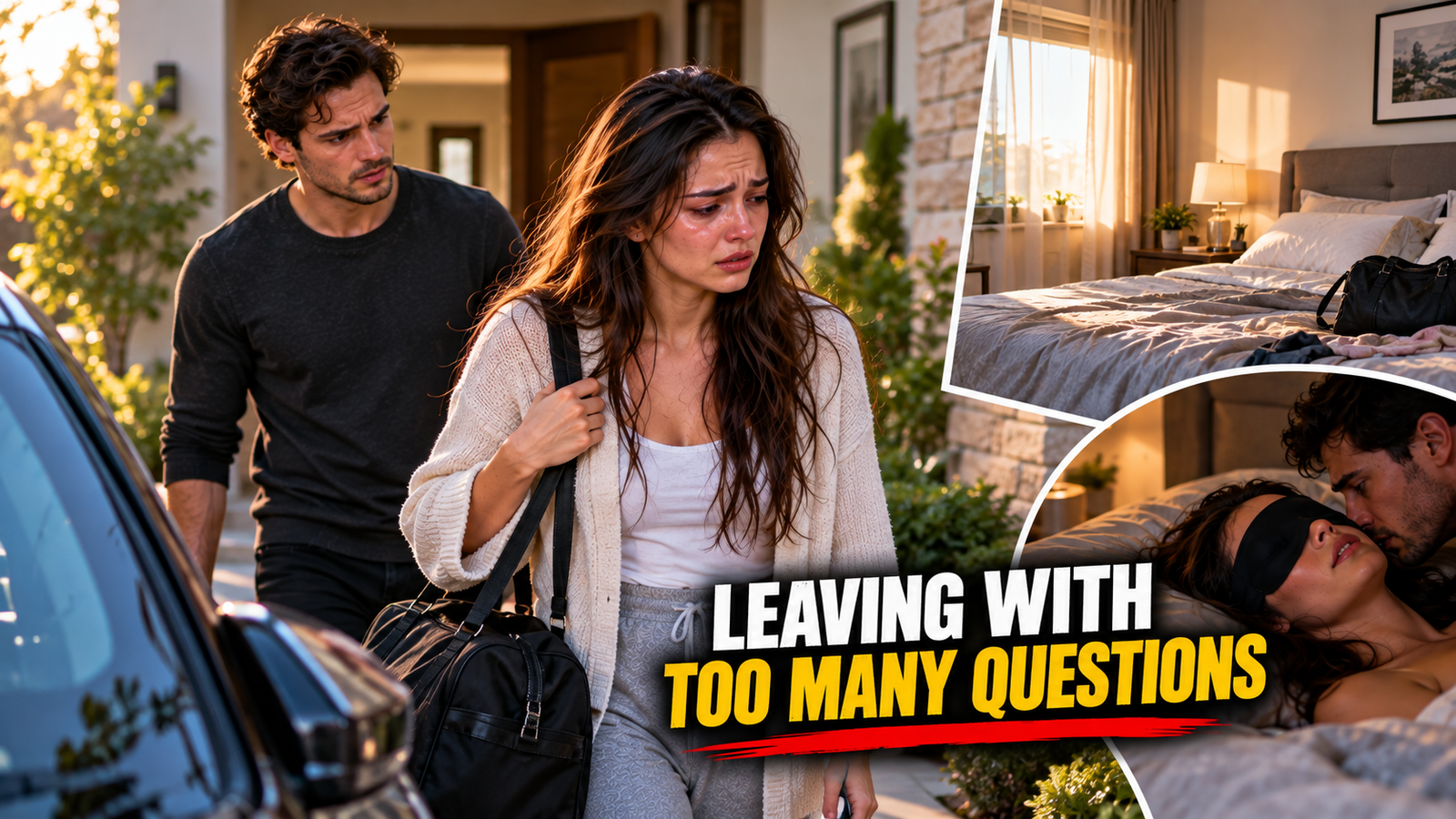
“We don’t have to stay here,” he said gently.
I picked up my bag.
“I just want to leave.”
He didn’t argue.
As I walked outside, I saw my car parked where I had left it the previous evening.
That familiar sight reminded me of the simple decision that had started everything.
I had only wanted to surprise my boyfriend.
I never imagined how different my life would feel the following morning.
The Conversation With My Closest Friend That Helped Me Understand My Conflicting Emotions
When I arrived home, I went straight to my bedroom.
I wanted to sleep, but my thoughts wouldn’t settle.
I kept remembering the conversation with my boyfriend’s friend.
I also remembered moments from the previous night that I had initially understood as affectionate and romantic.
The contradiction was difficult to process.
How could an experience feel one way at the time and mean something entirely different afterward?
Eventually, I contacted my closest college friend, Emma.
I asked whether she could talk privately.
She called me almost immediately.
At first, I couldn’t explain what had happened without stopping several times.
Emma listened patiently.
When I finished, she remained quiet for a moment.
Then she asked whether I was somewhere safe.
I told her that I was at home.
She asked whether I wanted her to visit.
I wasn’t sure.
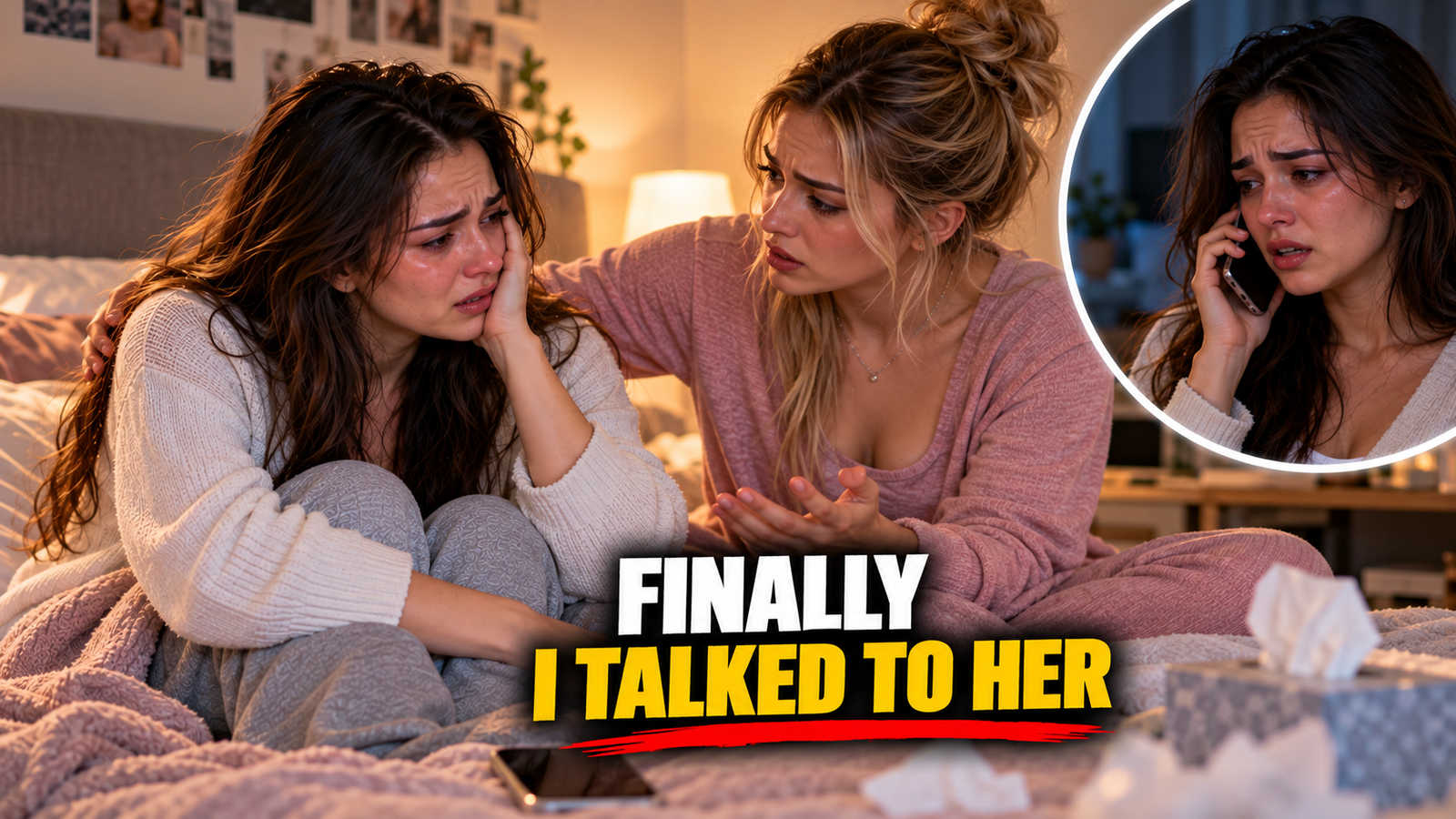
But I was grateful that she had offered.
I told her that part of my confusion came from remembering that I had experienced physical pleasure during parts of the encounter.
She answered carefully.
“That doesn’t mean you knew who he was.”
I remained silent.
She continued.
“You thought you were with your boyfriend. He knew you weren’t.”
Her words were simple, but they helped me separate two things I had been struggling to understand.
My body had responded to an experience.
My mind had believed I was with someone else.
Neither fact changed the deception.
The Practical Decisions I Had to Consider Before Returning to College
As the day continued, I began thinking beyond the immediate shock.
I would eventually have to return to college.
My boyfriend would still be there.
His friend might also be there.
I didn’t know whether he would try to contact me again or tell other people a distorted version of what had happened.
Emma encouraged me not to make every decision that day.
She suggested writing down what I remembered while the details were still fresh.
I opened a notebook.
I recorded the approximate time I had arrived at my boyfriend’s house, who had been present, and where everyone had arranged to sleep.
I also wrote down what I remembered about the night, the morning confession, and the conversation that followed.
It was difficult to write.

But having a private record made me feel a little more organized.
I also considered speaking with a healthcare professional about the encounter and whether I needed medical care, sexual health advice, or time-sensitive treatment.
Emma reminded me that I could also seek confidential support from a counselor or specialist service.
I hadn’t decided whether to make a formal report.
The laws concerning sexual deception and consent can differ depending on where an incident occurs, and I didn’t want to make assumptions about legal outcomes.
For now, I wanted reliable information, privacy, and the freedom to make my own choices.
That felt like a manageable first step.
My Boyfriend Called That Afternoon, but I Wasn’t Ready to Pretend Everything Was Normal
Later that afternoon, my phone rang.
It was my boyfriend.
I looked at the screen for several seconds before answering.
“Hello?”
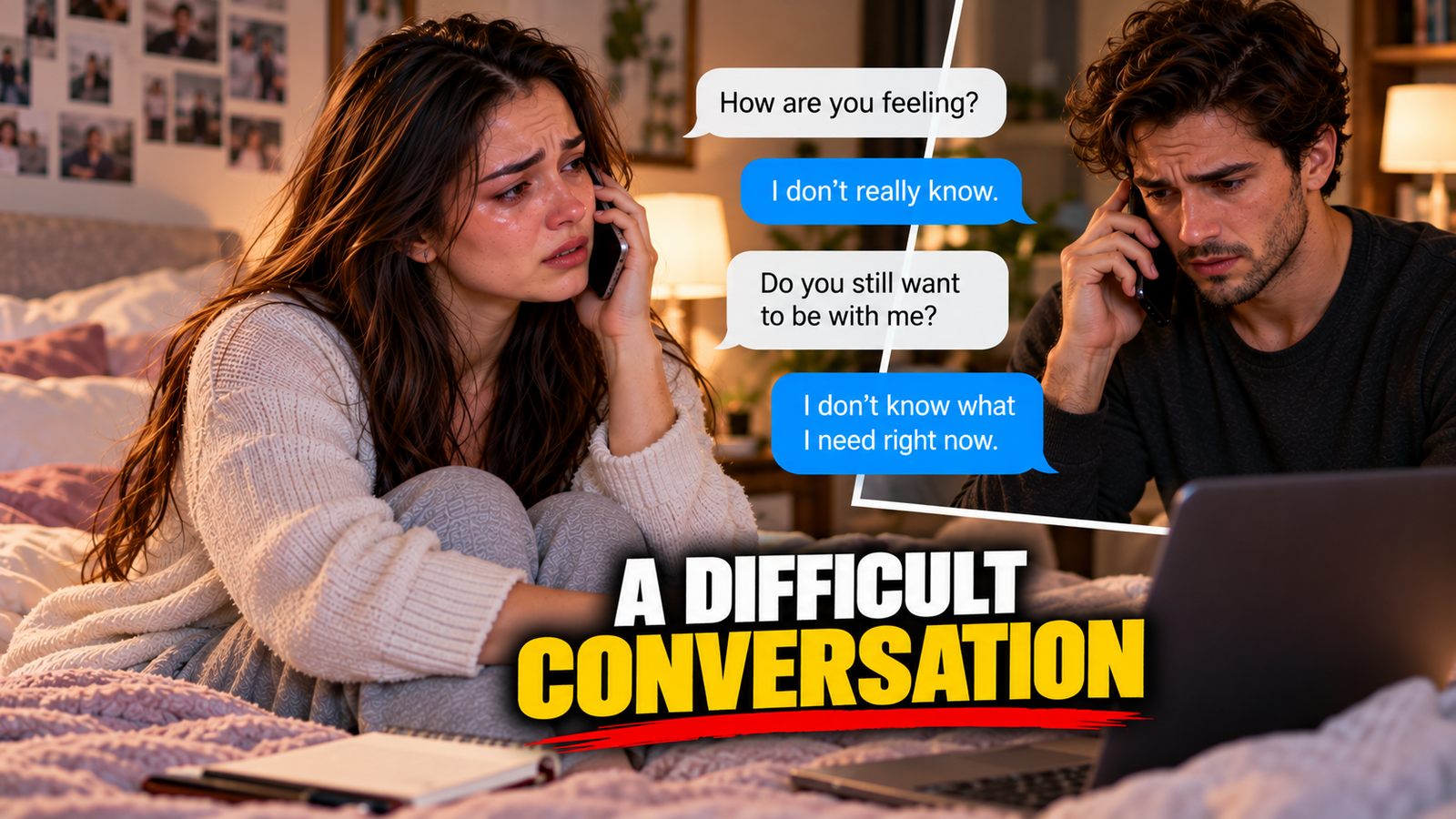
“How are you feeling?” he asked.
I gave the only answer that felt truthful.
“I don’t really know.”
He paused.
“I’ve been thinking about everything.”
“So have I.”
He told me that he had ended the friendship.
He also said that he had been questioning himself for allowing someone he trusted to stay in the house.
I didn’t want him to turn the incident into something solely about his own guilt.
“You didn’t know what he was going to do,” I told him.
He sighed.
“I know. But I still hate that it happened.”
For a while, we talked about the evening before the incident.
We remembered having dinner together.
We discussed the sleeping arrangements.
He explained that he had slept through the night and had not been aware of his friend leaving the room.
I listened carefully.
His account was consistent with what I already knew, but I still needed time to process everything.
Then he asked a question that made me pause.
“Do you still want to be with me?”
I looked down at my hands.
I loved him.
But love didn’t automatically resolve everything I was feeling.
“I don’t know what I need right now,” I admitted.
He didn’t pressure me for an answer.
“That’s okay,” he said.
Why I Needed Time to Separate My Feelings for My Boyfriend From What His Friend Had Done
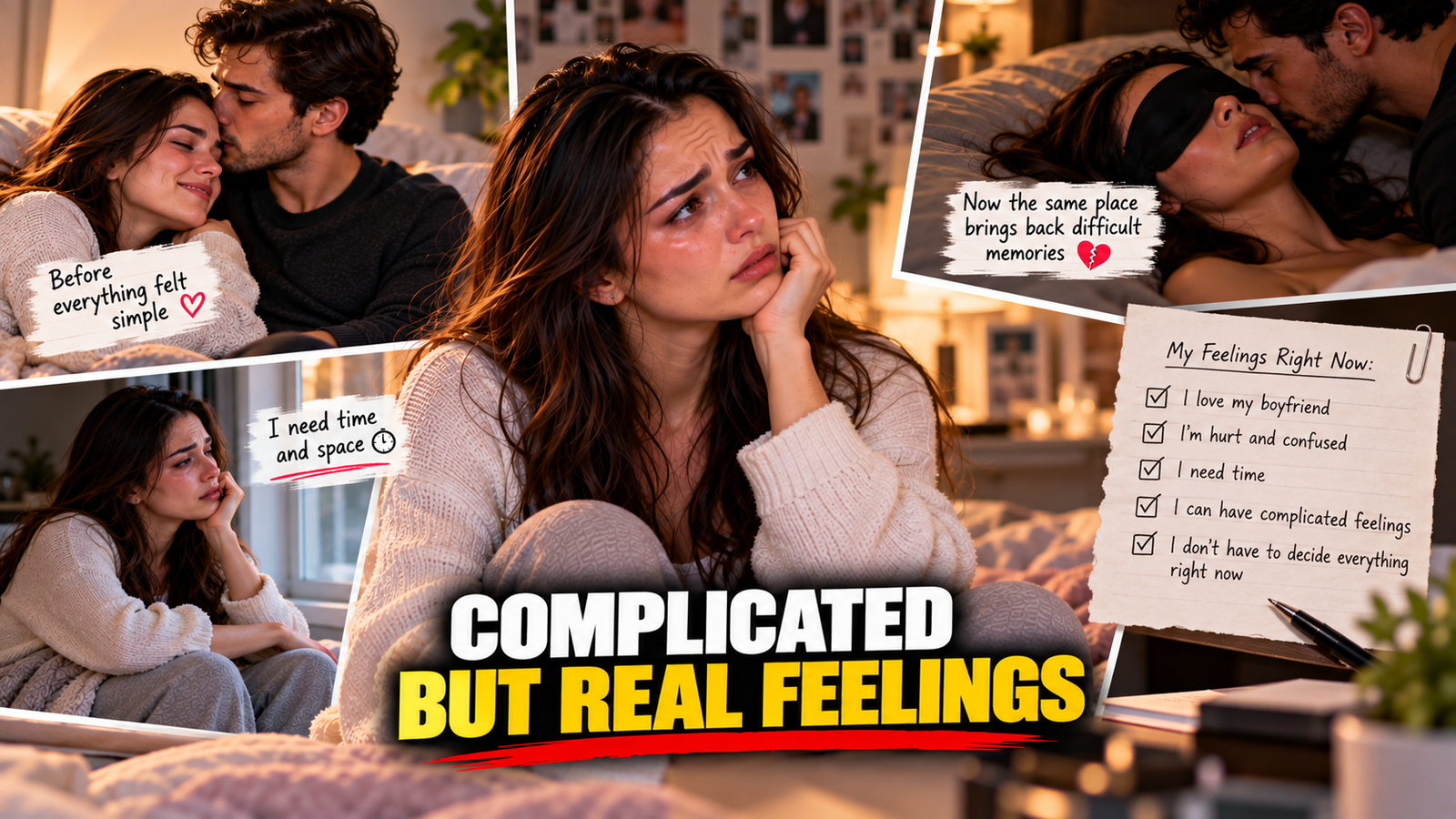
Before that night, my relationship had felt uncomplicated.
I enjoyed spending time with my boyfriend.
We had ordinary disagreements, but nothing that made me question whether I wanted to be with him.
Now, even simple memories of his house reminded me of the incident.
I worried that being around him might bring back feelings I wasn’t ready to confront.
At the same time, I knew he had not been the person who deceived me.
Those two realities were difficult to hold together.
I didn’t want to blame him for his friend’s actions.
But I also couldn’t ignore how deeply the experience had affected my sense of safety.
When he suggested meeting the next day, I asked for more time.
He accepted my decision.
That response mattered.
I needed to know that he could respect my boundaries without treating them as a rejection of our relationship.
I also needed to understand that I was allowed to have complicated feelings.
I could love my boyfriend and still need space.
I could appreciate his support and still feel uncertain about returning to his home.
And I could remember physical sensations from the night without accepting the deception that had occurred.
For the first time since the confession, I began to feel that I didn’t need to resolve every contradiction immediately.
An Unexpected Message From His Friend Made Me Realize the Situation Wasn’t Over
That evening, I was sitting on my bed when my phone vibrated.
A message appeared from an unfamiliar number.
At first, I assumed it was a classmate.
Then I read the opening words.
It was my boyfriend’s friend.
He wanted to talk.
I stared at the screen.
After everything that had happened, I couldn’t understand why he thought contacting me directly was appropriate.
His first message said that he didn’t want the situation to become a bigger problem.
A second message followed.
He suggested that we should keep the matter between ourselves.
I felt my stomach tighten.
I didn’t respond.
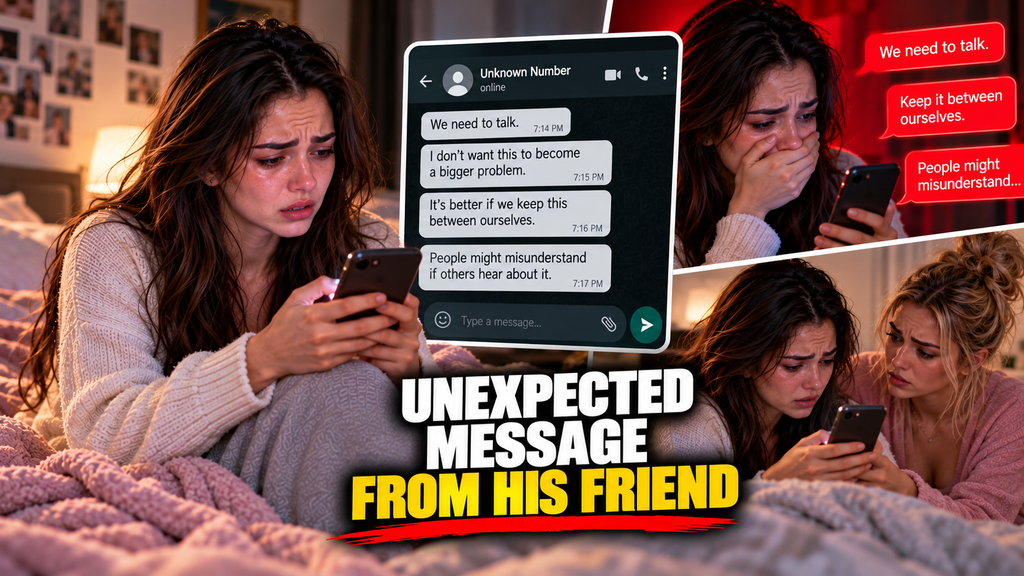
Then another message arrived.
This time, he implied that other people might misunderstand the situation if they heard about it.
I immediately recognized what frightened me about that statement.
He was trying to influence what I would say and to whom.
I took screenshots of the messages and saved them.
I didn’t want to argue with him.
I also didn’t want to give him another opportunity to reinterpret my words.
I forwarded the messages to Emma and told her that I was uncomfortable.
She encouraged me not to meet him alone.
I agreed.
Whatever happened next, I wanted to make decisions with a clear mind and appropriate support.
The Message I Sent My Boyfriend Before Making a Difficult Decision About Our Future
After reading the messages, I contacted my boyfriend.
I explained that his friend had reached out and appeared to be asking me to stay quiet.
My boyfriend was upset.
He offered to contact him immediately, but I asked him not to.
“I don’t want another argument,” I said.
“I just want you to know what’s happening.”
He agreed.
Then I told him something I had been thinking about throughout the day.
“I need you to understand that I can’t act as if everything is normal tomorrow.”
He responded almost immediately.
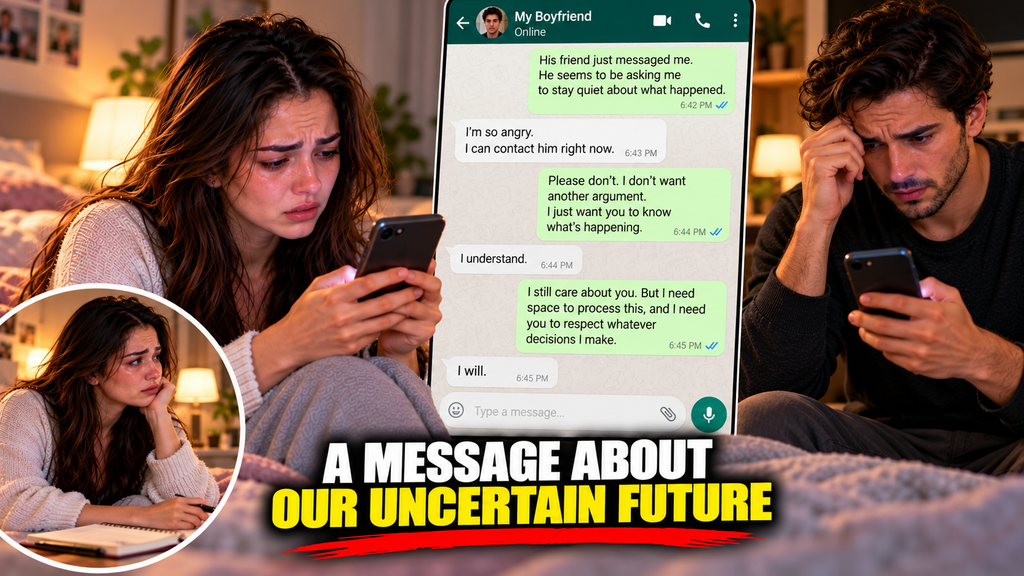
“I understand.”
I continued typing.
“I still care about you. But I need space to process this, and I need you to respect whatever decisions I make.”
His reply was simple.
“I will.”
I read the message several times.
It didn’t solve the problem, but it gave me some reassurance that our relationship did not need to become another source of pressure.
I wanted to believe we could eventually rebuild a sense of normality.
Perhaps we could.
Perhaps we couldn’t.
I wasn’t ready to decide.
At that moment, what mattered most was that I was beginning to regain control over my own choices.
That Night, I Finally Understood Why the Truth Mattered More Than the Feelings I Remembered
Later, as I prepared for bed, I thought about how drastically the past twenty-four hours had changed.
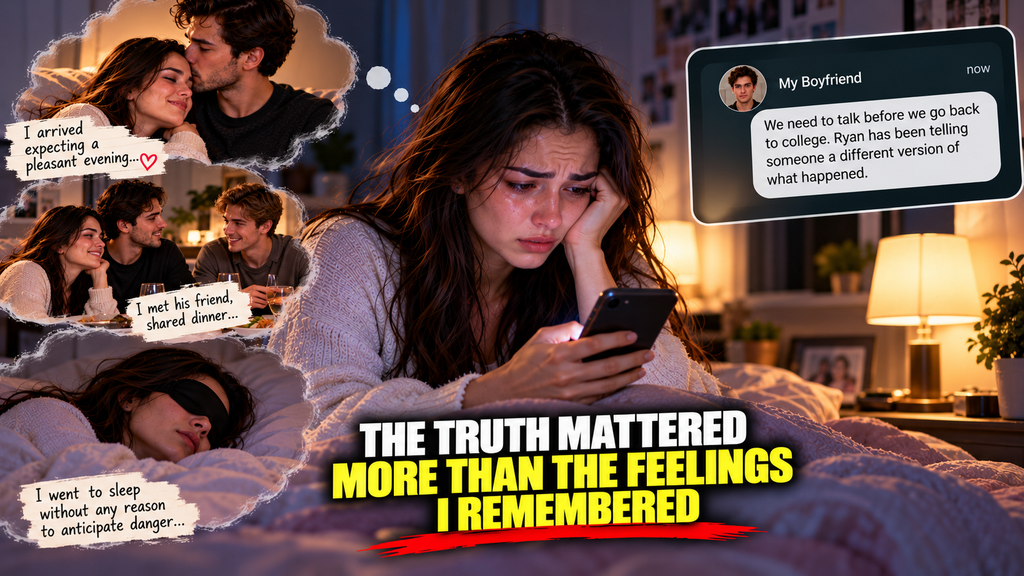
I had arrived at my boyfriend’s house expecting a pleasant evening.
I had met his friend, shared dinner, and gone to sleep without any reason to anticipate danger.
During the night, I had believed I was with the person I loved.
The following morning, I discovered that my belief had been wrong.
And throughout the day, I had been forced to confront the consequences of another person’s deliberate decision to conceal his identity.
For hours, I had questioned whether my own actions made me responsible.
But I was beginning to recognize the distinction between being mistaken and being deliberately misled.
I had not knowingly chosen my boyfriend’s friend.
I had not understood who was present.
The fact that I remembered moments of physical pleasure did not change those facts.
I also understood that healing would probably not be immediate.
My relationship might change.
My friendships might change.
I might need professional support, and I might eventually decide to explore formal reporting options.
But I didn’t need to decide everything in a single day.
I turned off the light and placed my phone beside the bed.
For the first time since the morning, I felt a small sense of clarity.
Then, just as I was beginning to relax, my phone vibrated again.
Another message.
This one was from my boyfriend.
“We need to talk before we go back to college. Ryan has been telling someone a different version of what happened.”
I sat upright.
I read the message twice.
I had thought the hardest part would be telling my boyfriend the truth.
Now I realized that the truth itself might become the subject of another struggle.
And I had no idea who had already heard Ryan’s version of the story.
To Be Continued — Season 1, Episode 03
Editor’s Note: This fictionalized story explores romantic relationships, sexual deception, trust, and informed consent. The characters and subsequent developments are fictional narrative elements. Experiencing physical pleasure does not automatically establish consent, particularly when a person’s understanding of their partner’s identity has been deliberately manipulated.