
For years, a man believed that nothing he accomplished would satisfy his parents. His sister’s academic success had become the standard against which his own achievements were measured, leaving him feeling that every career decision, educational milestone, and personal choice fell short.
Eventually, the constant comparisons contributed to a painful decision: he stopped communicating with his parents. What followed was a decade of family estrangement, during which he pursued his education, established a career, married, and began preparing to become a father himself.
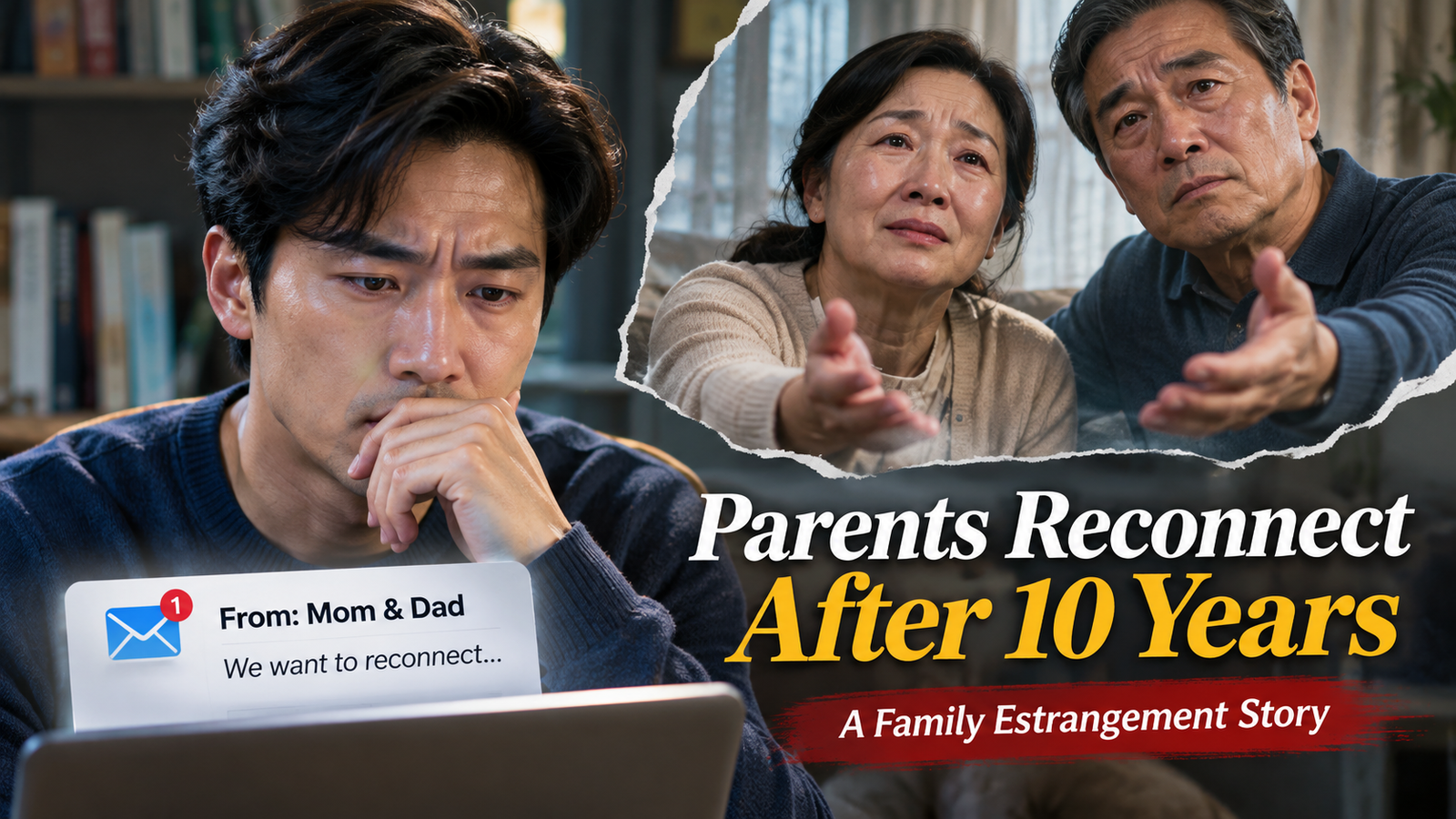
Then an unexpected email arrived. After 10 years without contact, his parents wanted to reconnect, but their message left him questioning whether they understood why he had walked away.
The account, shared on Reddit’s r/BoyDinnerDiaries community on October 24, 2026, raises difficult questions about parental expectations, adult independence, emotional support, and whether family relationships can be repaired after years of separation.

Editor’s note: This article is based on a publicly shared, first-person Reddit account. The events and family interactions reflect the poster’s description and have not been independently verified. His parents’ perspectives were not available. The additional discussion draws on published research about parental expectations and family estrangement.
Growing Up in the Shadow of an Exceptionally Successful Sister

Academic Achievement Became the Family’s Standard
According to the Reddit author, his older sister was extraordinarily accomplished from a young age. He described her as a Mensa member who won a science fair, met former President Bill Clinton, and later attended the Massachusetts Institute of Technology with scholarship support.
He admired his sister’s intellectual abilities but believed his parents measured him against achievements he could not realistically replicate. Rather than treating their children as individuals with different abilities and ambitions, he felt they considered his sister’s path the benchmark for success.

That comparison became especially painful when he expressed an interest in taking the SAT and exploring higher education. According to his account, his parents discouraged him and suggested that he should eventually take over the family’s grocery store instead.
Their response communicated more than a practical suggestion about employment. From his perspective, it meant that his parents had already decided what he was capable of achieving before he had been given an opportunity to demonstrate his abilities.
When Encouragement Feels Like Rejection
Parental expectations are not necessarily harmful. Families can encourage academic achievement, emphasize education, and help children build confidence through appropriately challenging goals.
However, expectations may become damaging when they are accompanied by persistent criticism, unfavorable comparisons, or little recognition of individual progress. A child may begin interpreting every accomplishment through the question of whether it will finally earn parental approval.

A research review published in Educational Psychology Review examined the relationship between parental expectations and academic achievement across different sociocultural contexts. The findings emphasize that expectations operate through several factors, including motivation, children’s beliefs about their abilities, and parental involvement.
The research does not establish that demanding parents inevitably create strained family relationships. It does, however, provide a useful distinction: encouraging someone toward achievement is different from dismissing their potential because they do not resemble another successful family member.
Choosing the Army Instead of Following His Parents’ Plans
After completing high school, the man decided to enlist in the United States Army. It was a different direction from the educational and professional accomplishments that had distinguished his sister.
He described completing basic training as an important personal achievement. Rather than celebrating the milestone, however, he said his parents questioned his military choice and criticized the relatively modest pay associated with his entry-level position.

Those reactions reportedly reinforced his belief that his accomplishments would never be considered sufficient. Even when he took meaningful steps toward independence, he felt the conversation returned to what he should have done differently.
Seven Years of Military Service Opened Another Path
The Reddit author explained that he worked as a petroleum laboratory specialist during approximately seven years of Army service. Although he did not describe the role as his ideal career, it provided professional experience and helped him pursue opportunities beyond the military.
He later used GI Bill education benefits and attended community college. His educational ambitions had not disappeared simply because his parents initially discouraged him from taking a traditional college route.

The U.S. Department of Veterans Affairs explains that eligible GI Bill recipients can use education benefits for college degrees, career training, and other qualifying educational expenses. The program offers one pathway for veterans pursuing further education after military service.
In this man’s account, the significance was personal as well as practical. He had found a way to continue learning without depending on the approval he had previously sought from his parents.
His Medical Career Ambitions Still Failed to Impress His Parents

From Medical School Aspirations to Pharmacy
As his education progressed, the man initially hoped to attend medical school. He reported that his Medical College Admission Test results were not strong enough for that plan, but he subsequently gained admission to pharmacy school.
For many students, acceptance into a professional healthcare program would be an important milestone. In his account, however, the achievement prompted another comparison because his parents considered becoming a pharmacist less impressive than becoming a physician.

The criticism reportedly extended beyond education. He also said his parents disapproved of his dating choices because he was not dating someone from his own ethnic background at the time.
The combination of career criticism and personal disapproval contributed to a growing sense that his family valued conformity more than his independence. He did not describe one isolated disagreement but a pattern of conversations in which his decisions were repeatedly questioned.
The Comparison That Became a Breaking Point
The final turning point involved another comparison with a successful young professional. According to the Reddit account, his parents pointed to a family friend’s son who worked in investment banking and had reportedly purchased a luxury car for his parents at age 25.
They contrasted that achievement with their own son’s decision to continue his education at approximately the same age. He understood the comparison as another statement that his progress was embarrassing rather than worthwhile.

That interaction became the point at which he decided to end communication with his parents. After years of feeling underestimated, he chose distance rather than continuing to defend decisions that mattered to him.
His account does not establish every conversation or disagreement that occurred before the separation. Nevertheless, his explanation makes clear that the decision resulted from accumulated frustration rather than a single argument about money or professional status.
How High Parental Expectations Contributed to Family Estrangement
Family estrangement is more complex than an ordinary disagreement between relatives. It generally involves significant emotional distance, reduced communication, or a deliberate decision to limit or end contact.
For the Reddit author, the issue was not simply that his parents wanted him to succeed. He believed they had repeatedly dismissed his accomplishments and treated his personal choices as disappointments.
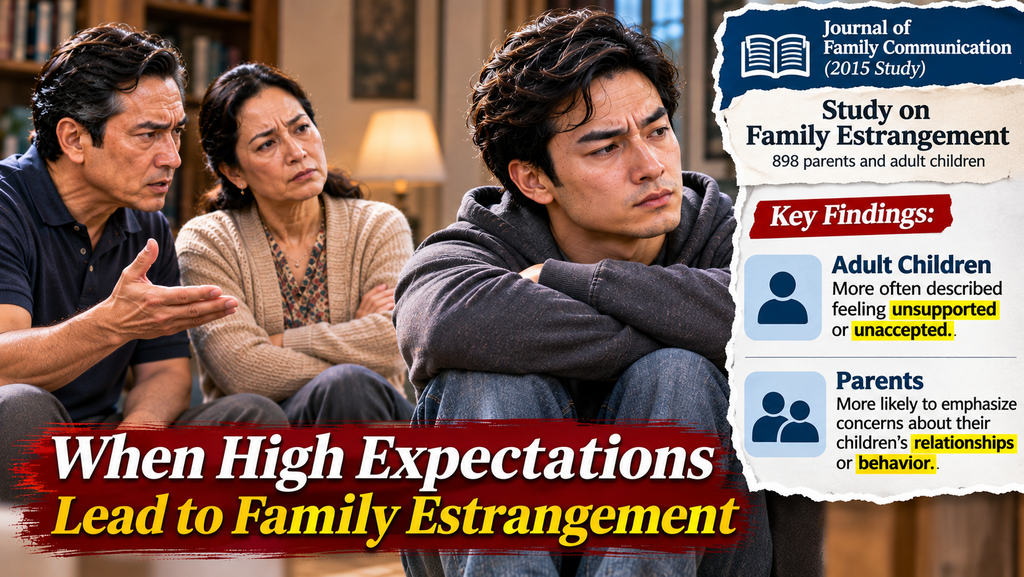
Research offers useful context for understanding why two generations can interpret the same relationship differently. A 2015 study published in the Journal of Family Communication examined 898 parents’ and adult children’s reported reasons for estrangement.
The researchers found differences in how parents and adult children explained their separation. Adult children more often described feeling unsupported or unaccepted, whereas parents were more likely to emphasize concerns about their children’s relationships or behavior.
Why Family Members May Remember the Conflict Differently
The findings do not establish what happened in this particular family. They do suggest that a parent and adult child can understand the origins of their estrangement in substantially different ways.
Parents may remember the ambitions they held for their child’s future or the sacrifices they made while raising a family. Their adult child may remember moments when encouragement felt like criticism or when personal choices were dismissed.

These perspectives are not automatically equivalent, nor does understanding a parent’s intentions erase the effects of hurtful behavior. Meaningful reconciliation may require acknowledging both what someone intended and what the other person experienced.
A disagreement about educational choices can sometimes be resolved through conversation. A longstanding belief that affection or respect depends on achievement may require more extensive changes in how family members communicate.
Ten Years Later, He Had Built a Life of His Own
A decade passed after the man stopped communicating with his parents. During that period, according to his Reddit post, he completed his professional training and established himself as a pharmacist.
He also reported completing ROTC during college and becoming a commissioned officer in the Army Reserve. His career and military experiences reflected a combination of ambitions that had developed over time rather than a single conventional route to success.
Outside his professional life, he described several additional milestones. He owned a home, reported having no debt beyond his mortgage, and had married.
Perhaps the most significant personal development was that he and his wife were expecting their first child. He was preparing to become a parent while still carrying painful memories of his relationship with his own parents.
Success Did Not Automatically Resolve the Past
From an outside perspective, the man’s career and personal achievements might appear to provide a satisfying answer to the criticism he experienced. He had built a life that included professional responsibility, financial stability, and a growing family.
Yet the account suggests that success had not eliminated the emotional impact of his earlier experiences. When his parents eventually contacted him, their message brought those memories back into focus.
This distinction is important because professional accomplishment and family reconciliation are separate matters. A person can become financially independent, establish fulfilling relationships, and still experience distress when reminded of unresolved family conflict.
The man’s achievements were meaningful on their own terms. Whether his parents eventually recognized their value remained an unanswered question.
An Unexpected Email Reopened a Decade-Old Conflict
The contact came through an old personal email account. According to the man, his parents wrote to say they missed spending time with him and wanted to restore their relationship.
However, he said the message did not contain an apology for their previous treatment of him. Instead, his parents reportedly warned that he might regret neglecting his family because those relationships could not be replaced.
For the man, that wording was upsetting. He had spent 10 years building a life away from the criticism he associated with his childhood and early adulthood, and the email appeared to place responsibility for the separation primarily on him.
Rather than feeling reassured, he described experiencing renewed stress. He considered expressing his frustration directly but worried that responding would create another complicated exchange.
Why the Missing Apology Mattered
An invitation to reconnect and an acknowledgment of past harm serve different purposes. Someone can express a desire for renewed contact without necessarily demonstrating that they understand why the relationship deteriorated.
In this account, the man appeared particularly troubled by the absence of recognition for the comparisons and criticism he had described. His parents wanted renewed communication, but he did not see evidence in the email that the underlying conflict had been addressed.
That does not establish whether his parents had changed, what motivated the message, or what they might have said during a longer conversation. The available account includes only the son’s characterization of their email.
What it does establish about his perspective is that the invitation alone did not restore his confidence in the relationship. The unresolved history remained central to how he interpreted their request.
Reddit Readers Debated Whether He Should Respond
The man’s post attracted considerable attention, with commenters offering sympathy, personal experiences, and differing opinions about his situation. Many praised the independence he had developed and recognized why receiving the email could be emotionally difficult.
Several commenters speculated that his parents might be seeking financial assistance, future caregiving, or a relationship with their expected grandchild. However, the original post provided no evidence establishing those motives.
Other participants suggested that he could communicate his boundaries without agreeing to a complete reconciliation. Some believed that remaining silent might be more appropriate if responding would renew the distress he had spent years trying to escape.
These reactions illustrate the different expectations people bring to family relationships. For some, maintaining contact with parents is an important obligation; for others, continued communication depends on mutual respect and whether the relationship feels emotionally sustainable.
Reconciliation Does Not Have to Be Immediate
Reconnecting after a lengthy separation can take different forms. Some families gradually rebuild communication through occasional messages, while others attempt more direct conversations about past conflicts.
In other situations, the person who established distance may decide not to resume contact. That decision can reflect their assessment of the relationship, their present circumstances, and whether they believe meaningful change is possible.
A research review by Lucy Blake in the Journal of Family Theory & Review describes family estrangement as a complex experience with varied causes and consequences. It also recognizes that distancing from relatives can involve emotional loss and social stigma.
The research does not prescribe reconciliation as the correct outcome for every family. It encourages a more nuanced understanding of relationships that may be difficult, painful, or significantly different from conventional expectations.
What Would Meaningful Reconciliation Require?
The Reddit account does not provide a verified account of any eventual reunion. However, it raises a broader question: what makes an invitation to reconnect credible after years of hurt?
A useful starting point may be acknowledging the specific behavior that contributed to the separation. In this case, that could mean recognizing how repeated sibling comparisons, dismissive comments about career choices, and criticism of personal decisions affected the son.
Another consideration is whether both sides can communicate without immediately returning to old arguments. Contact alone may not be enough if conversations continue to involve belittling remarks or pressure to meet expectations that the adult child has already rejected.
Rebuilding trust may also involve respecting the pace and limits of communication. An invitation can be offered, but the other person must still decide whether, when, and how to respond.
Respecting Boundaries Without Assuming the Outcome
Personal boundaries are particularly important when family members have different expectations about involvement in one another’s lives. An adult child may be willing to exchange occasional messages without immediately agreeing to visits, family gatherings, or access to their children.
The importance of clearly defined boundaries appears in other family disputes as well. A separate W1 Network Stories article about a mother-in-law who redecorated her pregnant daughter-in-law’s home examines how misunderstandings about permission and personal decisions can damage family trust.
The circumstances differ, but both accounts involve disagreements about who has authority over another person’s choices. Family closeness does not automatically eliminate the need for permission, respect, and honest communication.
In the man’s case, becoming a father may eventually influence how he thinks about family relationships. However, his post did not establish that he wanted his parents involved in his child’s life or that their outreach was connected to the pregnancy.
What Parents Can Learn From This Story
One of the clearest lessons is that children may develop ambitions that differ substantially from their parents’ expectations. Academic ability, professional interests, career timing, and personal relationships cannot always be measured against one standard of success.
A student who pursues military service, community college, vocational training, or professional education later in life may still build a fulfilling and successful career. Treating one route as inherently shameful can overlook the effort and judgment involved in choosing a different path.
Research also indicates that the quality of parental support matters. A 2023 longitudinal study published in the Journal of Youth and Adolescence examined parental support, negative interactions, and students’ responses to academic stress.
Although the study concerns adolescents rather than estranged adults, it offers relevant context for understanding the relationship between achievement pressures and supportive family interactions. Expectations are only one part of a child’s broader emotional and educational environment.
Recognizing Effort Without Demanding Perfection
Parents can maintain high expectations while recognizing that children have different strengths. Encouraging education does not require treating every alternative career as an embarrassment or comparing one child unfavorably with another.
Likewise, parents can express concerns about an adult child’s choices without making affection or respect seem conditional on agreement. Constructive conversations leave room for individual judgment, disagreement, and the possibility of changing direction.
For adult children, establishing an independent identity does not necessarily mean rejecting everything their parents value. It can mean deciding which expectations remain meaningful and which no longer fit their goals.
The central issue is not whether families should celebrate achievement. It is whether their relationships can remain respectful when someone chooses a life different from the one others imagined.
Final Thoughts: Can Family Estrangement End After Ten Years?
The man’s Reddit account began with memories of growing up under comparisons he found impossible to escape. His military service, educational progress, and acceptance into pharmacy school reportedly failed to earn the approval he wanted from his parents.
Eventually, he chose to stop communicating with them. During the following decade, he established a career, maintained military responsibilities, married, and prepared to welcome his first child.
Then came the email asking him to reconnect.
For his parents, the message may have represented an attempt to reopen a relationship they missed. For their son, according to his account, it brought renewed attention to the criticism and disappointment that had contributed to the separation.
The available post does not establish whether he eventually responded or whether reconciliation occurred. It also cannot reveal the parents’ private motivations or the full history of their relationship.
What the story illustrates is that family estrangement is not always about one dramatic argument. Sometimes, it develops through years of feeling misunderstood, compared, or unable to meet expectations that seem constantly out of reach.
An invitation to reconnect may open the possibility of a different future, but it cannot erase the past by itself. Whether a relationship can be rebuilt depends on the people involved, their willingness to understand what happened, and the boundaries they are prepared to respect.
Ten years after walking away, this man faced a decision that no academic achievement or professional milestone could make for him: whether reconnecting with his parents would be a meaningful new beginning or a return to a relationship he had worked hard to leave behind.