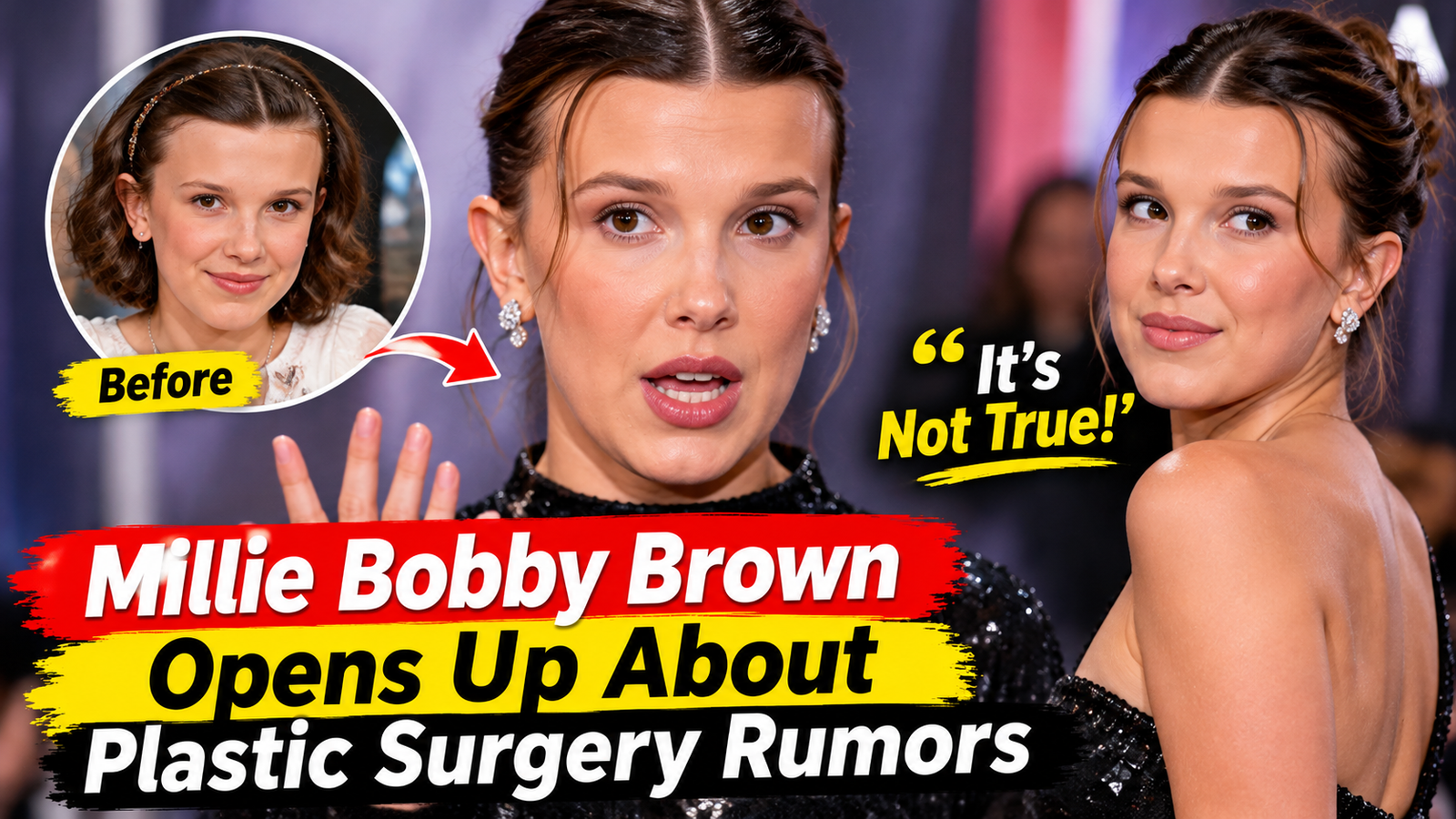
Millie Bobby Brown has spent much of her life growing up in front of millions of viewers. From becoming a household name through Netflix’s Stranger Things to establishing herself as a film actress and entrepreneur, her journey has unfolded under an unusually intense public spotlight. But as she entered adulthood, the attention surrounding her appearance became increasingly difficult to navigate.
In a candid interview with British Vogue, published on November 5, 2025, Brown discussed the hurtful headlines and plastic surgery speculation that followed her during the promotional campaign for The Electric State. Rather than confirming rumors about cosmetic procedures, the actress focused on how public criticism affected her emotionally and why she believes the media should treat young women more responsibly.
Her comments attracted renewed attention because they addressed something larger than celebrity beauty standards: the pressure placed on women to maintain a particular appearance, even as they naturally grow older and experiment with their personal style. Brown also explained why she decided to speak publicly, emphasizing that her message was intended to encourage other young women to feel comfortable expressing themselves.
What Millie Bobby Brown Said About Plastic Surgery Rumors
MANAGEMENT+ARTISTS – BEAUTY – REBECCA WORDINGHAM, talent.maworldgroup.com
The central subject of Brown’s British Vogue interview was the emotional impact of repeated criticism about her appearance. During the earlier promotional period for The Electric State, several media headlines questioned whether she had undergone plastic surgery and made negative comparisons about how old she looked.
Instead of treating these comments as harmless celebrity gossip, Brown described them as deeply upsetting. She explained that she respected journalism and understood that public figures attract attention, but she believed there was a difference between reporting on someone’s professional life and attacking their physical appearance.
One of her strongest criticisms concerned headlines that immediately presented negative judgments about her face, hair, and makeup. Brown argued that this type of reporting could become bullying, particularly when directed at young women who are still developing confidence in themselves.
Importantly, the interview should not be interpreted as a confirmation of cosmetic surgery. Brown discussed the speculation and its consequences, but the published conversation did not establish that she had undergone any particular cosmetic procedure. Claims about fillers, surgical enhancements, or other treatments should therefore not be presented as verified facts.
Her response shifted the conversation away from guessing what might have changed about her appearance and toward examining why strangers and media outlets feel entitled to judge it.
Why Millie Bobby Brown Faced Appearance Criticism During The Electric State Press Tour
What Is Millie Bobby Brown Telling Us With Her Style Shift? | Vogue, vogue.com
The controversy became particularly noticeable in early 2025, when Brown began promoting The Electric State, a science-fiction adventure film starring her alongside Chris Pratt. The promotional campaign introduced audiences to a noticeably different fashion direction, including blonde hair, glamorous makeup, and outfits inspired by the film’s 1990s aesthetic.
Brown was not simply changing her appearance for attention. According to her British Vogue interview, she and her stylist, Ryan Young, wanted the promotional looks to reflect the movie’s visual inspiration. They even borrowed iconic fashion pieces associated with celebrities Pamela Anderson and Paris Hilton.
However, some media coverage focused less on the fashion choices or the film and more on whether Brown looked older than expected. Her blonde hairstyle and more mature red-carpet styling became subjects of online discussions, with some commentators making unsupported assumptions about cosmetic procedures.
This reaction highlighted an unusual problem facing performers who become famous as children. Audiences become familiar with a particular version of an actor and sometimes struggle to accept that the person will eventually look different.
For Brown, whose career began when she was approximately 10 years old, that transition happened under continuous public observation. Her appearance was being compared with memories of her early Stranger Things performances, even though years had passed.
The discussion also demonstrated how quickly an ordinary beauty or fashion decision can become a much larger controversy when social media users and entertainment headlines repeatedly amplify it.
Millie Bobby Brown Reveals the Emotional Impact of the Rumors
One of the most striking parts of the British Vogue interview was Brown’s description of how the criticism affected her mental and emotional well-being.
She explained that the negative coverage left her feeling depressed for several days. Recalling the experience, she said:
“I was depressed for three, four days. I was crying every day.”
The actress also remembered becoming emotional while preparing for public appearances. Even getting her hair and makeup done became difficult because the criticism had affected her excitement about the promotional campaign.
This detail offered an important perspective on the difference between how celebrity controversies appear online and how they can affect the person at the center of them. To internet users, a photograph or headline may represent only a few seconds of entertainment. For the individual being discussed, however, hundreds or thousands of similar comments can become difficult to escape.
Brown’s experience also illustrates why public figures should not automatically be expected to ignore every negative comment. Being famous does not eliminate the emotional effects of humiliation, repeated criticism, or unwanted attention.
Her decision to discuss those feelings publicly helped explain why the issue mattered to her beyond the immediate controversy. She wanted people to understand that comments about someone’s face or perceived age are not necessarily harmless observations.
Why Brown Called Appearance-Based Headlines Bullying
Millie Bobby Brown: “Family Life? It’s Just Endless Joy” | British Vogue, vogue.co.uk
Brown did not argue that journalists should stop covering celebrities or discussing their professional choices. Instead, she questioned the way certain publications approached stories about her appearance.
During the interview, she explained that she respected journalism and enjoyed reading about people whose careers interested her. She also acknowledged that paparazzi attention was part of the entertainment industry, even when it felt invasive.
However, she objected to headlines that began by insulting her appearance or suggesting that something was wrong with her face. She described this approach as bullying, especially because younger girls who are new to the entertainment industry may already struggle with confidence and public expectations.
Her criticism raises an important distinction between legitimate entertainment reporting and appearance-based personal attacks.
A journalist can report on a celebrity’s new hairstyle, fashion choices, film appearance, or public statement without suggesting that the individual has somehow failed to meet an expected beauty standard.
Similarly, discussing cosmetic surgery as a broader cultural topic does not require making unsupported claims about a specific person’s body.
Brown’s comments encouraged a more thoughtful approach to celebrity coverage, one that recognizes the difference between public interest and unnecessary humiliation.
Millie Bobby Brown’s Response Began Before the Vogue Interview
The British Vogue conversation was not the first time Brown had spoken against criticism of her appearance. She had previously addressed similar treatment during her teenage years, when negative headlines and inappropriate commentary about her were already becoming a recurring issue.
In 2025, during the controversy surrounding The Electric State, she published a video on Instagram addressing media coverage of her changing appearance. She specifically challenged journalists who had publicly criticized her looks and questioned whether she had undergone cosmetic procedures.
According to her statement, she started working in the entertainment industry at approximately 10 years old. She explained that people had watched her grow up but seemed unwilling to accept that she would naturally change as she became an adult.
One of the central messages in her video was that she should not be expected to look exactly as she did during the first season of Stranger Things.
That observation resonated with the larger issue behind the controversy. An actor’s early screen appearance can become permanently associated with their public identity, even when the person has moved through several stages of life.
Brown also called attention to the effects of publishing critical headlines about young performers. Her argument was that young women should not feel ashamed of trying different hairstyles, wearing makeup, or exploring their individual fashion preferences.
Her public response received considerable attention and became another example of celebrities using social platforms to challenge traditional entertainment coverage.
Sabrina Carpenter’s Encouragement Helped Brown Regain Confidence
An especially personal detail from the Vogue interview involved singer Sabrina Carpenter.
Brown explained that the negative publicity had affected her so much that she became emotional while preparing for an appearance at the Brit Awards in London. She was scheduled to present an award to Carpenter, but the experience of getting ready was overshadowed by the criticism she had been receiving.
When the two met backstage, Brown recalled becoming emotional again. Carpenter offered encouragement and shared an attitude that Brown found refreshing: not allowing every negative opinion to determine how someone feels about themselves.
The exchange appears to have helped Brown reconsider how much attention she wanted to give the criticism.
She subsequently recorded her Instagram response, explaining that her decision to speak out was not exclusively about defending herself. She also wanted to support other girls who might be afraid to experiment with their appearance because of public judgment.
This moment added another dimension to her message. Instead of focusing entirely on the people criticizing her, she wanted to encourage confidence and self-expression among those who might be experiencing similar pressure.
It also demonstrated how support from friends and fellow performers can make a difference when someone is navigating intense public scrutiny.
Growing Up as Eleven Made Her Appearance a Public Conversation
“דברים מוזרים” חוזרת! כך השתנתה כוכבת הסדרה לאורך השנים | מגזין את, atmag.co.il
For many viewers, Millie Bobby Brown will always be associated with Eleven, the mysterious young character she played in Netflix’s Stranger Things. The series premiered in 2016 and quickly became one of the platform’s most recognizable entertainment properties.
Brown was approximately 12 when the first season premiered, having been cast at around 10. Her short hairstyle, youthful appearance, and distinctive portrayal of Eleven became recognizable parts of her public identity.
As the series continued, viewers watched both the character and the actress change. Brown appeared in additional seasons, attended major entertainment events, worked on films, and developed interests outside acting.
But growing up in front of an international audience comes with a particular challenge. People who remember an actor from childhood may unconsciously compare every later appearance with an earlier image.
That comparison can become especially unfair when ordinary adult changes are treated as evidence of something unusual.
Brown’s situation demonstrates how childhood fame can create expectations that follow performers long after their early roles have ended. Although audiences may feel familiar with an actor because they have watched them for years, that familiarity does not create ownership over the person’s appearance.
Her comments also invite viewers to reconsider the difference between appreciating a familiar television character and expecting the performer behind that character to remain visually unchanged.
The Difference Between Cosmetic Surgery Speculation and Verified Information
The discussion surrounding Millie Bobby Brown plastic surgery rumors also highlights an important issue in modern celebrity reporting: the difference between observation, speculation, and confirmed information.
A photograph cannot reliably establish whether someone has received cosmetic treatment. Lighting, camera angles, makeup, facial expressions, hairstyles, and natural changes over time can all affect how a person appears.
Even comparisons between photographs taken several years apart are not sufficient evidence of a medical or cosmetic procedure.
There is also an important privacy consideration. An individual’s medical and cosmetic history is personal information, and public curiosity does not automatically justify presenting unverified claims as facts.
In Brown’s case, the British Vogue interview provides reliable evidence of what she said about the rumors and their emotional consequences. It does not provide medical evidence confirming that she underwent plastic surgery.
Responsible reporting should preserve that distinction rather than turning speculation into a headline that appears to establish something the source never confirmed.
Readers can also distinguish between an actress discussing beauty, makeup, fashion, or public criticism and an actress making a specific disclosure about a cosmetic procedure. These are different subjects and should not be treated as interchangeable.
For entertainment publications, maintaining this distinction is important for accuracy, credibility, and reader trust.
How Celebrity Beauty Standards Affect Young Women
Attractive three friends discussing model
Although Brown’s experience involved a famous actress, the broader issue extends well beyond Hollywood. Millions of people encounter appearance-related comments through social media, entertainment websites, video platforms, and everyday online conversations.
Young women can face pressure to look attractive while simultaneously being criticized for wearing too much makeup, changing their hairstyles, following fashion trends, or appearing different from earlier photographs.
Celebrity culture can intensify this pressure because public figures are frequently photographed under professional lighting and styling conditions. Those images can create unrealistic expectations about how people should look in ordinary life.
The problem becomes more complicated when online discussions treat natural aging as a negative development. Growing older is an ordinary part of life, yet celebrity headlines sometimes frame visible changes as something requiring an explanation.
Brown’s experience provides a reminder that public discussion does not have to become personal judgment. People can appreciate fashion, discuss entertainment, and follow celebrity news without turning someone’s appearance into a constant subject of ridicule.
For younger audiences, the message is particularly relevant: experimenting with personal style should not require permission from strangers online.
Millie Bobby Brown Wants Young Women to Feel Comfortable Being Themselves
One of the most meaningful parts of Brown’s interview was her explanation of why she chose to address the controversy.
She said she wanted to speak not only for herself but also for other girls who might want to try a different hairstyle or wear a bold red lip without worrying about negative reactions.
Her point was straightforward. Changing your appearance should be an opportunity for creativity and personal expression, not a reason to become the target of online criticism.
This message is particularly relevant for teenagers and young adults who are still discovering their individual preferences. Fashion, makeup, hairstyles, and other forms of self-expression naturally change over time.
Brown’s career demonstrates how those changes can become public entertainment when someone grows up in front of millions of people. Yet her argument is equally applicable to individuals who are not celebrities.
A person should be able to experiment with their style without having every decision interpreted as a statement about their character, confidence, or personal history.
By speaking openly about the experience, Brown redirected attention toward a more constructive conversation about kindness, boundaries, and respect.
What the Vogue Interview Reveals About Her Life Beyond Stranger Things
Millie Bobby Brown: “Family Life? It’s Just Endless Joy” | British Vogue, vogue.co.uk
While the appearance controversy attracted significant attention, the November 2025 British Vogue interview covered considerably more than cosmetic surgery speculation.
Brown discussed the conclusion of Stranger Things, her professional ambitions, her business activities, and her family life. She reflected on how much the Netflix series had shaped her identity and described the emotional experience of preparing to say goodbye to a project that had been part of her life since childhood.
The interview also explored her relationship with husband Jake Bongiovi and their decision to build a family together. Brown discussed adopting a daughter and described the happiness of entering a new stage of life.
She also explained her desire to protect her daughter’s privacy, saying she did not want to share personal details about the child before she was old enough to make her own decisions about public attention.
That perspective connects closely with the appearance controversy. Brown understands the consequences of growing up under constant observation and appears determined to provide her child with more control over her personal story.
Her professional life has also expanded beyond acting. She established the Florence by Mills beauty brand and has been involved in producing entertainment projects through her production company.
These developments show that Brown’s identity is no longer limited to her childhood role as Eleven. She is building a career and personal life that reflect her interests as an adult.
The Vogue interview therefore offers a broader portrait of someone navigating fame, family, business, and personal independence while continuing to face the pressures that accompany international recognition.
Why Millie Bobby Brown’s Comments Continue to Matter
The continuing interest in Millie Bobby Brown plastic surgery rumors is about more than whether audiences think an actress looks different. It reflects a wider debate about how celebrities, particularly women who began their careers as children, are treated as they grow older.
Brown’s interview brought attention to the emotional consequences of appearance-based headlines and the unrealistic expectation that performers should maintain the same image throughout their careers.
Her experience also highlights the responsibility of entertainment publications and social media users to distinguish between reporting and personal attacks.
There is nothing unusual about changing a hairstyle, experimenting with makeup, choosing a different fashion direction, or simply looking older than you did several years earlier. These are ordinary parts of growing up and developing an individual identity.
The actress’s response was not an attempt to control every opinion about her. Instead, she wanted to make clear that criticism should not become an excuse for humiliating someone over their physical appearance.
For readers, the broader takeaway is simple: enjoying celebrity culture does not require participating in appearance-based judgment. Public figures can be discussed, admired, questioned, and appreciated without treating their bodies as public property.
Conclusion: Millie Bobby Brown’s Message Goes Beyond Plastic Surgery Rumors
Millie Bobby Brown’s candid British Vogue interview offered a revealing look at the personal impact of celebrity appearance criticism. By discussing the plastic surgery rumors surrounding her during The Electric State promotional campaign, she explained how negative headlines affected her confidence and made an otherwise exciting professional experience emotionally difficult.
Her message was not a confirmation of cosmetic surgery, but a challenge to the way public figures are judged for changing their appearance. She also wanted young women to understand that trying new hairstyles, wearing makeup, and expressing personal style should never become reasons for shame.
Ultimately, the conversation is about respect as much as celebrity culture. Brown has grown up in front of the world, but she should not be expected to remain the same person or look the same way she did when audiences first met her as Eleven.
Her words offer a timely reminder that behind every celebrity photograph is a real person deserving of dignity, privacy, and the freedom to grow.
Sources and References
The following sources were used to verify the interview, Brown’s statements, and the background to the controversy.
- British Vogue — Original Interview (November 5, 2025)
Millie Bobby Brown: “Family Life? It’s Just Endless Joy” - ABC News — Original Appearance Controversy (March 4, 2025)
Millie Bobby Brown claps back at critics about her appearance - Allure — Coverage of the British Vogue Interview (November 6, 2025)
Millie Bobby Brown Has Something to Say to Bullies - People — Coverage of the Emotional Impact of the Rumors
Millie Bobby Brown Was Depressed for Days Following Plastic Surgery Accusations