

Some days, life feels like a series of things to finish: answer the messages, pay the bills, get through work, and prepare to do it again tomorrow. Even when nothing is obviously wrong, there may be little room for the people and activities that make those efforts worthwhile. Building a happy, meaningful life starts with noticing that gap and choosing one manageable way to close it.
Happiness, peace, and meaning do not always arrive together. A joyful afternoon can be carefree, while something deeply meaningful, such as caring for a loved one, can also be difficult. The aim is to make room for enjoyment, create steadier routines, and spend more of your limited energy on what matters to you.

These 15 suggestions combine practical reflection with selected public-health guidance. They are options to adapt to your circumstances, rather than a checklist you must complete. Health, income, caregiving responsibilities, and access to support all influence what is realistic, so start wherever you have some room to act.
Build the Foundations of a Happy, Meaningful Life

#1. Define What a Good Life Means to You
Before adding another goal, decide what you want your goals to serve. Write down three qualities you would like your ordinary week to have, such as connection, curiosity, or stability. Then describe an action that would make each quality visible: connection might mean having dinner with a friend, while curiosity might mean visiting the library.

Use those qualities when a new commitment competes for your time. An impressive opportunity may be worth taking, but ask what it would displace and whether that trade-off fits your priorities. Revisit your answers when your circumstances change; your definition of a good life can grow with you.
#2. Give Close Relationships a Place on Your Calendar
Relationships need opportunities for ordinary contact, including conversations that have no urgent purpose. The CDC’s guidance on strengthening social connections recommends making time for supportive people and joining groups with shared interests. It also recognizes that health problems, financial difficulties, and living alone can make connection harder.

Choose a recurring invitation that fits your circumstances, such as a Sunday phone call or a monthly lunch brought from home. If you are building a new social circle, try an activity where the same people return regularly. Familiarity gives you a chance to move beyond introductions without expecting instant friendship.
#3. Protect a Realistic Sleep Routine
Sleep deserves a place in your plans before the remaining hours fill up. The National Institute of Mental Health recommends prioritizing sleep, maintaining a schedule, and reducing screen exposure before bedtime. Start with one adjustment you can repeat, such as ending household tasks at a set time.

Make that adjustment fit your actual responsibilities. A shift worker or new parent may need a very different routine from someone with predictable evenings. If sleep difficulties persist, discuss them with a healthcare professional rather than assuming you simply need more discipline.
#4. Choose Movement You Can Keep Returning To
Physical activity offers benefits beyond appearance or athletic performance. According to the CDC’s overview of physical activity benefits, moderate-to-vigorous activity can reduce short-term feelings of anxiety in adults, and regular activity can support better sleep. You can begin with an activity and duration suited to your abilities.

Consider walking with a neighbor, dancing at home, swimming, or an accessible exercise class. Make the starting point easy enough to fit a busy day, then adjust as you learn what works. If you have health concerns or limitations, ask a qualified professional about appropriate options.
#5. Remove One Repeated Source of Daily Friction
Think about a small problem that interrupts your day repeatedly: misplaced keys, an overcrowded entryway, or deciding what to pack each morning. Choose one simple arrangement that addresses it, such as a key hook or a prepared bag. Judge the arrangement by whether it helps you use the space, rather than how polished it looks.
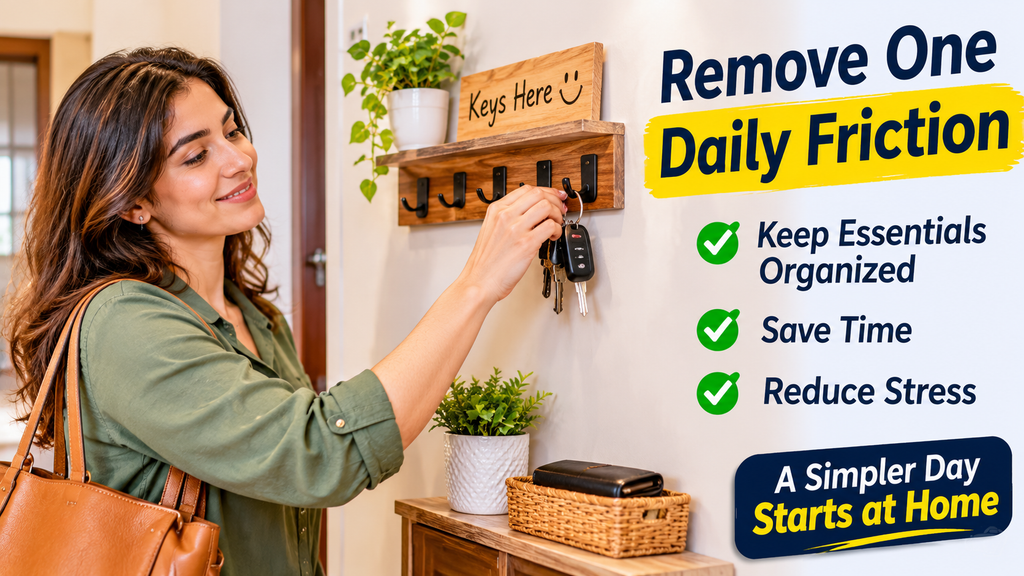
For more ideas, explore W1 Network Stories’ practical everyday life hacks, selecting only suggestions relevant to your routine. You do not need to reorganize your entire home. Fixing one recurring annoyance is a useful result on its own.
Make Room for More Peace in Everyday Decisions

#6. Set Boundaries You Can Explain Clearly
A useful boundary tells another person what you can offer and where your availability ends. For example, you might say, “I can help for an hour on Saturday,” or “I will check that message tomorrow morning.” Specific language gives people something concrete to plan around.

Start with a recurring commitment over which you have some control. If saying no feels difficult, pause before answering and check your existing responsibilities first. Where work or caregiving limits your choices, ask for a smaller adjustment or shared responsibility instead of expecting an immediate overhaul.
#7. Interrupt Comparison With a Better Question
When another person’s promotion, vacation, or home becomes a judgment on your own life, identify what caught your attention. You might want more freedom, recognition, companionship, or rest. Naming that desire gives you something more useful to work with than a broad conclusion that you are falling behind.

Ask what a modest version of that need would look like in your current circumstances. Wanting more adventure might lead to exploring a nearby town rather than copying an expensive vacation. You can appreciate someone else’s milestone while choosing a response that belongs to your own life.
#8. Practice Gratitude Without Denying What Hurts
The NIH’s Emotional Wellness Toolkit includes gratitude among its suggestions for emotional well-being. Try naming one specific thing you appreciated today and why it mattered. A useful entry might be that a coworker explained a confusing task without making you feel embarrassed.

Leave room for difficult feelings alongside that observation. You can appreciate someone’s kindness and still feel exhausted, disappointed, or worried. If gratitude writing feels forced, simply notice a welcome moment without requiring it to change the meaning of the whole day.
#9. Give Your Attention a Clear Destination
Choose one activity each day that deserves your attention for its own sake. It could be eating lunch, listening to someone, reading a chapter, or sitting outside. Put away avoidable distractions for a short period and notice whether the experience feels different.

Digital boundaries can be small and specific. You might silence promotional alerts while keeping family calls available, or stop checking work messages during dinner when your role permits it. Review the change after a week and keep it only if it serves your needs.
#10. Decide What Is Enough for Today
An unfinished task list can expand to occupy every available hour. Before beginning your day, choose a reasonable stopping point for one important task: draft the email, complete one application, or clear the kitchen counter. Defining the endpoint gives you a way to recognize completion.
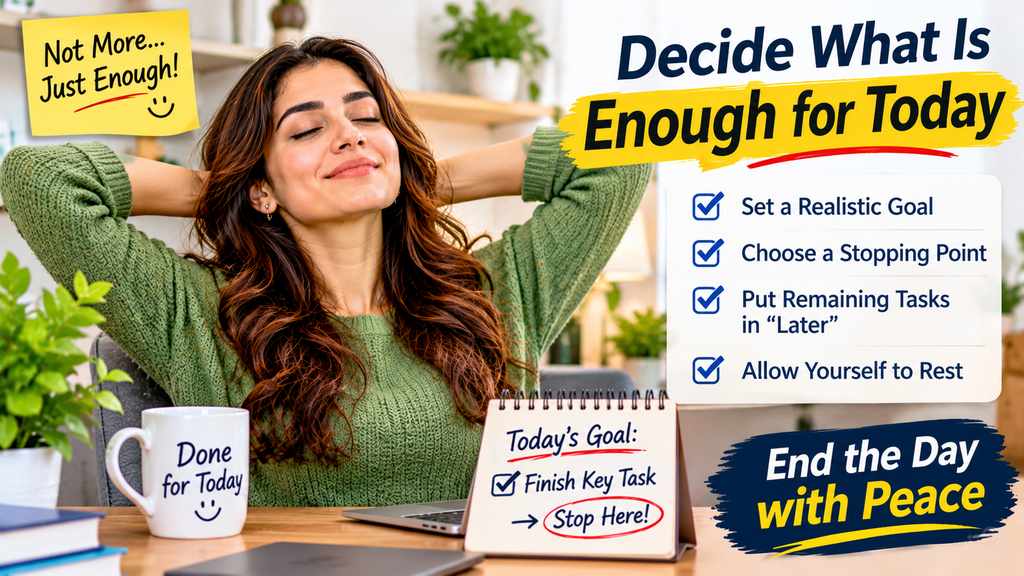
Keep a separate place for tasks that can wait. If something unexpected consumes your time, revise the plan to reflect what happened instead of judging yourself against an outdated schedule. Rest can be part of an ordinary evening even when tomorrow still contains work.
Give Meaning and Enjoyment Regular Space

#11. Translate Purpose Into a Small Commitment
Purpose can be expressed through a specific responsibility, interest, or contribution. You might care about helping children learn, preserving family stories, tending a garden, or making your workplace more welcoming. Choose something you would value even if it attracted little attention.

Turn that interest into a commitment you can describe clearly. Record one family interview, help with one community event, or spend twenty minutes practicing a skill. A concrete next step lets you explore what feels worthwhile without first deciding on a lifelong mission.
#12. Help in Ways That Respect Both People’s Needs
Before offering help, ask what would actually be useful. Someone managing a difficult week may prefer a grocery pickup to advice, while a new colleague may need a clear explanation of a process. Listening first keeps your offer connected to the other person’s situation.

Choose a contribution you can sustain without neglecting essential responsibilities. You can offer a short errand, share reliable information, or volunteer occasionally rather than promise ongoing availability. Let the recipient decline, and be clear about any limits on what you can provide.
#13. Keep Something You Enjoy Free From Performance
Make room for an activity that does not need to become a business, achievement, or public display. Sketching, baking, reading mysteries, playing music, or watching birds can be worth doing because you enjoy the experience. You do not need to become especially good at it to continue.

If you have lost touch with your interests, recall what you once chose when nobody was evaluating you. Try a small version using materials or resources you already have. Treat the result as information about what you like, rather than another test you must pass.
#14. Review Your Week With Curiosity
Set aside a few minutes to consider what you want to repeat and what needs adjusting. Ask which moment felt worthwhile, which commitment was too much, and what support would have helped. Use specific events so the review leads to decisions instead of vague self-criticism.

Choose only one adjustment for the following week. If an evening class was enjoyable but the travel was exhausting, look for a closer option or a less frequent schedule. Keep the part you value while changing the part that does not fit.
#15. Seek Support When Everyday Changes Are Not Enough
Persistent distress deserves attention even when you are making thoughtful lifestyle changes. NIMH advises seeking professional help for severe or distressing symptoms lasting two weeks or more, including difficulty concentrating, loss of interest, and trouble completing usual activities. Seek help sooner if symptoms are severe or worsening; two weeks is not a requirement to wait.

A practical first step is to tell a healthcare professional what has changed and how it affects your daily life. A trusted person may also help you arrange an appointment or explain what you have been experiencing. Habits can support well-being, but they do not replace care when it is needed.
Start With One Change That Fits Your Life
A happy, meaningful life does not require adopting all 15 ideas at once. Choose the one that addresses a real difficulty or makes room for something you miss. Keep the first step small enough to try this week, such as inviting a friend for a walk or reserving an evening for a neglected interest.

Afterward, ask whether the change helped and whether it was realistic to maintain. Keep it, adapt it, or try something else based on what you learn. The goal is a daily life with more room for relationships, enjoyment, and commitments you personally value.
6. Sources and References
- National Institute of Mental Health: Caring for Your Mental Health
- Centers for Disease Control and Prevention: Improving Social Connectedness
- Centers for Disease Control and Prevention: Benefits of Physical Activity
- National Institutes of Health: Emotional Wellness Toolkit
- W1 Network Stories: 30 Smart Everyday Life Hacks — related reading.