
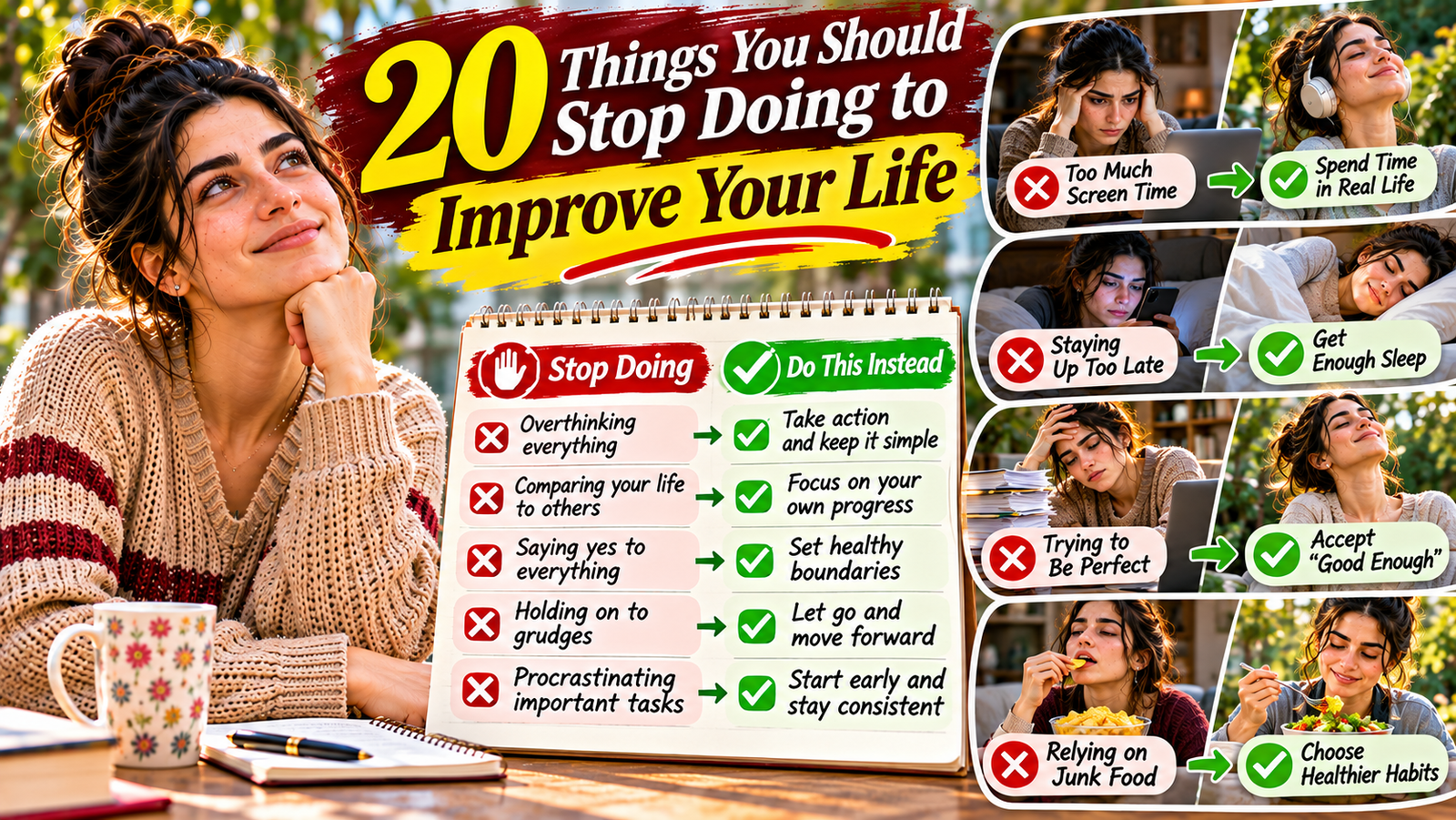
A day can feel exhausting even when nothing especially dramatic happens. You answer messages before getting out of bed, agree to something you cannot comfortably fit into your schedule, and spend your evening putting off a task that keeps bothering you. By bedtime, you have been busy for hours without making room for what matters to you.
When we look for ways to improve life, things we can add usually come to mind first: a new routine, another goal, or a better planning app. Sometimes the more useful question is what we can stop doing. Removing one recurring source of frustration may be more manageable than building an elaborate new lifestyle.
These 20 suggestions offer practical places to start, not a judgment about how well you are coping. Health conditions, caregiving, money pressures, and demanding work can limit your choices. Choose an adjustment that fits your circumstances and treat it as an experiment, rather than another standard you must meet perfectly.
Improve Life by Protecting Your Time and Attention
#1. Stop Starting Every Day With Everyone Else’s Priorities
Opening email or social media immediately can mean your first decisions revolve around other people’s requests. If your responsibilities allow it, take a few minutes to identify your own most important task before opening those channels. Write something specific, such as “submit the application,” rather than “have a productive day.” If you must check urgent messages first, return to that priority before letting routine requests fill the morning.
#2. Stop Saying Yes Before Checking Your Capacity
An invitation or request can sound manageable until you consider everything already on your calendar. Replace an immediate yes with “Let me check what I can realistically do.” Consider preparation, travel, and recovery time as well as the commitment itself. When you cannot take on the whole request, offer a smaller contribution only if you actually have room for it.
#3. Stop Switching Tasks Whenever Something Feels Difficult
A challenging paragraph, form, or phone call can suddenly make checking notifications seem essential. Before switching away, write down the exact obstacle: missing information, an unclear instruction, or uncertainty about what to say. Work on that obstacle for a short period, keeping unrelated tasks on a separate list. If you still need to stop, leave a clear note about where to resume.
#4. Stop Letting Every Notification Interrupt You
Not every app needs permission to interrupt a meal, conversation, or focused task. Review notifications individually and keep the ones that support real responsibilities, such as family contact or time-sensitive work. Silence promotional alerts and other messages that can wait until you choose to check them. Test the setup for a day and adjust it if you miss something important.
#5. Stop Consuming News Without a Stopping Point
Checking the news can serve a purpose, but repeatedly refreshing the same story may leave you with little new information. The CDC’s guidance on managing stress recommends taking breaks from news and social media because constant exposure to negative events can be upsetting. Try checking a reliable source at a chosen time and stopping when you have the information you need. Keep necessary local emergency alerts available while reducing repetitive commentary.
Stop Making Progress Harder Than It Needs to Be
#6. Stop Waiting Until You Feel Fully Motivated
Some useful tasks remain unappealing even when you care about the result. Make the starting step small enough that you do not need a burst of enthusiasm: open the document, collect the paperwork, or put away five items. Decide beforehand whether you will continue or stop after that first step. The purpose is to make beginning easier without pretending that every difficult task becomes enjoyable.
#7. Stop Using Perfection as the Entry Requirement
A first draft does not need the polish of a finished piece, and an initial plan does not need to answer every question. Define what “good enough for this stage” means before you begin. You might require accurate information and a complete outline today, leaving style improvements for tomorrow. Save meticulous checking for decisions where mistakes carry meaningful consequences.
#8. Stop Turning One Setback Into a Verdict About Yourself
Missing a deadline is an event; deciding that you are incapable is a much broader conclusion. Describe what happened in terms you can act on, such as underestimating the work or forgetting a reminder. Then change one part of the process before the next attempt. Accountability becomes more useful when it produces a repair instead of a permanent label.
#9. Stop Measuring Your Life Against Someone Else’s Highlights
A promotion announcement or vacation photo rarely shows the full circumstances behind it. When a comparison bothers you, identify what you actually want: more freedom, recognition, connection, or a change of scenery. Translate that wish into a step suited to your resources. Someone else’s milestone can help you notice a preference without becoming your deadline.
#10. Stop Treating Busyness as Proof of Progress
An overflowing schedule can contain necessary responsibilities, avoidable commitments, and tasks that no longer serve a purpose. At the end of the day, ask what moved forward and what simply occupied time. Look for one recurring activity you could shorten, combine, delegate when possible, or stop. Leave room for rest and relationships even when they produce nothing you can check off a list.
Give Your Everyday Needs More Consistent Attention
#11. Stop Borrowing From Sleep for Optional Activities
Work schedules and caregiving can make adequate sleep difficult, but optional late-night scrolling may reduce the time available even further. The CDC’s sleep recommendations advise at least seven hours for adults ages 18–60, with different ranges for older adults. Start by identifying one optional activity you can end earlier and protect a realistic bedtime where possible. If you regularly have trouble sleeping, discuss it with a health care provider rather than assuming you simply need more discipline.
#12. Stop Treating Movement as All or Nothing
A busy day does not have to make every opportunity for movement disappear. Choose an activity that fits your abilities and surroundings, whether that means a brief walk, gentle stretching, or an accessible movement routine. Attach it to a natural break instead of waiting for an ideal exercise session. Keep your own limitations and any clinical guidance in mind when deciding what is appropriate.
#13. Stop Postponing Every Enjoyable Activity
If enjoyment must wait until every responsibility is finished, it can remain postponed indefinitely. Choose a modest activity you value and give it a defined place in the week. Reading, gardening, listening to music, or spending time outdoors can qualify without becoming another performance goal. Protect that time as realistically as you would another ordinary commitment.
#14. Stop Making Daily Essentials Difficult to Find
Repeatedly searching for keys, paperwork, or a charger creates a problem you have to solve again each day. Give one frequently misplaced item a consistent, convenient home near where you use it. Start with a single surface or drawer and check whether the arrangement actually works for everyone sharing the space. For additional household ideas, explore W1 Network Stories’ practical everyday life hacks and choose only those relevant to your routine.
#15. Stop Buying a New System Before Testing a Simple One
A planner, storage set, or subscription can feel like the beginning of change, but the purchase does not establish the habit. Before buying, test the basic idea using something you already own. Try a paper checklist before paying for a task manager, or an existing container before ordering matching organizers. Once you know what is missing, you can judge whether a purchase solves a specific problem.
Make More Room for Honest Relationships
#16. Stop Expecting People to Guess What You Need
Someone close to you may notice that you are frustrated without understanding what would help. Replace an indirect hint with a specific request, such as asking to divide a household task or schedule uninterrupted time together. Explain the situation without assuming you know the other person’s intentions. A clear request gives them something concrete to respond to, even when the answer requires negotiation.
#17. Stop Responding to Every Disagreement Immediately
You do not have to resolve every nonurgent disagreement while you are upset. If it is safe and appropriate, say that you need a pause and name a time to return to the discussion. Use the break to identify the issue and the outcome you are asking for. Returning as promised matters, because repeatedly postponing the conversation leaves the problem unresolved.
#18. Stop Letting Important Connections Depend Entirely on Leftover Time
Busy weeks can turn “we should catch up” into a promise nobody schedules. Suggest something concrete and manageable, such as a short call or a walk at a mutually convenient time. Make room for different capacities, including friends who cannot travel, spend money, or respond quickly. The aim is a sustainable pattern of contact that both people can comfortably maintain.
#19. Stop Confusing Support With Solving Everything Yourself
Helping someone does not always require becoming responsible for every part of their problem. Ask whether they want a listener, practical assistance, or help finding another resource. Be clear about the time and support you can offer, particularly when you already have demanding responsibilities. A limited promise you can keep is more dependable than an unlimited one you cannot sustain.
#20. Stop Waiting Until You Are Completely Overwhelmed to Ask for Help
When a problem keeps interfering with daily life, consider what kind of support would address it directly. That might mean asking a supervisor to clarify priorities, requesting practical help, or contacting a qualified health professional. The National Institute of Mental Health’s self-care guidance advises seeking professional help for severe or distressing symptoms lasting two weeks or more; you can seek help sooner if symptoms worsen or you are concerned. Everyday adjustments can support your well-being, but they do not replace appropriate care.
Choose One Change You Can Repeat
Trying to stop all 20 habits at once would create an unnecessary project. Choose the pattern causing the most frequent, manageable frustration, then decide what you will do in its place. For example, replace checking every alert with checking nonurgent messages after finishing a task, or replace an automatic yes with a calendar check.
Give that adjustment a week, then review what happened without grading yourself. Notice whether it made your day easier, whether it fit your responsibilities, and what needs changing. To improve life, things do not need to become perfect; a useful beginning is making one recurring part of your day work better for you.
Sources and References
- Centers for Disease Control and Prevention — Managing Stress.
- Centers for Disease Control and Prevention — About Sleep.
- National Institute of Mental Health — Caring for Your Mental Health.
- W1 Network Stories — 30 Smart Everyday Life Hacks (related reading).