
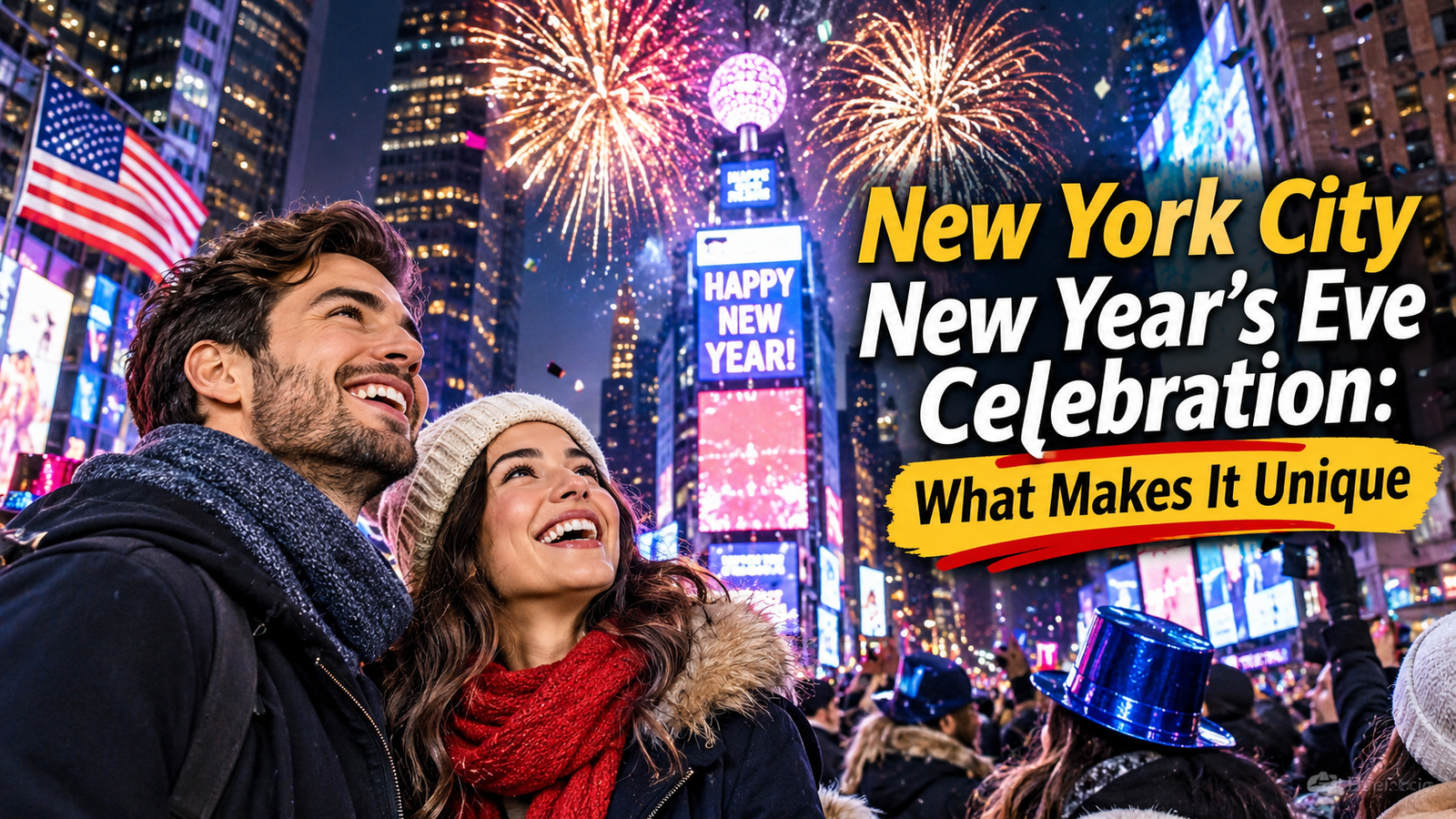
As the final hours of December approach, millions of people turn their attention toward one of the world’s most recognizable New Year’s Eve traditions. In the heart of Manhattan, Times Square transforms into a spectacular gathering place filled with brilliant lights, music, excitement, and the anticipation of a new beginning. As midnight approaches, an illuminated crystal ball slowly descends above the cheering crowd, marking the arrival of another year.
The New York City New Year’s Eve celebration is much more than a countdown. It is a tradition shaped by more than a century of history, a remarkable public spectacle, and a moment that connects people watching from different countries and time zones. From the famous Times Square Ball Drop to the colorful confetti carrying personal wishes, several elements make this annual event stand apart. Understanding its origins, traditions, and atmosphere helps explain why New York remains one of the most recognizable destinations for welcoming the New Year.
Why New York City’s New Year’s Eve Celebration Is So Special
New York City has many attractions, but Times Square takes on a different character on December 31. Its enormous digital billboards, illuminated buildings, busy streets, and distinctive architecture create a setting that is instantly recognizable around the world. During the celebration, this familiar commercial district becomes a shared public space where people gather for one purpose: to welcome the beginning of another year.
One important difference is the combination of a live public gathering and a worldwide broadcast. People standing in Times Square experience the countdown directly, while audiences at home follow the same moment through television and online coverage. The ceremony creates a connection between strangers who may be thousands of miles apart but are watching the same clock reach midnight.
The atmosphere also comes from the event’s scale and location. Rather than taking place inside a stadium or a private entertainment venue, the celebration unfolds among Manhattan’s tall buildings, famous signs, and crowded streets. The surrounding city becomes part of the experience, making the setting almost as memorable as the Ball Drop itself.
Another reason the tradition has lasted is its ability to welcome different generations. Visitors who remember watching the ceremony on television can share the moment with children experiencing it for the first time. Some attend with friends, others travel with family, and many celebrate from home. The central tradition remains recognizable even as the people watching and the technology broadcasting it change.
The History Behind the Famous Times Square Ball Drop
The origins of the Times Square celebration go back to 1904, when New York was experiencing major changes in transportation, business, and urban life. The New York Times had opened its new headquarters in a building near the intersection of Broadway and Seventh Avenue. Newspaper publisher Adolph Ochs helped persuade the city to rename the surrounding neighborhood Longacre Square as Times Square.
To mark the newspaper’s new headquarters, Ochs organized a major New Year’s Eve celebration. The event featured decorations, a street gathering, and a fireworks display that attracted an enormous crowd for the period. According to the Times Square Alliance’s historical account, the celebration was an immediate success and helped establish the area as New York City’s central destination for welcoming the New Year. Times Square NYC
However, the event needed a new attraction after the city prohibited the fireworks display. Ochs responded with an illuminated ball that could descend from the tower at midnight. The first Times Square New Year’s Eve Ball made its historic descent on December 31, 1907, welcoming the arrival of 1908.
The original ball was considerably different from the spectacular structure visitors see today. It was made of iron and wood, measured approximately five feet in diameter, and weighed around 700 pounds. One hundred electric light bulbs illuminated its surface, creating a striking visual effect for people gathered below. The ball was built by metalworker Jacob Starr, whose company later became closely associated with the annual lowering ceremony. Times Square NYC
Over time, the tradition survived changes in the city, technology, and public entertainment. Different versions of the ball appeared during the twentieth century, including an aluminum design and a memorable period when it was decorated to resemble an apple as part of the I Love New York campaign. Later versions introduced brighter lighting, modern controls, and increasingly elaborate crystal designs.
The tradition even continued through difficult wartime years. In 1942 and 1943, the illuminated ball drop was suspended because New York City observed wartime restrictions on lighting. People nevertheless gathered in Times Square to welcome the New Year, observing a minute of silence before hearing chimes from sound trucks. Those unusual celebrations demonstrated that the tradition was about more than an illuminated object. The gathering itself had become meaningful to the city. Times Square NYC
More than a century after the first ball descended, the ceremony remains a recognizable part of American New Year’s Eve culture. Its continued popularity reflects the strength of a simple idea: bringing people together to mark a shared moment in time.
The Times Square Ball: A Spectacle of Technology and Design
The glowing ball is the defining symbol of New York’s annual celebration. Although the original version was relatively simple, modern designs combine decorative materials with sophisticated lighting and control technology. Each generation has given the structure a different appearance while preserving the central idea of a carefully timed descent.
The newest major design, introduced in November 2025, is called the Constellation Ball. According to One Times Square, it measures 12.5 feet in diameter and weighs 12,350 pounds. Its surface features 5,280 Waterford crystals and LED light pucks, making it the largest version of the New Year’s Eve Ball introduced to that point. One Times Square+1
Its circular crystal design also represents a noticeable departure from the triangular crystals used on earlier versions. Different crystal sizes give the surface a distinctive appearance, while modern lighting technology creates a wide range of visual effects. The ball also incorporates updated motion and control systems, along with interactive audio technology designed to produce visual effects influenced by sound.
The engineering behind the event is impressive because the movement must be carefully coordinated with the midnight countdown. The ball is raised above One Times Square before the evening’s final moments. At 11:59 p.m. Eastern Time, it begins its traditional 60-second descent, reaching the bottom as the clock strikes midnight. Times Square NYC+1
For spectators, the countdown is easy to understand but difficult to forget. As the ball begins moving, attention shifts toward the structure above the crowd. People raise their phones, cheer, and count down together. During the final seconds, the entire atmosphere changes as anticipation becomes celebration.
The ball’s transformation over the years also reflects the broader development of New York City. The original design represented early electrical innovation, while modern versions demonstrate advances in materials, lighting, and digital technology. Despite these changes, the purpose has remained consistent: to create a visible signal that an old year has ended and a new one has begun.
The Confetti and the New Year’s Eve Wishing Wall
One of the most memorable moments of the Times Square celebration happens immediately after midnight, when colorful confetti fills the surrounding streets. As the new year begins, pieces of paper drift down from buildings and rooftops, creating a scene that has become almost as recognizable as the ball itself.
The amount of confetti is significant. The Times Square Alliance reports that more than one ton is typically released during the celebration. The colorful pieces float above the crowd, catch the surrounding lights, and contribute to the visual excitement of the moment. Times Square NYC
However, the confetti has an additional meaning that makes the tradition more personal. Through its official New Year’s Eve Wishing Wall, the Times Square Alliance invites people to share messages and hopes for the coming year. These can include personal goals, dreams, expressions of gratitude, or wishes for a better future.
Selected wishes are printed on pieces of official Times Square New Year’s Eve confetti and released above the gathering at midnight. This means that some of the paper falling through the air represents real messages submitted by people from different parts of the world. Times Square NYC
The idea adds a human element to an event often associated with enormous screens, bright lights, and large crowds. A person might submit a wish for good health, another might hope to achieve an important personal goal, and someone else might simply wish for happiness for their family. Although these messages are personal, they become part of a shared public celebration.
The Wishing Wall also demonstrates how an established tradition can develop without losing its original purpose. The ball still marks midnight, and the crowd still counts down together, but the wishes allow individuals to contribute something of their own. They become part of the event rather than simply watching it happen.
Music, Entertainment, and the Global Countdown
The Times Square celebration is also known for its entertainment program. Musical performances, appearances, live broadcasts, and special countdown presentations help create an atmosphere that builds throughout New Year’s Eve. The program adds variety to an event that would otherwise be focused primarily on waiting for midnight.
Artists and performers from different musical backgrounds have appeared in the annual celebrations over the years. Their performances help attract a broad audience and introduce different styles of entertainment to the event. The exact lineup changes from one year to another, so viewers planning to attend or watch online should consult the official event program for the latest confirmed information.
The broadcast is another important part of the experience. Television networks and digital platforms allow people who cannot travel to Manhattan to follow the celebration. Families can watch from their living rooms, friends can gather around screens, and viewers in other countries can see the countdown as New York approaches midnight.
The Times Square Alliance also provides information about its official online coverage, including accessible streaming options with open captions and American Sign Language interpretation when offered. These broadcasts make it possible for more people to follow the event without needing to stand in the crowd. Times Square NYC
The global audience is one reason the ceremony has become an international symbol of New Year’s Eve. New York’s position as a major center of business, culture, entertainment, and media gives the celebration an international profile. The event is no longer simply a neighborhood gathering; it has become a recognizable moment in the worldwide holiday calendar.
What Makes the Live Times Square Experience Different?
Watching the Ball Drop on television and standing in Times Square are two very different experiences. A broadcast provides close-up camera angles, interviews, commentary, and access to performances. In person, however, visitors experience the surroundings directly: the winter air, the movement of the crowd, the sound of thousands of voices, and the visual scale of the buildings.
The public outdoor celebration is also different from many ticketed New Year’s Eve events. According to the Times Square Alliance, the general outdoor viewing areas are free and operate on a first-come, first-served basis. Public viewing spaces are not sold as reserved tickets. Private parties at individual hotels, restaurants, or other venues are separate events and may require advance reservations. Times Square NYC
This distinction is important for visitors making plans. A ticket advertised for a nearby party does not automatically guarantee access to the public viewing areas. The Alliance specifically warns about misleading multi-venue passes that suggest buyers can move freely between businesses inside the secured area. Visitors should verify the arrangements directly with their chosen venue rather than assuming every ticket provides the same access.
The atmosphere also involves a considerable amount of waiting. People who want to watch from the outdoor viewing areas may arrive hours before midnight because capacity is limited. Once viewing areas fill, additional visitors may not be able to enter. The official access arrangements, opening times, and entry locations can change, so anyone planning to attend should check the latest guidance before traveling.
Winter weather is another important consideration. New York temperatures can be cold in late December, and visitors may spend an extended period outside. Wearing warm layers, suitable footwear, and weather-resistant clothing can make the experience more comfortable. The official FAQ also lists items that may not be allowed in the viewing areas, including large bags, umbrellas, folding chairs, coolers, and alcohol. These restrictions should be checked again before the event because security instructions can be updated. Times Square NYC
There are also practical limitations that people should understand. The official FAQ states that portable public restrooms are not provided within Times Square during the celebration. It also warns that visitors who leave their viewing area to eat elsewhere cannot return to the same spot. These details may seem minor when planning a holiday evening, but they can make a significant difference during a long outdoor event. Times Square NYC
Planning a Visit to Times Square on New Year’s Eve
For anyone considering attending in person, preparation is just as important as excitement. The central viewing areas are limited, and access is controlled by security arrangements around the event. Visitors should study the official entry information before leaving their hotel or accommodation, rather than relying on ordinary walking routes through Midtown Manhattan.
Public transportation is generally the practical choice for reaching the area. Roads around Times Square are subject to closures, and vehicle access can become difficult as the crowds arrive. The Times Square Alliance recommends using public transportation and directs visitors to check the Metropolitan Transportation Authority for the latest service information. Times Square NYC
The best travel plan is one that allows flexibility. Subway stations, walking routes, and street crossings can be affected by event-related arrangements. Visitors should check the MTA’s official planned service changes before traveling and allow additional time for walking.
It is also important to follow the instructions of event staff and law enforcement. Security checks, barricades, and designated entry points help manage the large gathering. Visitors should avoid bringing unnecessary belongings and should review the current prohibited-items list before arriving.
People who prefer not to stand outdoors for several hours can still enjoy the celebration through official broadcasts. This option provides a more comfortable way to watch the performances and countdown, particularly for families with young children, older viewers, and anyone who does not want to spend an extended period in a crowded public space.
For visitors traveling from outside New York, advance planning can make the evening considerably easier. Hotel availability, transport arrangements, restaurant reservations, and the location of accommodation all deserve attention. A room within a convenient distance of public transportation may be more useful than choosing accommodation solely because it appears close to Times Square on a map.
The most important advice is to use current information rather than assuming that last year’s arrangements will remain unchanged. Entry rules, road closures, viewing areas, transit service, and entertainment schedules can vary. The official Times Square New Year’s Eve information page is a useful starting point for checking details as December 31 approaches.
Why This Annual Tradition Continues to Inspire People
Many public celebrations are built around fireworks, concerts, light displays, or sporting events. What makes the New York City celebration especially recognizable is the combination of these familiar elements with a historic ritual that people have followed for generations.
The Ball Drop creates a clear and shared moment. Everyone knows what is about to happen, and the final countdown gives the evening a natural climax. Unlike entertainment that depends on a particular performer or production, the central ritual can continue even as the surrounding program changes from year to year.
Its history also gives the event a sense of continuity. The first ball was made from basic materials and illuminated by ordinary electric bulbs for its time. Today’s Constellation Ball uses thousands of crystals and advanced lighting technology, yet the central movement is still a carefully timed descent at the end of the year.
There is also a personal meaning behind the celebration. New Year’s Eve encourages people to reflect on the past twelve months and think about what they hope to accomplish next. Some people make resolutions, others remember important experiences, and many simply welcome the opportunity to spend time with friends or family. The Wishing Wall brings that personal feeling into the public celebration by giving people a way to share their hopes with the crowd.
New York’s setting makes the moment visually distinctive, but the emotions behind it are familiar. People everywhere experience change, uncertainty, celebration, and the desire for a fresh start. The event provides a memorable public expression of feelings that exist well beyond Manhattan.
Conclusion: A New Year Begins in the Heart of New York
The New York City New Year’s Eve celebration stands apart because it brings history, technology, entertainment, and human connection together in one recognizable moment. What began as a gathering to celebrate a newspaper’s new headquarters in 1904 gradually became an international tradition, with the first illuminated Ball Drop taking place in 1907.
Today, the crystal ball, brilliant Times Square signs, musical performances, and colorful confetti create a spectacle that attracts visitors and viewers from around the world. The Wishing Wall adds a personal dimension, allowing individual hopes and messages to become part of the larger celebration. Even people watching from home can share in the excitement as the final seconds of the year disappear.
Ultimately, the lasting appeal of this annual event comes from its simple message. One year ends, another begins, and people have an opportunity to look forward with renewed hope. Whether experienced in the middle of Times Square or through a screen thousands of miles away, the countdown remains a powerful reminder that a new beginning can bring people together.
Sources and References
The following official and supporting sources were used to verify the historical details, Ball specifications, celebration traditions, and visitor information.
- Times Square Alliance — History of New Year’s Eve and the Times Square Ball
- Times Square Alliance — New Year’s Eve Frequently Asked Questions
- Times Square Alliance — Official New Year’s Eve Wishing Wall
- One Times Square — Introduction of the Constellation Ball (November 24, 2025)
- Metropolitan Transportation Authority — Planned Service Changes